
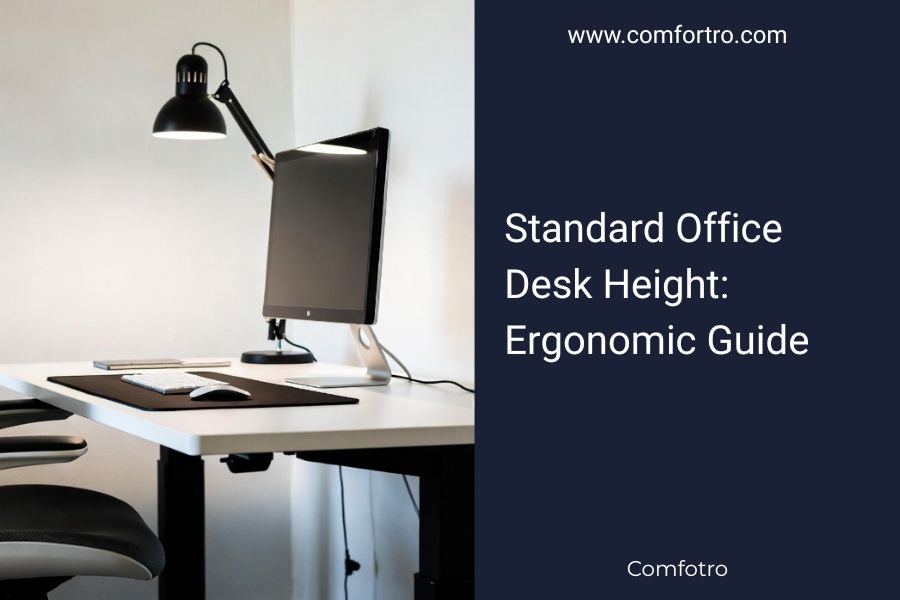
The standard office desk height is 29 to 30 inches (73.7 to 76.2 cm), but the right height depends on your body size and chair setup.
Your desk should allow your elbows to rest at a 90-degree angle when typing, with your feet flat on the floor.
Why Desk Height Matters More Than You Think
Ever wonder why your neck aches after a long work day? Your desk height might be the culprit.
I found that poor desk ergonomics cause millions of workplace injuries each year. The Occupational Safety and Health Administration (OSHA) reports that musculoskeletal disorders make up about 30% of all workplace injury cases.
Getting your desk height right isn’t just about comfort. It’s about protecting your body for years to come.
The Standard Desk Height Rule
Most office desks sit between 28 and 30 inches high. But here’s the thing: “standard” doesn’t mean “right for you.”
This height works for people around 5’8″ to 5’10” tall. If you’re shorter or taller, you’ll need adjustments.
How Desk Standards Were Created
These measurements came from studying average body proportions in the mid-20th century. Back then, the workforce looked different than today.
Research from the Human Factors and Ergonomics Society shows that one-size-fits-all furniture doesn’t work for everyone. Your body is unique.
Finding Your Perfect Desk Height
Here’s a simple test you can do right now. Sit in your chair and let your arms hang naturally at your sides.
Bend your elbows to 90 degrees. Your hands should rest comfortably on your desk surface without lifting your shoulders or bending your wrists.
The Elbow Rule
Your elbows are your best guide. When typing, they should form that 90-degree angle or be slightly more open.
If your elbows are less than 90 degrees, your desk is too high. If they’re much more than 90 degrees, it’s too low.
Height Calculations by Body Size
I came across a helpful formula from ergonomics experts. Multiply your elbow height (while sitting) by 1.05 to get your ideal desk height.
| Your Height | Recommended Desk Height |
|---|---|
| 5’0″ – 5’3″ | 26″ – 28″ |
| 5’4″ – 5’7″ | 27″ – 29″ |
| 5’8″ – 5’11” | 28″ – 30″ |
| 6’0″ – 6’3″ | 29″ – 31″ |
| 6’4″ and above | 31″ – 33″ |
Signs Your Desk Height Is Wrong
Your body sends clear signals when something’s off. Listen to what it’s telling you.
Physical Warning Signs
- Shoulder tension or pain
- Wrist pain or numbness
- Neck strain from looking up or down at your screen
- Lower back discomfort
- Tired arms by the end of the day
Posture Problems to Watch For
Do you find yourself hunching forward? That’s often a sign your desk is too low.
Are your shoulders creeping up toward your ears? Your desk might be too high, forcing you to lift your arms unnaturally.
The Typing Test
Watch your wrists while you type. They should stay straight and relaxed, not bent up or down.
If your wrists angle upward, your desk is too low. If they bend downward, it’s too high.
Different Desk Types and Heights
Not all desks are created equal. Different work styles need different setups.
Traditional Fixed Desks
Most office desks are fixed at 29-30 inches. These work well if you’re average height and have an adjustable chair.
The key is matching your chair height to your desk. Your chair does most of the adjusting work.
Height-Adjustable Desks
These desks move up and down to fit you perfectly. I found research showing they can reduce back pain by up to 54% (Journal of Occupational and Environmental Medicine).
Adjustable desks typically range from 22 to 48 inches high. That covers sitting and standing positions.
Electric vs Manual Adjustment
Electric desks move smoothly with the push of a button. Manual cranks work too but require more effort.
Both options beat being stuck with the wrong height all day.
Standing Desk Heights
Standing desks need to be much higher, usually 38-42 inches for most people.
The same elbow rule applies: 90-degree angles while your arms are at your sides.
Standing Desk Conversion Guidelines
Add about 10-12 inches to your sitting desk height for standing work. This varies based on your leg length and posture.
Many people find they need different heights for typing versus writing by hand.
Making Your Current Desk Work Better
Can’t buy a new desk right now? No problem. You have options.
Chair Adjustments First
Your chair height is usually easier to change than your desk. Start there.
Raise or lower your chair until your elbows hit that sweet spot. Make sure your feet still touch the floor comfortably.
Footrests for Shorter People
If raising your chair leaves your feet dangling, get a footrest. Your feet need solid support.
A simple box or phone book works in a pinch. Your knees should be at about 90 degrees.
Desk Risers and Platforms
Desk risers lift your entire work surface. They’re perfect if your desk is too low.
You can find adjustable risers that add 2-6 inches of height. Some include built-in storage too.
Keyboard Trays
If your desk is too high, a keyboard tray can bring your typing surface down to the right level.
Good trays adjust for height and tilt. This lets you keep your wrists in a natural position.
Monitor Height Considerations
Your screen height ties directly to your desk height. Get one wrong and the other suffers.
The top of your monitor should be at or slightly below eye level. This keeps your neck in a neutral position.
The 20-Inch Rule
Sit about arm’s length from your screen, roughly 20-24 inches away.
If you need to lean forward to read text, your monitor might be too far back or your text too small.
Dual Monitor Setups
Using two screens? Position your main monitor directly in front of you.
The secondary monitor should be at the same height and slightly angled toward you.
Special Considerations
Some situations need extra attention to get your setup right.
Laptop Users
Laptops create a problem: you can’t separate your keyboard and screen heights.
For long work sessions, use an external keyboard and mouse. This lets you raise your laptop screen to eye level.
Laptop Stands
A laptop stand brings your screen up while keeping your desk height the same.
Pair it with an external keyboard positioned at your normal typing height.
Gaming Setups
Gamers often prefer slightly lower desk heights for better mouse control.
The same ergonomic rules apply, but you might want your elbows at 95-100 degrees instead of exactly 90.
Wrist Rests and Mouse Pads
These accessories can fine-tune your hand position without changing your entire setup.
Look for gel or memory foam options that support without adding bulk.
Common Mistakes to Avoid
I’ve seen people make the same desk height errors over and over. Don’t be one of them.
Ignoring Your Shoes
The shoes you wear to work affect your sitting height. Factor this in when making adjustments.
High heels change your leg angle. Thick-soled shoes add height.
Seasonal Changes
Winter boots versus summer sandals can change your setup needs by an inch or more.
Check your ergonomics when you switch seasonal footwear.
Setting and Forgetting
Your body changes throughout the day. Slight adjustments can help with comfort.
Many people benefit from changing their position every hour or so.
Professional Help
Sometimes you need expert guidance to get things right.
Ergonomic Assessments
Many companies offer workplace ergonomic evaluations. These can spot problems you might miss.
An expert can look at your entire workspace, not just desk height.
Physical Therapy Input
If you have existing pain or injuries, a physical therapist can provide specific guidance.
They understand how your body mechanics affect your workspace needs.
Conclusion
Getting your desk height right isn’t complicated, but it makes a huge difference in how you feel at work. Start with the 90-degree elbow rule and adjust from there. Listen to your body and make changes when something doesn’t feel right. Remember, the best desk height is the one that keeps you comfortable and pain-free throughout your workday. Small adjustments now can prevent big problems later.
What if my desk is too high and I can’t lower it?
Use a keyboard tray to bring your typing surface down to the right level. You can also try a taller chair with a footrest to raise your elbow height. Some people find success with thick cushions on their chair seat.
How often should I adjust my desk height?
Make small adjustments whenever you feel discomfort. If you have an adjustable desk, try alternating between sitting and standing every 30-60 minutes. Your body will tell you when it’s time for a change.
Is it normal to need different heights for different tasks?
Yes, many people prefer slightly different heights for typing, writing by hand, or drawing. Your dominant hand and the tools you use can affect your ideal positioning. This is why adjustable desks are so popular.
Can poor desk height cause permanent damage?
Long-term poor ergonomics can lead to repetitive strain injuries, chronic pain, and posture problems. While most issues are reversible with proper setup and treatment, prevention is much easier than correction.
What’s the best desk height for children?
Children need much lower desks, typically 20-26 inches depending on their age and size. The same elbow rule applies, but kids grow quickly so you’ll need to readjust frequently. Consider adjustable furniture for growing children.

