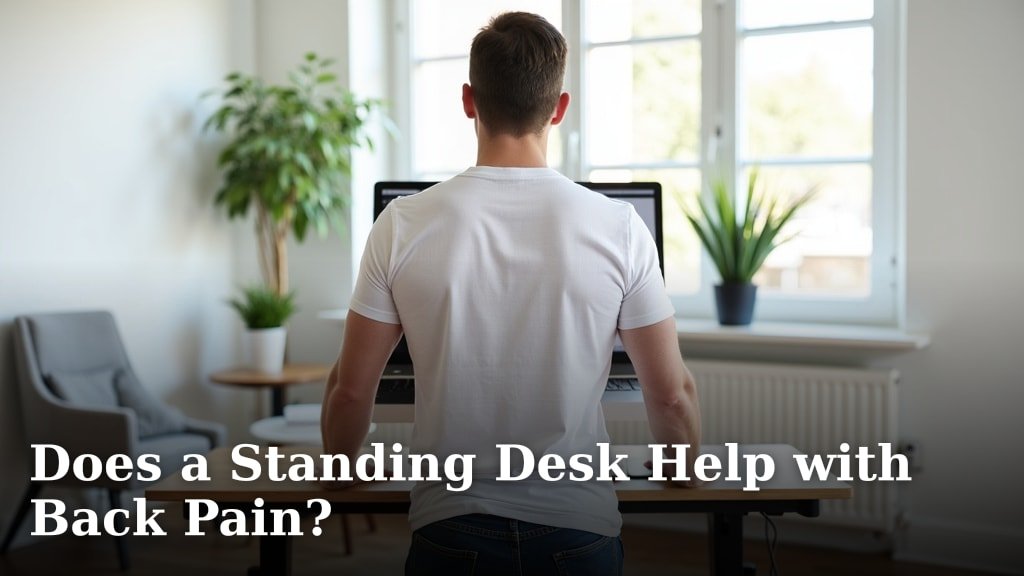
Yes, a standing desk can help with back pain for many people, especially if your pain is linked to sitting too much. Shifting your position throughout the day can reduce spinal pressure and improve muscle engagement. It’s not a magic cure, but it can be a big part of your pain management strategy.
We found that regular movement and varying your posture are key to a healthy back. A standing desk encourages you to break up long periods of sitting. This can help prevent the stiffness and discomfort often associated with a sedentary workday.
- Standing desks can reduce back pain.
- They promote movement throughout the day.
- Not a cure, but a helpful tool.
- Combine standing with proper ergonomics.
- Listen to your body for best results.
Let’s dive into why changing your work posture matters and how to get the most out of a standing desk for your back.
How Standing Desks Address Back Pain
Standing desks can absolutely be a game-changer for your back pain by promoting movement and reducing the static load on your spine. They help you avoid prolonged sitting, which often contributes to discomfort.
The Problem with Prolonged Sitting
Think about how much time you spend sitting each day. It adds up, doesn’t it? Our bodies weren’t designed for hours of motionless sitting.
Pressure on Your Spine
When you sit, especially with poor posture, your lower back bears a lot of pressure. This constant compression can strain discs and muscles (Mayo Clinic). Over time, this pressure can lead to chronic pain and stiffness.
Your spine is meant to move and articulate. Sitting for long periods keeps it in a fixed, often slumped, position. This limits blood flow and can weaken important core muscles that support your back.
Muscle Weakness and Imbalance
Sitting for too long can weaken your glutes and core muscles. Strong glutes and a strong core are essential for good posture and back support. When these muscles are weak, other muscles, like those in your lower back, have to work harder, leading to strain and pain.
We’ve found that this muscle imbalance is a common contributor to back issues. It’s like having a house with a weak foundation; everything else starts to suffer.
How Standing Changes the Equation
When you stand, you naturally engage more muscles. This simple shift can make a big difference for your back.
Reduced Spinal Compression
Standing helps decompress your spine. It lessens the direct pressure on your spinal discs that sitting creates. This can bring significant relief, particularly if your pain is related to disc issues (National Institutes of Health).
It allows the natural curves of your spine to align more easily. You’ll often feel an immediate difference in how your back feels when you transition from sitting to standing.
Improved Blood Flow and Muscle Engagement
Standing encourages better circulation throughout your body. Increased blood flow means more nutrients reach your muscles and tissues, helping them stay healthy. This also reduces stiffness.
You’re also engaging your leg, glute, and core muscles more subtly when standing. This gentle activation helps strengthen these supporting muscles without you even realizing it. It’s a low-impact workout throughout your day!
Enhanced Posture
Maintaining good posture while sitting can be tough, especially as fatigue sets in. Standing often promotes a more natural, upright posture. Your shoulders tend to pull back, and your spine lengthens.
We found that people naturally adopt better posture when standing at a properly adjusted desk. It’s much easier to slouch when you’re seated.
Making the Most of Your Standing Desk for Back Health
A standing desk isn’t a “set it and forget it” solution. To truly help your back, you need to use it thoughtfully.
The Art of Alternating: Sit-Stand-Sit
The key isn’t to stand all day long. In fact, prolonged standing can also lead to discomfort or other issues. The real benefit comes from regularly switching between sitting and standing.
Think of it as a constant dance between positions. We recommend a general guideline of standing for 20-30 minutes, then sitting for 30-60 minutes, and repeating this cycle throughout your workday.
Listen to your body. If you feel tired or uncomfortable while standing, sit down. If you feel stiff from sitting, stand up. It’s about movement, not rigidity.
Proper Ergonomics: Your Standing Stance
Just like sitting, standing requires good posture. Your desk needs to be at the right height for you.
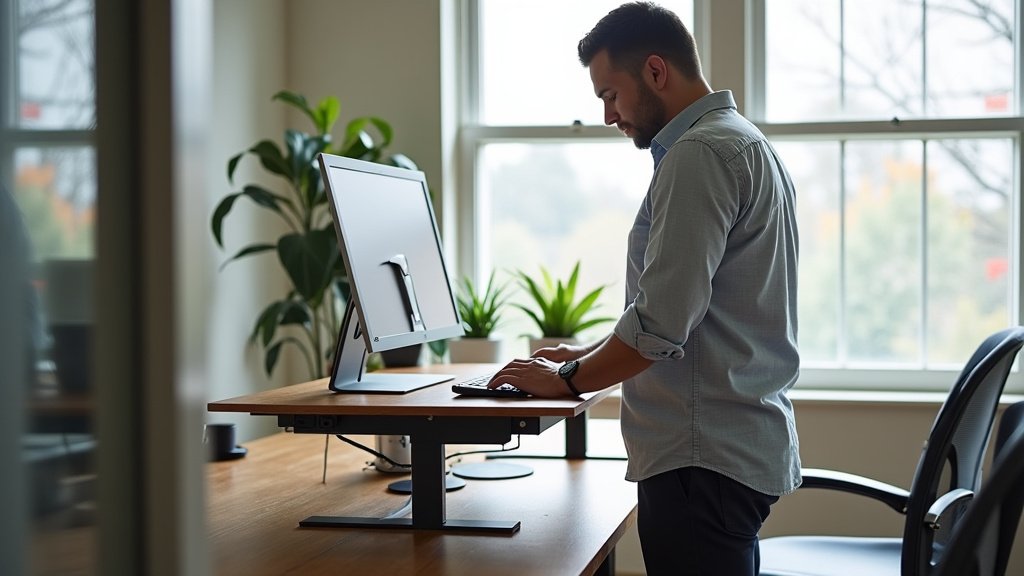
- Monitor Height: The top of your monitor should be at or slightly below eye level. This prevents neck strain.
- Keyboard and Mouse: Your elbows should be at a 90-degree angle, close to your body. Your wrists should be straight, not bent up or down.
- Foot Position: Stand with your feet shoulder-width apart. Avoid locking your knees. Shift your weight occasionally from one foot to the other.
- Anti-Fatigue Mat: Invest in a good anti-fatigue mat. This cushioning can make a huge difference in comfort for your feet and lower back when standing (Occupational Safety and Health Administration).
Setting Up Your Standing Desk
Getting your desk height just right is crucial. Here’s a quick guide:
| Consideration | Recommendation |
|---|---|
| Desk Height | Elbows at 90-degree angle when hands are on keyboard |
| Monitor Distance | Arm’s length away, top of screen at eye level |
| Keyboard/Mouse | Keep wrists straight and neutral |
| Foot Support | Use an anti-fatigue mat for comfort |
When a Standing Desk Might Not Be Enough
While a fantastic tool, a standing desk isn’t a miracle cure for all back pain. Some types of pain require a different approach.
Underlying Medical Conditions
If your back pain is due to a specific medical condition like sciatica, a herniated disc (severe), spinal stenosis, or an injury, a standing desk might only offer partial relief. It’s always best to consult a doctor or physical therapist if you have persistent or severe pain.
They can help diagnose the root cause of your pain and recommend appropriate treatments. A standing desk can then become a complementary part of your overall recovery plan.
The Importance of Core Strength and Movement
A standing desk encourages movement, but it doesn’t replace the need for regular exercise. Strengthening your core muscles, improving flexibility, and engaging in overall physical activity are vital for a healthy back.
We found that combining a standing desk with a consistent exercise routine yields the best results for long-term back health. Think of it as a team effort between your desk and your lifestyle.
Checklist for Standing Desk Success and Back Pain Relief
Ready to give it a try? Use this checklist to optimize your experience:
- Alternate frequently: Don’t stand or sit for too long.
- Adjust height correctly: Ensure proper ergonomic setup.
- Use an anti-fatigue mat: Protect your feet and lower back.
- Wear supportive shoes: Avoid high heels or flimsy footwear.
- Incorporate stretching: Gentle stretches throughout the day.
- Stay hydrated: Water helps keep discs healthy.
Remember, your journey to a pain-free back is personal. A standing desk is a powerful tool, but it’s most effective when used intelligently and as part of a broader commitment to your well-being. Give it a try, experiment with your sit-stand routine, and feel the difference it can make!
Conclusion
You’ve seen how a standing desk can genuinely support your back health by combating the negative effects of prolonged sitting. It’s about movement, reduced spinal pressure, and engaging your core muscles more naturally. While it’s not a magic bullet, we’ve found that when used correctly and combined with proper ergonomics, it becomes a powerful ally against back pain.
Remember to alternate between sitting and standing, adjust your setup precisely, and listen to your body’s cues. By making these thoughtful changes, you can transform your workday and take a significant step toward a more comfortable, pain-free back. Why not try incorporating a standing desk into your routine and experience the difference for yourself?
Frequently Asked Questions
How long should I stand at a standing desk each day?
It’s best to alternate. Aim for 20-30 minutes of standing for every 30-60 minutes of sitting. Avoid standing all day long, as this can also lead to discomfort or other issues. Listen to your body and switch positions when you feel the need.
Can a standing desk make my back pain worse?
If used incorrectly or for too long without breaks, standing can potentially worsen some types of back pain. Always ensure proper ergonomic setup, use an anti-fatigue mat, and frequently switch between sitting and standing. If pain persists or increases, consult a healthcare professional.
Do I need a special chair with a standing desk?
While not strictly necessary, a good ergonomic chair is still important for when you choose to sit. You’ll want a chair that supports your lower back and allows you to maintain good posture during your sitting intervals. The goal is to have comfort and support in both positions.
What’s the ideal height for my standing desk?
Adjust your standing desk so that your elbows form a 90-degree angle when your hands are resting comfortably on your keyboard. Your monitor should be at arm’s length, with the top of the screen at or slightly below eye level. This setup helps prevent strain on your neck and shoulders.
Can a standing desk help with sciatica?
For some, a standing desk can offer relief from sciatica symptoms by reducing pressure on the spinal nerves that cause the pain. However, it’s not a universal solution. If you have sciatica, we recommend discussing the use of a standing desk with your doctor or physical therapist to ensure it’s appropriate for your specific condition.