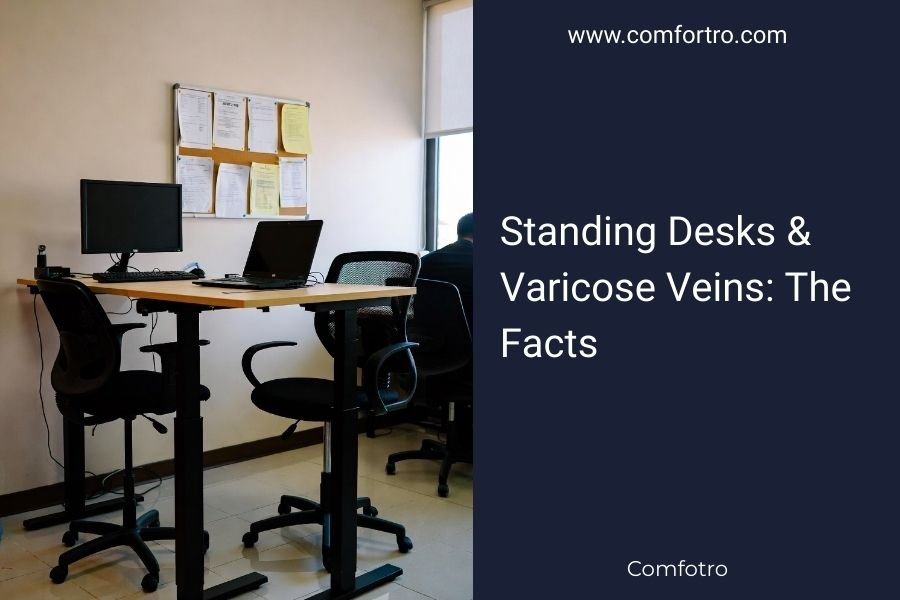
Standing desks may help reduce varicose vein symptoms by improving blood circulation, but they won’t cure existing varicose veins.
The key is alternating between sitting, standing, and walking throughout your workday to keep blood flowing properly in your legs.
What Are Varicose Veins Really?
Varicose veins are enlarged, twisted veins that appear just under your skin. They look like dark blue or purple cords running down your legs.
Your leg veins have one-way valves that push blood back up to your heart. When these valves weaken or fail, blood pools in your veins. This pooling causes the veins to stretch and bulge.
Common Symptoms You Might Notice
You might feel heaviness or aching in your legs. Some people get restless legs or muscle cramps at night.
Swelling around your ankles is another common sign. Your legs might feel worse after long periods of sitting or standing.
How Traditional Desk Jobs Affect Your Veins
Sitting for 8 hours puts extra pressure on your leg veins. Your calf muscles act like pumps when you walk. But when you sit all day, those pumps barely work.
Research from the American Heart Association shows that prolonged sitting slows blood flow in your legs by up to 50%. That’s like turning your circulation into slow-moving traffic.
The Sitting Position Problem
When you sit, your thighs press against your chair. This creates pressure points that can block blood flow.
Your knees bend at 90 degrees, which kinks your veins slightly. Add crossed legs to the mix, and you’re really restricting circulation.
Why Your Calves Matter So Much
Your calf muscles are your body’s second heart. They squeeze your veins with each step you take.
This squeezing action pushes blood upward against gravity. When you sit motionless, this natural pump system shuts down.
Can Standing Desks Actually Help?
Standing desks can improve circulation compared to sitting all day. But standing motionless for hours creates its own problems.
I found research from the National Institute for Occupational Safety and Health that shows prolonged standing can actually worsen varicose veins. The key word here is “prolonged.”
The Sweet Spot for Standing
You want to stand for 15-30 minutes at a time. Then sit for 30-60 minutes. This gives your legs variety without overdoing either position.
Think of it like interval training for your veins. You’re giving them different challenges throughout the day.
Movement Makes the Difference
Standing and swaying slightly engages your calf muscles. Shifting your weight from foot to foot keeps blood moving.
Even small movements like lifting your heels or doing calf raises can activate that muscle pump action.
Best Practices for Vein Health at Work
The 20-8-2 rule works well for most people. For every 30 minutes, spend 20 minutes sitting, 8 minutes standing, and 2 minutes moving around.
Set a timer on your phone or computer. Your body will thank you for the regular position changes.
Smart Standing Techniques
Use an anti-fatigue mat under your feet. These mats encourage small movements that keep your muscles active.
Keep one foot slightly elevated on a footrest or rail. Switch feet every 10-15 minutes to prevent stiffness.
Sitting Strategies That Help
When you do sit, elevate your feet when possible. This helps blood drain back toward your heart.
Avoid crossing your legs or ankles. Keep your feet flat on the floor or on a footrest.
Simple Desk Exercises
Try ankle circles and calf raises while you work. Point and flex your toes to engage different muscles.
These tiny movements might look silly, but they keep your blood flowing when you can’t take a walking break.
When Standing Desks Might Not Be Enough
If you already have moderate to severe varicose veins, standing desks alone won’t fix them. You might need medical treatment or compression stockings.
Some people have genetic factors that make them prone to vein problems regardless of their work setup.
Warning Signs to Watch For
Pain that gets worse throughout the day is a red flag. Skin changes around your ankles or calves need attention too.
If your legs feel heavy or swollen regularly, talk to a doctor. These could be signs of more serious circulation issues.
Additional Tools and Equipment
Compression socks can help whether you sit or stand. They provide graduated pressure that supports your veins.
A balance board or standing mat adds movement to your standing time. Small adjustments keep your muscles engaged.
Desk Setup Tips
Position your monitor so you’re not leaning forward. This keeps your posture neutral and reduces strain.
Keep frequently used items within easy reach. You don’t want to spend extra energy stretching or reaching while standing.
Footwear Considerations
Supportive shoes make a big difference for standing desk users. Avoid high heels or completely flat shoes.
Look for shoes with good arch support and cushioning. Your feet are your foundation for the whole day.
Creating Your Personal Routine
Start slowly if you’re new to standing desks. Begin with 15-20 minutes of standing per hour.
Listen to your body and adjust as needed. Some days you might need more sitting time, and that’s okay.
Tracking Your Progress
Notice how your legs feel at the end of each day. Are they less tired or swollen than before?
Keep a simple log for the first few weeks. This helps you find the sitting-standing balance that works for you.
Conclusion
Standing desks can be a useful tool for improving circulation and potentially reducing varicose vein symptoms. The real magic happens when you combine standing with regular movement and smart positioning throughout your day.
Remember that preventing varicose veins is easier than treating them. If you’re already dealing with vein problems, a standing desk might help but probably won’t solve everything. The goal is better circulation through variety – sitting, standing, and moving in a rhythm that keeps your blood flowing properly.
Can standing desks prevent varicose veins completely?
Standing desks alone cannot prevent varicose veins completely, especially if you have genetic factors or other risk factors. They work best as part of an active lifestyle that includes regular movement and exercise.
How long should I stand at my desk if I have varicose veins?
Start with 15-20 minutes of standing per hour, then gradually increase as your body adapts. Avoid standing motionless for more than 30 minutes at a time, as this can actually worsen vein problems.
Should I wear compression socks with a standing desk?
Compression socks can be helpful whether you sit or stand at work. They provide extra support for your veins and may reduce swelling and discomfort, especially if you already have circulation issues.
What’s the best flooring for standing desk users with vein concerns?
Anti-fatigue mats or cushioned flooring work best because they encourage small movements and reduce pressure on your feet and legs. Avoid standing directly on hard concrete or tile floors for extended periods.
Can I use a standing desk if my varicose veins are painful?
If your varicose veins cause significant pain, consult with a healthcare provider before making major changes to your work setup. They might recommend compression therapy or other treatments alongside any desk modifications.
