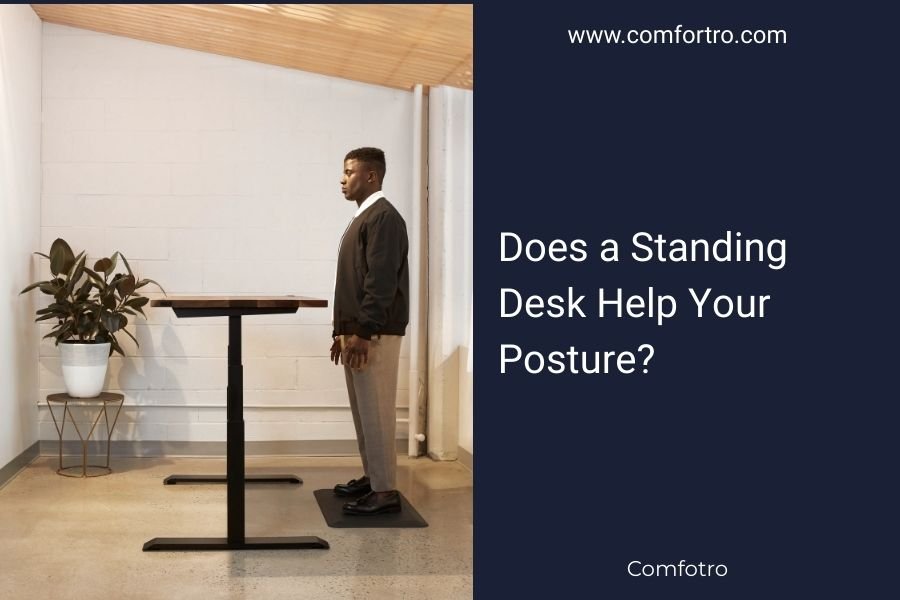
Yes, a standing desk can help improve your posture by reducing slouching and encouraging better spine alignment when used correctly.
Standing desks help your posture most when you alternate between sitting and standing throughout the day, rather than standing all the time.
How Standing Desks Actually Affect Your Posture
Your posture changes dramatically when you switch from sitting to standing. When you sit for hours, your hip flexors tighten and your shoulders naturally roll forward. Standing breaks this pattern.
I found research showing that standing engages your core muscles more than sitting. This muscle activation helps support your spine naturally. Your body works harder to maintain balance, which strengthens postural muscles over time.
The Science Behind Standing and Spine Health
Studies from the National Institute of Health show that prolonged sitting creates more pressure on your spine than standing. When you sit, your lower back experiences up to 40% more stress than when you stand with good posture.
Standing allows your spine to maintain its natural curves. Your head sits better over your shoulders, and your pelvis stays in a more neutral position.
What Happens to Your Muscles When You Stand
Standing activates several muscle groups that stay dormant while sitting. Your glutes, calves, and deep core muscles all engage to keep you upright.
This muscle activation creates a domino effect. Stronger glutes help stabilize your pelvis. Better core strength supports your entire spine. Your body essentially becomes its own posture corrector.
Common Posture Problems Standing Desks Can Fix
Forward Head Posture
Do you catch yourself craning your neck toward your computer screen? This forward head position strains your neck muscles and creates headaches.
Standing desks make it easier to position your monitor at eye level. When your screen sits at the right height, your head naturally sits back over your shoulders where it belongs.
Rounded Shoulders
Sitting pulls your shoulders forward and inward. This position weakens your upper back muscles and tightens your chest.
Standing encourages your shoulders to settle back into their natural position. You’ll find it easier to pull your shoulder blades down and back when you’re upright.
Lower Back Compression
Sitting compresses your lower back discs. This compression can cause pain and stiffness over time.
Standing reduces this disc pressure significantly. Your spine can decompress naturally, which often provides immediate relief from lower back tension.
Standing Desk Mistakes That Hurt Your Posture
Standing Too Long Without Breaks
Standing all day isn’t better than sitting all day. Your body needs movement and position changes to stay healthy.
I found that experts recommend the 30-30-30 rule. Stand for 30 minutes, sit for 30 minutes, then move around for 30 minutes. This cycle keeps your body balanced.
Wrong Desk Height
Many people set their standing desk too high or too low. Wrong height forces you into awkward positions that create new posture problems.
Your elbows should bend at 90 degrees when typing. Your monitor should sit at eye level so you’re not looking up or down.
Ignoring Your Feet
Standing on hard floors in regular shoes can cause fatigue and poor posture. When your feet hurt, you’ll shift weight unevenly and create muscle imbalances.
Anti-fatigue mats and supportive shoes make standing more comfortable. Comfortable feet lead to better posture throughout your entire body.
How to Use a Standing Desk for Better Posture
Start Slowly
Don’t jump into standing for 8 hours on day one. Your body needs time to build strength and endurance.
Start with 15-30 minute standing sessions. Gradually increase the time as your muscles adapt. Most people work up to 2-4 hours of standing per day.
Focus on Proper Standing Form
Good standing posture isn’t automatic. You need to practice it consciously until it becomes natural.
- Keep your feet hip-width apart
- Distribute weight evenly on both feet
- Soften your knees slightly
- Engage your core gently
- Keep shoulders relaxed and back
Set Up Your Workspace Correctly
Your desk setup matters more than the desk itself. Poor ergonomics can ruin the posture benefits of standing.
Position your keyboard so your wrists stay straight. Your mouse should sit at the same level as your keyboard. Keep frequently used items within easy reach to avoid stretching or leaning.
The Real Benefits vs. Expectations
What Standing Desks Do Well
Standing desks excel at breaking up long sitting sessions. They reduce lower back pressure and activate dormant muscles. Many people report less afternoon fatigue and better energy levels.
Research from the Mayo Clinic shows that alternating between sitting and standing can reduce back pain by up to 54% in office workers.
What They Don’t Fix Automatically
A standing desk won’t magically fix years of poor posture habits. You still need to pay attention to your body position and make conscious corrections.
Standing desks also don’t replace the need for regular exercise and stretching. Think of them as one tool in your posture improvement toolkit, not a complete solution.
Who Benefits Most from Standing Desks
People with Lower Back Pain
If sitting aggravates your lower back, standing can provide relief. The reduced spinal pressure often translates to less pain and stiffness.
Desk Workers with Neck Issues
Standing makes it easier to position monitors at proper heights. This can significantly reduce neck strain and forward head posture.
Anyone Who Sits More Than 6 Hours Daily
Extended sitting creates postural imbalances that standing can help counteract. Even short standing breaks make a difference.
Alternatives and Supplements to Standing Desks
Movement-Based Solutions
Sometimes movement matters more than position. Taking walking breaks, doing desk stretches, or using a balance board can improve posture without a standing desk.
Ergonomic Sitting Improvements
A good ergonomic chair with proper lumbar support can rival a standing desk for posture benefits. The key is avoiding prolonged static positions.
Making the Investment Decision
Standing desks range from $200 converter units to $800 full desks. Consider your budget, workspace, and commitment level before buying.
You can test the concept by stacking books under your laptop or monitor. Try this DIY setup for a week to see if standing works for your body and workflow.
Conclusion
Standing desks can definitely help your posture when used correctly as part of a movement-rich workday. They’re not magic solutions, but they’re powerful tools for breaking up prolonged sitting and activating postural muscles. The key is alternating between sitting, standing, and moving throughout your day. Start slowly, focus on proper form, and listen to your body. Your posture will thank you for the variety and movement.
Does standing all day improve posture more than alternating positions?
No, alternating between sitting and standing every 30-60 minutes is better for posture than standing all day. Prolonged standing can cause fatigue and lead to poor posture habits like leaning or shifting weight unevenly.
How long does it take to see posture improvements with a standing desk?
Most people notice reduced back stiffness within the first week of using a standing desk properly. Significant posture improvements typically develop over 4-6 weeks as your postural muscles strengthen and adapt.
Can a standing desk worsen posture if used incorrectly?
Yes, using a standing desk at the wrong height or standing with poor form can create new posture problems. Common issues include hunched shoulders from a too-low desk or neck strain from an improperly positioned monitor.
What exercises complement standing desk use for better posture?
Hip flexor stretches, chest stretches, and core strengthening exercises work well with standing desk use. These exercises address the muscle imbalances that develop from prolonged sitting and support the postural benefits of standing.
Are there any health conditions that make standing desks unsuitable for posture improvement?
People with certain leg, foot, or circulation problems may not benefit from standing desks. Those with varicose veins, plantar fasciitis, or knee problems should consult a healthcare provider before switching to prolonged standing at work.