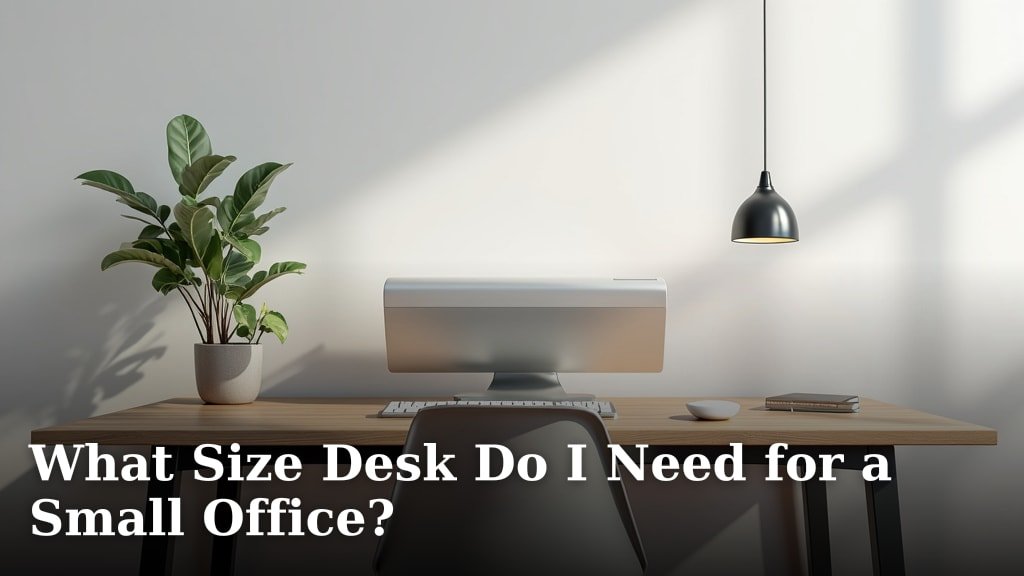
For a small office, the ideal size desk is generally Our guide to the best small desk for remote work offers additional insights into choosing a compact workstation that fits your needs.48 to 60 inches wide and 24 to 30 inches deep to give you enough workspace without overwhelming your room. This size helps you stay organized and comfortable, especially when you need space for a monitor, keyboard, and other essentials, making it easier to answer the question, “What size desk do I need for a small office?”
You want a desk that fits your room without feeling cramped. It’s about balancing your work needs with your available space. Think about how much equipment you use daily; that will guide your choice. We found that a good desk maximizes your productivity in a smaller footprint.
- Desk size: 48-60 inches wide, 24-30 inches deep
- Balance work needs with room size
- Measure your space carefully
- Consider your monitor and equipment
- Comfort and organization are key
Let’s walk through how to pick the perfect desk for your small office, ensuring you get the most out of every inch.
Choosing the Right Desk Size for Your Compact Workspace
For most small offices, you’ll find a desk between 48 to 60 inches wide and 24 to 30 inches deep provides a great balance of usability and space-saving design. This range works well for single monitors and essential office supplies.
Measure Your Space First: The Golden Rule
Before you even think about desk styles, grab a tape measure. This is step one, and it’s super important. You need to know the exact dimensions of the wall space where your desk will go. Measure the width, the depth, and even the height if you’re considering shelves above. Don’t forget to account for doors swinging open or drawers needing to pull out. Many people overlook this, but those extra inches can make a huge difference in a small room.
- Measure your wall space: width, depth, and height.
- Account for door swings and drawer pull-out space.
- Visualize the desk in the room to avoid surprises.
What Gear Do You Actually Need on Your Desk?
Think about your daily workflow. Are you a minimalist with just a laptop, or do you have multiple monitors, a keyboard, mouse, and maybe a printer? Your equipment dictates how much surface area you truly need. We found that most people underestimate the footprint of their tech. Lay out your current items on a table or the floor and measure that area. This gives you a clear picture of your actual working space requirements.
Single Monitor Setups
If you use one monitor, a desk around 48 inches wide is often enough. This gives you room for the monitor in the center, plus space for your keyboard, mouse, and a notepad. A depth of 24 inches is usually fine here, keeping your screen at a comfortable viewing distance (OSHA recommends about 20-40 inches from your eyes).
Dual Monitor Setups
Two monitors demand more real estate. You’ll likely need a desk at least 55 to 60 inches wide to comfortably fit both screens side-by-side without feeling cramped. A depth of 28 to 30 inches is ideal for dual monitors. This allows you to push the monitors back a bit, creating more space in front for your keyboard and writing.
Here’s a quick guide based on common monitor setups:
| Monitor Setup | Recommended Width | Recommended Depth |
|---|---|---|
| Laptop Only | 36-48 inches | 20-24 inches |
| Single Monitor | 48-55 inches | 24-28 inches |
| Dual Monitors | 55-60+ inches | 28-30 inches |
Desk Shape Matters in Small Spaces
The shape of your desk can make a huge difference in how it fits and functions in a small office. It’s not just about length and width; the design plays a key role. Choosing the right shape helps you maximize every inch without making your room feel cluttered.
Rectangular Desks: The Classic Choice
Rectangular desks are the most common and often the most straightforward for small rooms. They can be pushed flush against a wall, saving precious floor space. They offer a clean, continuous work surface. Look for narrower options if your room is particularly tight, perhaps 20-24 inches deep. We found that a simple rectangular desk often provides the most usable surface area per square foot.
L-Shaped Desks: Corner Maximizers
An L-shaped desk can be a brilliant solution if you have an unused corner. It wraps around, giving you two distinct work zones. You might use one side for your computer and the other for writing or sorting papers. While they take up more overall area, they use vertical space efficiently and can feel less imposing than a long, straight desk in a narrow room. Just make sure the “L” isn’t too long for your specific corner.
Corner Desks: Tucking Away Neatly
True corner desks, often triangular or pie-shaped, are designed to fit snugly into a room’s corner. They’re excellent for very small spaces where a full-sized desk would feel overwhelming. They offer a surprising amount of surface for a monitor and keyboard, but storage might be limited. They can make a room feel more open by centering the workspace in a less intrusive way.
Ergonomics and Comfort: Don’t Forget Your Body
Beyond fitting the room, your desk needs to fit you. An ergonomically sound setup prevents strain and improves focus. Your monitor should be at eye level, and your forearms should be parallel to the floor when typing (OSHA guidelines state this helps prevent wrist strain). A desk that’s too high or too low, even if it fits the room, will lead to discomfort. Many experts say that adjustable-height desks are a great option for small spaces, as they allow you to switch between sitting and standing, keeping you more active and productive.
- Monitor at eye level.
- Forearms parallel to the floor.
- Consider an adjustable-height desk for flexibility.
Storage Solutions: Built-In or Standalone?
Desk clutter is the enemy of small spaces. Think about storage. Some desks come with built-in drawers or shelves, which can be super handy. Others are just a flat surface. If your desk doesn’t have storage, you’ll need to account for a small filing cabinet or shelving unit. Remember, vertical storage—like wall-mounted shelves—is your best friend in a small office, keeping your floor clear and your room feeling larger.
The Small Office Desk Checklist
Ready to pick your perfect desk? Use this quick checklist to make sure you’ve thought of everything:
- Have I accurately measured my available space?
- Does it fit all my essential equipment (monitors, keyboard, etc.)?
- Is the desk shape appropriate for my room layout?
- Will it allow for good ergonomic posture?
- Does it offer enough storage, or have I planned for external storage?
- Does it allow enough room to comfortably get in and out of your chair?
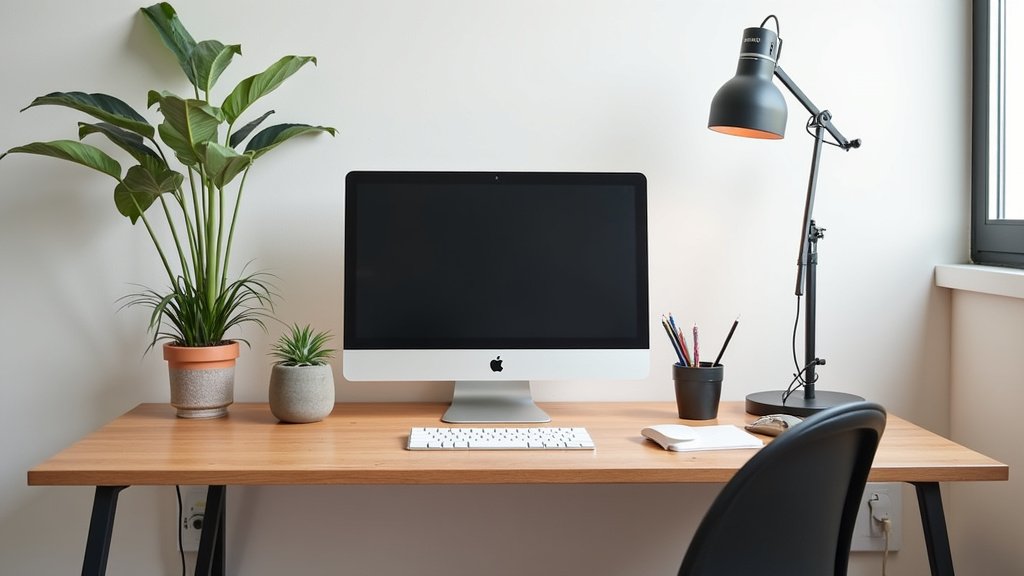
By thinking through these points, you’ll be much closer to finding a desk that not only fits your small office but also boosts your productivity and comfort.
Conclusion
Choosing the right desk for your small office doesn’t have to be overwhelming. By carefully measuring your space, honestly assessing your equipment needs, and considering desk shape and ergonomics, you’ll find the perfect fit. We found that a well-chosen desk transforms a compact room into a productive and comfortable workspace. Take these steps, and you’ll create an office that truly supports your daily tasks and makes you feel good.
Frequently Asked Questions
How can I make a small desk feel less cluttered?
Utilize vertical space with monitor risers or wall-mounted shelves. Consider desk organizers for pens and papers, and practice regular decluttering. Keeping only essential items on the surface helps a small desk feel more open and efficient.
Is it better to have a deeper or wider desk in a small room?
This depends on your primary needs. A wider desk accommodates more side-by-side equipment like dual monitors. A deeper desk is better for maintaining ergonomic viewing distances and providing more writing space in front of your screen. Often, a balance of both works best.
Can I use a standing desk in a small office?
Absolutely! Standing desks, especially electric adjustable ones, are excellent for small spaces. They offer flexibility, allowing you to change posture throughout the day, and many models come in compact sizes that fit well without dominating the room.
What’s the best way to visualize a new desk in my small space?
Once you have your measurements, try outlining the desk’s footprint on the floor with painter’s tape. This helps you see how much space it will actually occupy and if there’s enough room to move around comfortably.
Should I prioritize desk size or storage in a small office?
You should prioritize both, but in different ways. Start with a desk size that comfortably fits your essential work equipment and allows good ergonomics. Then, use vertical storage solutions, like shelves or hutches, to handle storage needs without increasing the desk’s footprint.