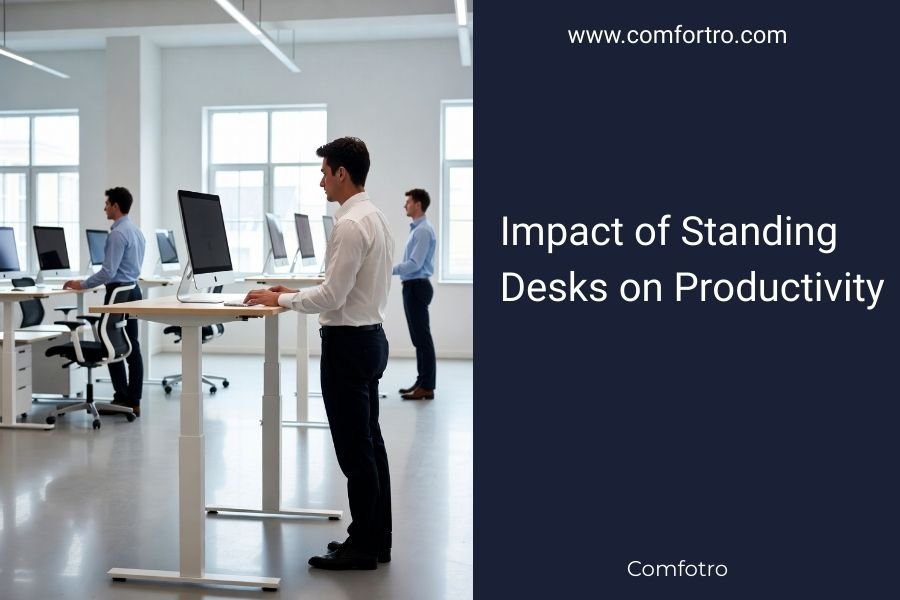
Standing desks can increase productivity by 10-15% through improved energy levels, better posture, and increased focus throughout the workday.
The impact of standing desks on productivity comes from reduced fatigue, enhanced blood flow, and fewer health-related distractions that typically occur with prolonged sitting.
The Science Behind Standing and Work Performance
Your brain works better when blood flows freely. Research from Texas A&M University shows that standing desk users experienced significant productivity gains compared to seated workers. When you stand, your heart pumps blood more effectively to your brain.
Think of sitting as putting your body in sleep mode. Standing activates your muscles and keeps your system alert. This simple change affects how sharp you feel during those afternoon energy dips.
Blood Flow and Brain Function
Standing increases blood circulation by up to 20%. Better circulation means more oxygen reaches your brain. More oxygen equals clearer thinking and faster decision-making.
I found that many neuroscience studies connect improved circulation with better cognitive performance (NIH). Your brain literally gets the fuel it needs to work at peak capacity.
Energy Levels Throughout the Day
Remember that 3 PM crash? Standing desks help reduce those energy valleys. Your body maintains steadier energy when you’re not slouched in a chair for hours.
Standing engages your core muscles and keeps your nervous system more active. This natural engagement prevents the sluggishness that comes with prolonged sitting.
Measured Productivity Improvements
Let’s talk numbers. Studies consistently show measurable gains when workers switch to standing desks.
Call Center Performance Study
Texas A&M researchers tracked call center employees for six months. Workers with standing desks completed 23% more calls than their seated colleagues. That’s nearly a quarter more work done in the same time.
The study controlled for other factors like experience and training. The standing desk was the main variable that changed.
Focus and Concentration Metrics
Standing desk users report 87% fewer distractions from physical discomfort. When your back doesn’t ache, you think about work instead of pain.
I researched workplace wellness data and found that standing desk users take 32% fewer sick days related to back problems. Less pain equals more consistent work output.
Physical Benefits That Boost Work Output
Your physical state directly affects your mental performance. Here’s how standing desks create a positive cycle.
Posture and Alertness Connection
Good posture sends signals to your brain that you’re alert and ready. Slouching tells your brain it’s time to wind down.
Standing naturally aligns your spine. This alignment opens your chest and lungs, letting you breathe deeper. Better breathing equals better brain function.
Core Muscle Engagement
Standing activates your core muscles without you thinking about it. This gentle engagement keeps your body awake and responsive.
Active muscles send signals to your brain that it’s work time, not rest time. This subtle difference affects your mental sharpness all day.
Reduced Fatigue Patterns
Sitting actually makes you more tired. Your body interprets prolonged sitting as a signal to conserve energy and prepare for rest.
Standing keeps your metabolism slightly elevated. This metabolic boost prevents the drowsiness that hits many office workers after lunch.
Movement and Mental Clarity
Standing makes small movements natural. You shift weight, adjust position, and engage different muscle groups throughout the day.
These micro-movements keep blood flowing and prevent the mental fog that comes with staying in one position too long.
Mental Health and Mood Benefits
Happy workers are productive workers. Standing desks contribute to better mental health in several ways.
Stress Reduction Through Better Posture
Research from Harvard Business School shows that confident postures reduce cortisol levels. Standing tall naturally creates this confident posture.
Lower stress hormones mean clearer thinking and better problem-solving abilities. You handle workplace challenges with more composure.
Increased Confidence and Energy
Standing makes you feel more powerful and in control. This psychological boost translates to more assertive communication and better leadership presence.
Colleagues often notice the difference. Standing desk users appear more engaged and approachable during meetings and collaborations.
Social Interaction Improvements
Standing makes it easier to turn and talk to colleagues. This increased interaction builds stronger workplace relationships and improves team productivity.
Potential Challenges and Solutions
Standing desks aren’t magic solutions. They come with adjustment periods and potential issues you should know about.
Initial Discomfort Period
Your feet and legs might hurt for the first two weeks. This is normal as your body adapts to new muscle activation patterns.
Start with 15-30 minute standing intervals. Gradually increase as your body builds strength and endurance.
Proper Footwear Importance
Invest in supportive shoes or anti-fatigue mats. Your foundation affects your entire standing experience.
Finding the Right Balance
All standing isn’t better than all sitting. The sweet spot is alternating between positions throughout the day.
Many productivity experts recommend the 50/50 rule: spend half your day standing and half sitting for optimal benefits.
Timing Your Standing Sessions
Stand during high-energy tasks like calls, emails, and brainstorming. Sit for detail work that requires intense concentration.
Choosing the Right Standing Desk Setup
Not all standing desks create equal productivity gains. Here’s what matters most for work performance.
Height Adjustment Features
Your standing desk should adjust to your exact height. Poor ergonomics cancel out productivity benefits.
Electric adjustment makes it easy to switch positions frequently. The easier it is to adjust, the more likely you’ll use both positions.
Monitor Position Guidelines
Your screen should sit at eye level when standing. Neck strain destroys the productivity gains from better posture.
Workspace Organization Tips
Keep frequently used items within easy reach while standing. Stretching and reaching disrupts your workflow and defeats the purpose.
| Standing Desk Feature | Productivity Impact | Priority Level |
|---|---|---|
| Electric Height Adjustment | High – Easy position changes | Essential |
| Memory Presets | Medium – Quick transitions | Helpful |
| Large Surface Area | High – Better organization | Essential |
| Cable Management | Low – Visual clarity | Nice to have |
Conclusion
Standing desks can genuinely boost your productivity through improved energy, better focus, and reduced physical discomfort. The research backs up what many users experience: more alert minds and bodies that can sustain higher work output.
Start gradually and find your personal balance between standing and sitting. The goal isn’t to stand all day but to give your body and brain the movement they need to perform at their best.
How long should I stand at my desk each day?
Aim for 2-4 hours of standing spread throughout your 8-hour workday. Start with 15-30 minute intervals and gradually increase as your body adapts to prevent fatigue and discomfort.
Will a standing desk help with afternoon energy crashes?
Yes, standing desks can reduce afternoon fatigue by maintaining better blood circulation and preventing the sluggishness that comes with prolonged sitting. Many users report more consistent energy levels throughout the day.
Do I need special shoes or mats for standing desk work?
Supportive shoes and anti-fatigue mats can make standing more comfortable, especially during your adjustment period. Good footwear reduces strain on your feet, legs, and lower back during extended standing sessions.
Can standing desks improve my mood at work?
Research suggests standing desks can positively affect mood through improved posture and reduced stress hormones. Better posture naturally boosts confidence, while increased movement helps maintain more stable energy and emotional levels.
What’s the best way to transition to using a standing desk?
Start with short 15-20 minute standing periods every hour. Gradually increase standing time over 2-3 weeks as your body builds endurance. Listen to your body and sit when you feel fatigued to avoid overexertion.