
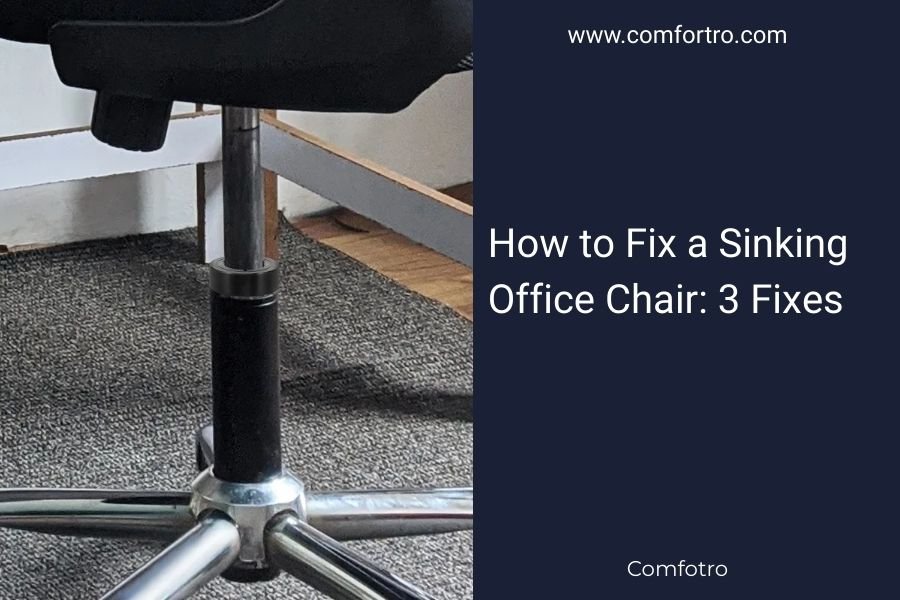
You can fix a sinking office chair using three main methods: replacing the gas cylinder, using a hose clamp to stop the sinking, or adding a spacer tube around the cylinder.
The most permanent solution is replacing the pneumatic cylinder, which costs $30-80 and takes about 30 minutes with basic tools.
Why Your Office Chair Keeps Sinking
Your chair drops because the pneumatic cylinder inside has lost its seal. Think of it like a slow leak in a bike tire. The gas escapes gradually until there’s not enough pressure to hold your weight.
This happens to almost every office chair after 2-5 years of regular use. The rubber seals wear out from constant up-and-down movement. Temperature changes and dust also speed up the process.
Signs Your Cylinder Has Failed
You’ll notice these warning signs before complete failure:
- Chair slowly sinks during the day
- Takes more pumps to raise the seat
- Makes hissing sounds when adjusting height
- Won’t stay at your preferred height
Fix #1: Replace the Gas Cylinder (Best Long-Term Solution)
Swapping out the cylinder gives you a brand-new chair experience. I found that most replacement cylinders cost between $30-80 and work with standard office chairs.
Tools You’ll Need
- Pipe wrench or large adjustable wrench
- Rubber mallet or hammer
- Penetrating oil (like WD-40)
- Safety glasses
Step 1: Remove the Chair Base
Turn your chair upside down. You’ll see the cylinder connected to the wheeled base. Spray penetrating oil around the connection and wait 10 minutes.
Use the pipe wrench to turn the base counterclockwise. It might be tight, so don’t be afraid to apply steady pressure.
Step 2: Separate the Seat from Cylinder
Flip the chair right-side up. The cylinder slides into a hole in the seat mechanism. Gently tap around the base of the seat with your rubber mallet.
The cylinder should pop out after a few firm taps. If it’s stuck, spray more penetrating oil and wait.
Step 3: Install the New Cylinder
Slide the new cylinder into the seat mechanism. Make sure it’s fully seated and straight.
Reattach the wheeled base by threading it clockwise onto the bottom of the new cylinder. Tighten with your wrench.
Expected Results
A new cylinder should last 3-5 years with normal use. You’ll get smooth height adjustment and reliable support again.
Fix #2: Hose Clamp Method (Quick and Cheap)
This fix stops the sinking without replacing parts. You’re basically creating an artificial stop that prevents the cylinder from compressing further.
What You’ll Need
- Large hose clamp (2-3 inches diameter)
- Screwdriver
- Measuring tape
Step 1: Find Your Ideal Height
Sit in your chair and pump it to the height you want. Mark this position or take a photo so you remember where the cylinder should stop.
Step 2: Position the Clamp
Remove the plastic cylinder cover if your chair has one. Place the hose clamp around the cylinder shaft just below where it enters the seat mechanism.
The clamp acts like a stopper. When the cylinder tries to compress, it hits the clamp instead of sinking further.
Step 3: Test and Adjust
Sit down and check if the chair stays at your preferred height. If it’s too high, loosen the clamp and move it down slightly. Too low? Move it up.
Pros and Cons of This Method
| Pros | Cons |
|---|---|
| Costs under $5 | No height adjustment |
| Takes 5 minutes | May look unprofessional |
| Works immediately | Can damage cylinder over time |
Fix #3: PVC Pipe Spacer (Clean Looking Solution)
This method uses a piece of PVC pipe as a sleeve around the cylinder. It’s more professional looking than the hose clamp but takes a bit more work.
Materials Needed
- PVC pipe (slightly larger than your cylinder diameter)
- Pipe cutter or saw
- Sandpaper
- Measuring tape
Step 1: Measure Your Cylinder
Measure the diameter of your cylinder shaft. Most office chairs use 2-inch cylinders, so you’d need 2.5-inch PVC pipe.
Step 2: Cut the Pipe to Length
Cut a piece about 4-6 inches long. Sand the ends smooth so they won’t scratch your chair or floor.
Step 3: Install the Spacer
Slide the PVC pipe over the cylinder shaft. Position it so the chair sits at your ideal height when the pipe touches the base.
Why This Method Works Well
The PVC sleeve distributes weight evenly and won’t damage the cylinder surface. It looks clean and professional compared to metal clamps.
Preventing Future Chair Problems
I found that simple maintenance can double your chair’s lifespan. Here’s what works best:
Regular Cleaning
Wipe down the cylinder shaft monthly with a damp cloth. Dust and debris wear out the seals faster.
Gentle Operation
Don’t slam the height lever up and down. Smooth, controlled adjustments put less stress on the internal seals.
Weight Considerations
Check your chair’s weight limit. Exceeding it regularly will cause premature cylinder failure.
Temperature Awareness
Extreme temperature changes can affect the gas pressure inside cylinders. Keep your chair away from heating vents and direct sunlight when possible.
When to Replace Your Chair Instead
Sometimes fixing isn’t worth it. Consider replacement if:
- Your chair is over 8 years old
- Multiple parts are failing
- Replacement parts cost more than 60% of a new chair
- You’ve outgrown your current chair’s features
Budget-Friendly Replacement Options
New office chairs with reliable cylinders start around $150. Many come with 2-5 year warranties that cover cylinder failures.
Safety Tips for Chair Repairs
Working on office chairs involves some risks. Follow these safety guidelines:
Cylinder Pressure
Never try to disassemble a cylinder. They contain pressurized gas that can cause injury if released suddenly.
Proper Tools
Use the right size wrenches to avoid slipping and injury. Wear safety glasses when hammering or using penetrating oils.
Stable Work Surface
Work on a level surface where the chair won’t roll away or tip over during repairs.
Conclusion
A sinking office chair doesn’t have to ruin your workday. You can fix it with a simple hose clamp for under $5, create a professional-looking PVC spacer for about $10, or invest in a new cylinder for $30-80. The cylinder replacement gives the best long-term results, while the clamp method gets you back to work immediately. Choose the fix that matches your budget and how long you plan to keep the chair. With proper maintenance, your repaired chair should serve you well for years to come.
How long does it take to replace an office chair cylinder?
Most people can replace a cylinder in 20-30 minutes. The hardest part is usually separating the old cylinder from the seat, which might take extra time if it’s stuck with age and debris.
Will a hose clamp damage my office chair?
A properly sized hose clamp won’t damage the cylinder if you don’t over-tighten it. However, it removes your ability to adjust chair height, so consider this trade-off before installing.
Can I fix a chair that won’t go up at all?
If your chair won’t lift at all, the cylinder is completely failed and needs replacement. The temporary fixes only work for chairs that still have some lifting ability but won’t stay up.
Are replacement cylinders universal for all office chairs?
Most standard office chairs use similar cylinder sizes, but you should measure your old cylinder’s diameter and length before buying. Some executive or specialized chairs may need specific replacement parts.
What causes office chair cylinders to fail so quickly?
Frequent height adjustments, exceeding weight limits, and dust buildup are the main causes. Chairs used by multiple people or adjusted several times daily tend to fail faster than those set once and left alone.