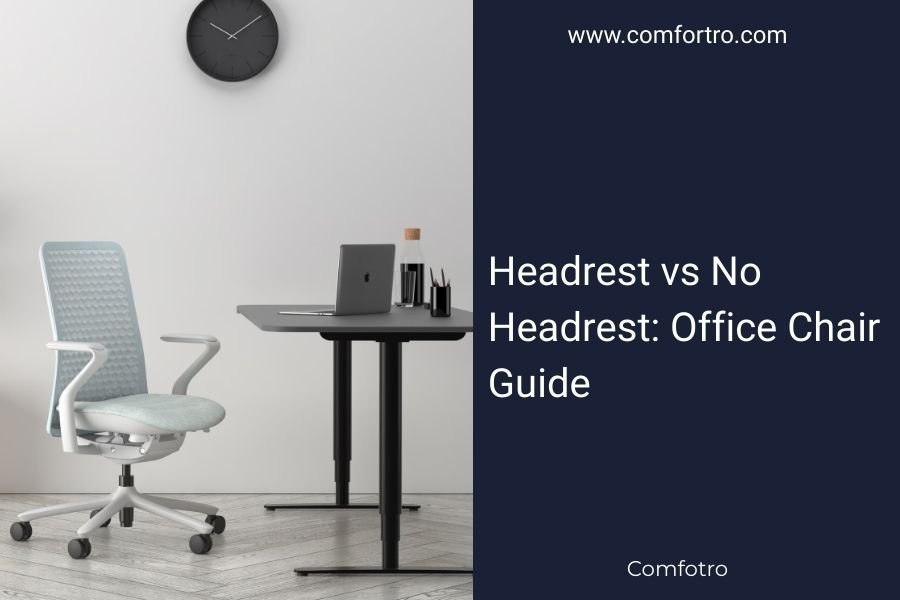
Office chairs with headrests provide better neck and upper spine support, while chairs without headrests offer more freedom of movement and typically cost less.
Your choice between headrest vs no headrest depends on how long you sit, your height, and whether you lean back during work.
What Makes a Headrest Worth Having?
A headrest supports your head and neck when you lean back. Think of it like a pillow for your chair. It keeps your cervical spine in a natural curve instead of letting your head hang forward.
When you sit for hours, your neck muscles work overtime to hold up your head. That’s about 10-12 pounds of weight they’re supporting. A headrest gives those muscles a break.
Health Benefits of Chair Headrests
Research from ergonomics experts shows that proper head support can reduce neck strain by up to 40% during long sitting periods. Your forward head posture improves when you have something to lean against.
Here’s what happens with good headrest support:
- Less tension in your neck and shoulder muscles
- Reduced risk of headaches from neck strain
- Better spinal alignment when you recline
- Lower chance of developing tech neck over time
Who Needs a Headrest Most?
You’ll benefit from a headrest if you’re taller than 5’8″. Shorter people often find headrests hit the wrong spot on their neck or head.
Do you take phone calls at your desk? A headrest becomes your best friend during long conversations. Same goes if you lean back to think or review documents.
When No Headrest Works Better
Some people work better without a headrest. You might be one of them if you move around a lot while working or prefer sitting upright most of the day.
Freedom of Movement
No headrest means you can turn your head and shoulders more easily. This helps when you’re switching between multiple monitors or need to reach different areas of your desk.
I found that many designers and creative professionals prefer chairs without headrests. They like being able to lean forward and move freely without something pushing against their head.
Cost and Space Considerations
Chairs without headrests usually cost 20-30% less than similar models with headrests. They also take up less visual space, which works well in smaller offices.
You can fit a no-headrest chair under lower desks more easily. This matters if you have a desk hutch or shelving above your workspace.
How to Choose the Right Option
Your work style tells you which option fits better. Ask yourself these questions:
Daily Work Habits
Do you sit for more than 6 hours daily? A headrest becomes more important with longer sitting periods. Your neck needs that support during extended work sessions.
What about your sitting position? If you lean back regularly, go with a headrest. If you sit upright and rarely recline, you might not need one.
Your Physical Setup
Check your height against the chair. Most headrests work best for people between 5’6″ and 6’2″. Outside this range, you might struggle to get proper positioning.
Look at your desk height too. Can you still roll under your desk with a headrest? Some combinations don’t work well together.
Types of Headrests Available
Not all headrests work the same way. You’ll find several different styles on the market.
Fixed vs Adjustable Headrests
Fixed headrests stay in one position. They’re simpler and usually more durable, but they might not hit the right spot for your height.
Adjustable headrests move up, down, and sometimes forward or backward. They cost more but give you better customization options.
Headrest Shapes and Sizes
Small headrests target just the base of your skull. Large ones support your whole head and upper neck. Medium options split the difference.
Curved headrests follow your neck’s natural shape. Flat ones give more flexibility but less targeted support.
Common Headrest Problems
Even good headrests can cause issues if they’re not set up right. Here are the most common problems I hear about:
Wrong Height Positioning
Your headrest should support the curve at the base of your skull, not push your head forward. If it hits the middle of your head, it’s too high.
Too low and it won’t help your neck muscles relax. You’ll still lean forward out of habit.
Interference with Movement
Some headrests get in the way when you try to look over your shoulder or reach for items. This happens more with larger, fixed headrests.
You might bump the headrest when getting up quickly or turning around. It’s annoying but usually not a deal-breaker.
Making No-Headrest Chairs Work Better
If you choose a chair without a headrest, you can still support your neck health with good habits.
Posture and Positioning
Keep your screen at eye level so you don’t crane your neck down. Your head should sit directly over your shoulders, not pushed forward.
Take breaks every 30-45 minutes to move your neck and shoulders. Simple neck rolls and shoulder shrugs help prevent stiffness.
Desk Setup Tips
Position frequently used items within easy reach. You don’t want to stretch or strain to grab your phone, mouse, or documents.
Good lighting prevents you from leaning forward to see better. This keeps your neck in a more neutral position throughout the day.
Price Differences You Should Know
Budget chairs without headrests typically range from $100-250. Similar chairs with headrests cost $150-350.
Value Considerations
The headrest adds manufacturing complexity, which increases costs. But if you need neck support, it’s usually worth the extra money.
High-end chairs show smaller price gaps. A $800 chair might only cost $50-100 more with a headrest compared to without.
Quick Comparison Table
| Feature | With Headrest | Without Headrest |
|---|---|---|
| Neck Support | Excellent when positioned right | Relies on good posture |
| Movement Freedom | Somewhat limited | Full range of motion |
| Cost | $50-150 more typically | Lower price point |
| Best For | Long sitters, tall users | Active workers, shorter users |
Conclusion
The headrest vs no headrest decision comes down to your specific needs and work style. If you sit for long periods and often lean back, a headrest will likely improve your comfort and neck health. But if you prefer maximum mobility and rarely recline, you might find a headrest unnecessary.
Consider your height, daily sitting time, and budget when making this choice. Remember that proper chair adjustment matters more than having every feature. A well-fitted chair without a headrest beats a poorly adjusted chair with one.
Can I add a headrest to my existing chair later?
Some chairs allow aftermarket headrest attachments, but compatibility varies by model. Check with your chair manufacturer or look for universal headrest accessories that clamp onto your chair back.
How high should my headrest be positioned?
Position your headrest to support the curve at the base of your skull, typically 2-4 inches above your shoulders. It should not push your head forward when you sit normally.
Do headrests help with migraines?
While headrests can’t cure migraines, they may help reduce tension headaches caused by neck strain. Proper neck support can decrease muscle tension that sometimes triggers headaches.
Are headrests worth it for gaming chairs?
Gaming chairs with headrests work well if you game for several hours and lean back during breaks. The headrest supports your neck during long sessions and when watching streams or videos.
What if the headrest hits the wrong spot on my neck?
First, try adjusting the height and angle if your chair allows it. If adjustment doesn’t help, consider a headrest pad or cushion to change the contact point, or look for a chair better suited to your proportions.