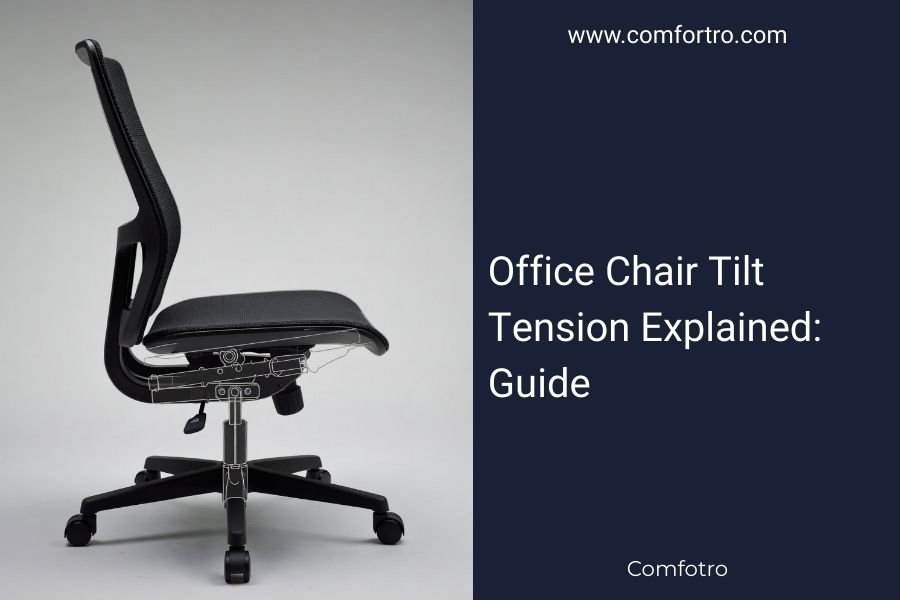
Office chair tilt tension controls how easily your chair leans back when you recline, making your sitting experience more comfortable and supportive.
The tilt tension knob typically sits under your seat and adjusts the resistance level from loose to firm based on your body weight and preference.
What Is Office Chair Tilt Tension
Tilt tension is the spring-loaded mechanism that controls backrest resistance. Think of it like a car’s shock absorber for your chair.
When you lean back, this system determines how much force you need to recline. Too loose, and you’ll tip backward unexpectedly. Too tight, and you’ll feel like you’re pushing against a brick wall.
How the Mechanism Works
The system uses a spring or pneumatic cylinder under your seat. When you turn the tension knob clockwise, it increases resistance. Counterclockwise reduces it.
Most chairs have a range that accommodates people weighing 100 to 300 pounds. The sweet spot allows gentle reclining without sudden movements.
Finding Your Perfect Tilt Tension Setting
Your ideal setting depends on your weight, sitting style, and personal comfort. Start with the middle position and adjust from there.
Step-by-Step Adjustment Process
First, sit normally in your chair with feet flat on the floor. Locate the tension knob under your seat – it’s usually on the right side.
Turn the knob to the middle position. Lean back gently to test the resistance. The chair should support you without feeling stiff or bouncy.
Testing Your Settings
Try leaning back at different angles. Your chair should return to upright position smoothly when you release pressure.
If you bounce back too quickly, increase tension. If you can’t recline easily, decrease it.
Weight-Based Guidelines
Research from ergonomics experts suggests these starting points:
- Under 150 pounds: Start with lower tension settings
- 150-200 pounds: Begin with medium tension
- Over 200 pounds: Start with higher tension settings
Common Tilt Tension Problems
Many people struggle with chairs that feel too bouncy or too rigid. These issues usually have simple fixes.
Chair Tips Back Too Easily
This happens when tension is set too low for your weight. Turn the knob clockwise in small increments until you feel proper resistance.
Don’t overtighten – you should still be able to recline with normal pressure.
Can’t Lean Back at All
Maximum tension settings can make reclining nearly impossible. Turn the knob counterclockwise to reduce resistance.
Some people prefer firm support, but complete rigidity defeats the purpose of tilt function.
Mechanism Feels Stuck
If the adjustment knob won’t turn, don’t force it. Check for debris or damage around the mechanism.
Sometimes chairs need professional service when internal components wear out.
Different Types of Tilt Systems
Not all office chairs use the same tilt technology. Understanding your chair type helps with proper adjustment.
Standard Tilt Mechanism
Basic tilt systems pivot from a single point under the seat. The entire chair tilts backward together.
These are common in budget chairs and offer simple tension adjustment with one knob.
Synchro-Tilt Systems
Advanced chairs use synchro-tilt, where the backrest reclines more than the seat. This maintains better leg support.
The tension knob works the same way, but the reclining motion feels more natural.
Multi-Position Tilt Locks
Some chairs let you lock the tilt at different angles. You can set your preferred recline position and lock it there.
Adjust tension first, find your ideal angle, then engage the lock mechanism.
Maintaining Your Tilt Tension System
Proper maintenance keeps your chair working smoothly for years. Simple care prevents expensive repairs.
Regular Cleaning and Lubrication
Dust and debris can interfere with smooth operation. Wipe down the mechanism monthly with a damp cloth.
Some chairs benefit from occasional lubrication, but check your manual first. Wrong lubricants can damage seals.
Signs of Wear
Watch for these warning signs that indicate maintenance needs:
- Grinding or clicking sounds during adjustment
- Tension knob becoming harder to turn
- Inconsistent resistance when reclining
- Chair tilting unevenly to one side
When to Replace Components
Quality chairs often have replaceable tilt mechanisms. If adjustment no longer works properly, replacement might be cheaper than a new chair.
Ergonomic Benefits of Proper Tilt Tension
Correct tension settings support good posture and reduce fatigue during long work sessions.
Spine Support and Alignment
Proper tilt tension lets you change positions naturally throughout the day. This movement reduces pressure on your spine.
Research from occupational health experts shows that dynamic sitting reduces back pain compared to static positions (NIH).
Circulation and Comfort
Gentle reclining improves blood flow and reduces leg pressure. The key is smooth, controlled movement.
Your chair should feel like a natural extension of your body, not a piece of exercise equipment.
Productivity Benefits
Comfortable seating helps you focus on work instead of adjusting your position constantly.
When tilt tension matches your needs, you’ll notice less fidgeting and better concentration.
Conclusion
Office chair tilt tension is your gateway to comfortable, supportive seating that adapts to your body and work style. The right setting transforms an ordinary chair into a personalized comfort zone that supports you through long work days.
Remember that perfect tension feels natural – not too bouncy, not too rigid. Take time to experiment with small adjustments until your chair responds exactly how you want it to. Your back will thank you for the effort.
How often should I adjust my chair’s tilt tension?
Most people find their ideal setting and rarely need changes. You might readjust if your weight changes significantly or if you notice discomfort after extended use.
Can tilt tension settings damage my chair over time?
Normal adjustments won’t harm your chair. Avoid forcing the knob beyond its natural range, and don’t overtighten the mechanism unnecessarily.
Why does my chair feel different at various times of day?
Your energy levels and muscle tension change throughout the day. What feels comfortable in the morning might need slight adjustment by afternoon.
Should heavier people always use maximum tension settings?
Not necessarily. Start with higher tension but adjust based on comfort. Some larger people prefer moderate settings that still allow easy reclining.
What if my chair has no visible tension adjustment knob?
Check under the seat thoroughly – some knobs are small or positioned differently. Budget chairs sometimes lack this feature entirely, while some premium chairs have electronic controls.