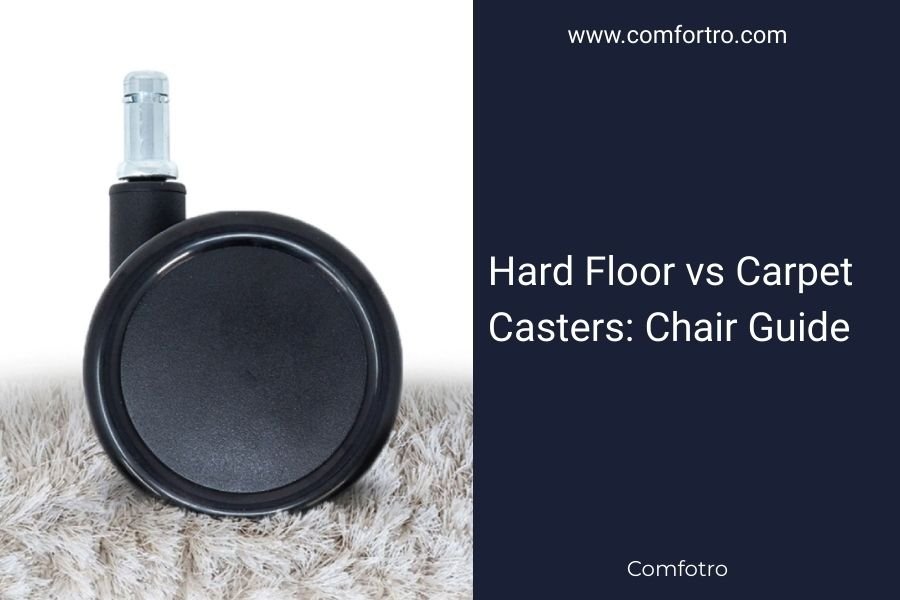
Hard floor casters work best on hardwood, tile, and laminate surfaces, while carpet casters are designed specifically for carpeted floors and rugs.
The main difference between hard floor vs carpet casters is the wheel material and design – soft wheels for hard floors prevent scratching, while hard wheels for carpet provide easier rolling through thick fibers.
Quick Answer: Which Chair Casters Do You Need?
You’re probably wondering which casters to choose right now. Here’s the simple breakdown:
- Got hardwood, tile, or laminate? Pick soft polyurethane or rubber wheels
- Working on carpet or rugs? Choose hard plastic or nylon wheels
- Mixed surfaces? Consider dual-wheel designs or rollerblade-style casters
This might seem backwards at first. Why use soft wheels on hard floors? Think of it like this – you wouldn’t wear metal cleats on your grandmother’s hardwood floors, right?
Understanding Hard Floor Casters
Hard floor casters use softer materials like polyurethane, rubber, or thermoplastic. These materials grip better and protect your expensive flooring.
Best Materials for Hard Floors
I found that polyurethane wheels top most expert lists. They roll smoothly without marking up your floors.
- Polyurethane: Quiet, smooth rolling, no floor damage
- Rubber: Great grip, very quiet, can leave marks on light floors
- Soft plastic: Budget-friendly, decent protection
Why Soft Wheels Work Better
Soft wheels distribute your chair’s weight more evenly. They absorb small bumps and debris instead of grinding them into your floor.
Hard wheels act like tiny bulldozers. They push dirt around and can scratch even the toughest hardwood finish.
Signs You Need Hard Floor Casters
Check your current wheels. Do you see:
- Scratches or scuff marks behind your chair?
- Small debris getting stuck in wheel grooves?
- Loud rolling sounds when you move?
These are clear signals that your current casters aren’t floor-friendly.
Understanding Carpet Casters
Carpet casters need to be tough. They use hard materials like nylon, hard plastic, or metal to push through carpet fibers.
Why Hard Wheels Work on Carpet
Think about pushing a shopping cart through sand versus concrete. Carpet fibers create resistance just like sand does.
Hard wheels cut through this resistance. They don’t get bogged down in thick pile or catch on carpet edges.
Best Carpet Caster Options
Research shows that wheel design matters as much as material on carpet.
Standard Hard Plastic
Most office chairs come with these. They work fine on low-pile carpet but struggle with thick rugs.
Large Diameter Wheels
Bigger wheels roll easier over carpet. I found that 3-inch wheels outperform 2-inch wheels on most carpets.
Rollerblade-Style Casters
These use multiple small wheels instead of one large wheel. They distribute weight better and roll smoother.
Common Problems and Solutions
Your Chair Won’t Roll Smoothly
This usually means mismatched casters. Soft wheels on thick carpet feel like you’re stuck in mud.
Hard wheels on smooth floors often skip and slide instead of rolling steadily.
Floor Damage From Wrong Casters
I’ve seen expensive hardwood floors ruined by the wrong wheels. The fix costs way more than buying proper casters upfront.
Hair and debris wrapped around wheels also causes damage. Clean your casters monthly to prevent this.
Noise Issues
Hard wheels on hard floors sound like a freight train. Your coworkers and family will thank you for switching to quieter options.
How to Choose the Right Size
Measuring Your Current Casters
Most office chairs use standard 7/16-inch or 3/8-inch stems. Measure the stem diameter and length before ordering.
Wheel diameter ranges from 2 to 4 inches. Larger wheels roll easier but might not fit under your desk.
Weight Capacity Matters
Check the weight rating. Cheap casters fail quickly under heavy use. Quality casters handle 250+ pounds easily.
Installation Tips
Removing Old Casters
Most casters pull straight out. Grip the wheel and pull firmly. Some might need gentle twisting.
Stubborn casters? Try this: sit in the chair and lift one wheel at a time while pulling.
Installing New Casters
Push new casters firmly into the socket until you hear a click. They should feel secure when you test them.
| Floor Type | Best Caster Material | Wheel Hardness |
|---|---|---|
| Hardwood | Polyurethane | Soft |
| Tile | Rubber/Polyurethane | Soft |
| Low-pile carpet | Hard plastic | Hard |
| Thick carpet | Nylon/Large wheels | Hard |
Special Situations
Mixed Flooring in Your Space
Many home offices have area rugs over hardwood. This creates a challenge for caster selection.
Rollerblade-style casters work well in mixed environments. They’re gentle enough for hard floors but effective on carpet too.
Heavy-Duty Office Chairs
Executive chairs and gaming chairs need stronger casters. Look for metal stems and reinforced wheel connections.
Ball Casters vs Wheel Casters
Ball casters move in all directions but offer less floor protection. Stick with wheels for most situations.
Maintenance and Care
Monthly Cleaning Routine
Hair, string, and debris wrap around caster wheels. Remove this buildup monthly to keep them rolling smoothly.
Use scissors to cut away wrapped material. Wipe wheels with a damp cloth afterward.
When to Replace Casters
Replace casters when you notice:
- Flat spots on wheels
- Cracks in the wheel material
- Loose or wobbly wheel connections
- Persistent noise even after cleaning
Cost Considerations
Budget vs Premium Options
Basic replacement casters cost $20-40 per set. Premium options run $50-100 but last much longer.
I found that spending more upfront saves money long-term. Cheap casters break quickly and can damage floors.
Conclusion
Choosing between hard floor vs carpet casters comes down to matching the wheel material to your floor type. Soft wheels protect hard floors while hard wheels cut through carpet resistance.
Take five minutes to check your current setup. Are you using the right casters? Your floors, your chair, and your daily comfort all depend on this simple but important choice.
Remember: soft wheels for hard floors, hard wheels for carpet. When in doubt, measure your current casters and upgrade to quality replacements designed for your specific flooring.
Can I use carpet casters on hardwood floors temporarily?
You can, but avoid this if possible. Hard carpet casters will scratch and scuff hardwood floors within days of regular use. The damage costs far more than buying proper casters.
How often should I replace office chair casters?
Quality casters last 3-5 years with regular office use. Replace them sooner if you notice flat spots, cracks, persistent noise, or difficulty rolling smoothly across your floors.
Do rollerblade casters work better than traditional wheels?
Rollerblade casters distribute weight more evenly and often roll smoother on both carpet and hard floors. They cost more but work well in mixed-flooring environments and last longer than standard wheels.
What’s the difference between stem and plate mount casters?
Stem casters push into a socket in your chair base – most common for office chairs. Plate casters bolt to a flat surface. Measure your chair’s mounting system before ordering replacements.
Can heavy people use standard office chair casters?
Standard casters typically handle up to 250 pounds total chair weight. Heavier users should choose heavy-duty casters with metal stems and reinforced wheel connections to prevent breaking and ensure smooth rolling.