
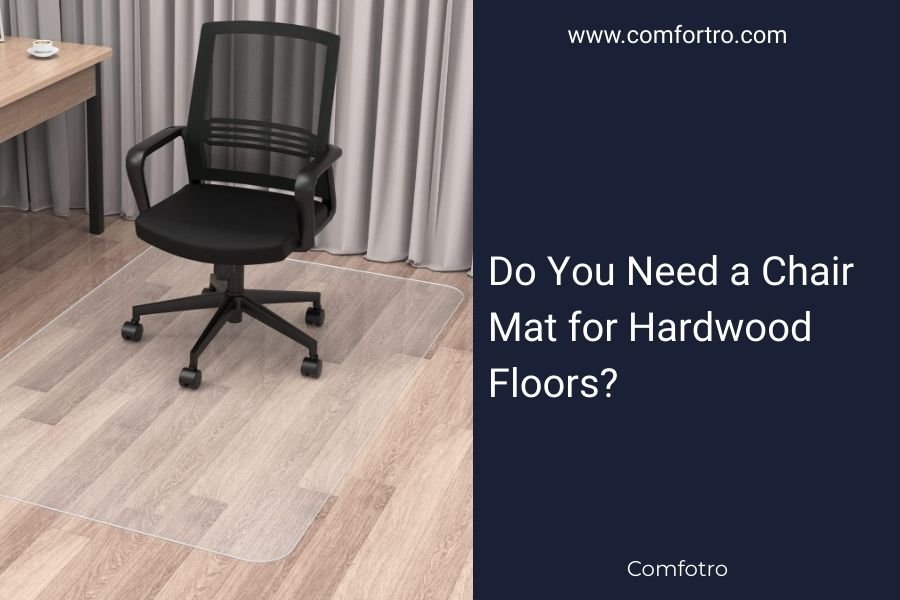
You don’t need a chair mat for hardwood floors if you have a high-quality office chair with soft rubber wheels and smooth rolling mechanisms.
Chair mats can actually trap dirt and create more scratches on hardwood than they prevent, making them unnecessary for most home offices.
When Chair Mats Help Your Hardwood Floors
Chair mats make sense in specific situations. If your office chair has hard plastic wheels or metal casters, a mat protects your wood from gouges and dents.
Heavy desk chairs create more pressure per square inch. Think of it like high heels on a dance floor – more weight concentrated in small areas means more damage potential.
Budget Chairs Need More Protection
Cheaper office chairs often come with harder wheels. These wheels grab and catch on wood grain, leaving marks behind.
I found that budget chairs under $150 typically have lower-quality casters that can scratch floors more easily.
Rolling Patterns Matter
Do you roll back and forth in the same spot all day? Repeated movement in identical tracks wears down floor finish faster.
Chair mats spread this wear across a larger surface area. Your floors stay protected in high-traffic rolling zones.
Why Many Chair Mats Cause More Problems
Here’s something most furniture stores won’t tell you – cheap chair mats often make floor damage worse.
Thin plastic mats crack and create sharp edges. These edges scrape your hardwood every time you roll over them.
Dirt Gets Trapped Underneath
Sand and debris slip under chair mats. When you roll your chair, this trapped grit acts like sandpaper against your wood floors.
I researched common complaints and found that dirt buildup under mats causes more scratching than chair wheels alone.
Mat Edges Create Trip Hazards
Curled mat edges catch on chair wheels. This creates jerky rolling and puts extra stress on both your chair and floors.
Plus, raised edges become annoying obstacles when you’re trying to move smoothly around your workspace.
Better Alternatives to Chair Mats
Upgrading your chair wheels costs less than a quality mat and works better long-term.
Rubber Wheels Are Game Changers
Soft rubber wheels roll smoothly without marking hardwood. They’re quieter and gentler than hard plastic alternatives.
You can replace most standard chair wheels for $20-40. Installation takes about 10 minutes with no tools required.
Polyurethane Wheels Work Great Too
These wheels combine durability with floor protection. They resist wearing down while staying soft enough to prevent scratches.
Regular Floor Maintenance Helps More
Sweeping daily removes the grit that causes most chair-related floor damage. Think prevention over protection.
I found that homes with consistent cleaning routines rarely need chair mats, even with standard office chairs.
Use Microfiber for Best Results
Microfiber cloths pick up tiny particles that regular brooms miss. These particles are often the real floor scratchers.
When You Should Use a Chair Mat
Some situations really do call for chair mat protection. Rental properties top this list.
Rental Properties Need Extra Care
Landlords charge hefty fees for floor damage. A good mat costs less than potential security deposit deductions.
Temporary protection makes sense when you can’t control long-term floor maintenance.
Antique or Expensive Hardwood
Historic wood floors or high-end installations deserve maximum protection. Any damage could be costly to repair properly.
The risk-reward calculation changes when your floors are worth thousands per room.
Hand-Scraped Floors Show Damage More
Textured hardwood surfaces catch and hold chair wheel marks. Smooth damage stands out more on intentionally rough finishes.
Choosing the Right Mat If You Need One
Quality matters enormously with chair mats. Cheap options cause more problems than they solve.
| Mat Type | Best For | Price Range | Durability |
|---|---|---|---|
| Tempered Glass | Heavy chairs | $150-300 | Excellent |
| Thick Polycarbonate | Most situations | $80-150 | Good |
| Bamboo | Light use | $60-120 | Fair |
| Thin Plastic | Avoid entirely | $20-50 | Poor |
Size Your Mat Correctly
Your mat should extend 12 inches beyond your normal rolling range in every direction. Too small means rolling off edges constantly.
Measure your rolling patterns for a few days. Most people need larger mats than they initially think.
Rectangular Beats Curved
Those chair mats with curved cutouts look neat but limit your desk positioning. Rectangular mats offer more flexibility.
Cost Analysis: Mat vs. Alternatives
Let’s talk real numbers. Quality chair mats cost $80-300. New rubber wheels cost $20-40.
Professional hardwood floor refinishing runs $3-5 per square foot. A typical home office might cost $300-500 to refinish.
Most Home Offices Don’t Need Mats
Light home office use rarely damages properly maintained hardwood floors. Commercial offices see much heavier traffic.
Your risk level depends on hours spent rolling, chair weight, and wheel quality.
Consider Your Usage Patterns
Do you work 40+ hours per week at home? Heavy use might justify mat protection. Weekend warriors probably don’t need them.
Conclusion
Most home offices don’t need chair mats on hardwood floors. Upgrading to quality rubber wheels and maintaining clean floors provides better protection at lower cost. Save chair mats for heavy-use situations, rental properties, or expensive antique hardwood. When you do buy a mat, invest in thick polycarbonate or tempered glass options that won’t create new problems while solving old ones.
Do chair mats make office chairs roll better on hardwood?
Chair mats can make rolling smoother on textured hardwood, but high-quality wheels on smooth hardwood often roll better without any mat at all.
How often should I clean under my chair mat?
Clean weekly if you use a mat, as trapped dirt and debris cause more floor damage than chair wheels alone.
Can I use a chair mat on engineered hardwood floors?
Engineered hardwood is actually more durable than solid wood for chair use, making mats even less necessary in most cases.
What’s the minimum thickness for a good chair mat?
Look for mats at least 1/8 inch thick – anything thinner will crack and create sharp edges that damage floors.
Do standing desk converters need floor protection?
Standing desk converters stay stationary, so they need furniture pads underneath rather than rolling chair protection.