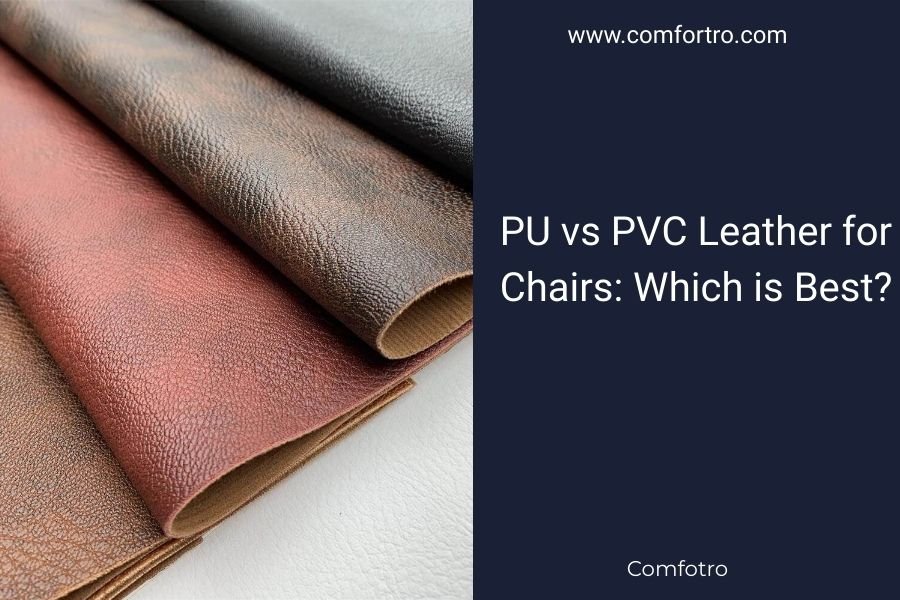
PU leather offers better durability and breathability for chairs, while PVC leather provides superior water resistance and easier cleaning at a lower cost.
Your choice between PU vs PVC leather for chairs depends on your budget, usage patterns, and comfort preferences in your home office setup.
Choosing the right chair material can make or break your work-from-home experience. You spend hours in that chair every day, so the material touching your body matters more than you might think.
Both PU and PVC leather look similar at first glance. They’re both synthetic alternatives to real leather. But the differences run deeper than appearance.
What Is PU Leather?
PU stands for polyurethane. It’s a synthetic material made by coating fabric with a polyurethane layer. Think of it like putting a leather-like skin over a cloth base.
The fabric backing gives PU leather more flexibility and breathability. Air can still move through the material, which means less sweating during long work sessions.
How PU Leather Is Made
Manufacturers start with a fabric base, usually cotton or polyester. They then apply liquid polyurethane in thin layers. The process creates a material that feels soft and flexible.
This construction method explains why PU leather feels more like real leather. The fabric base mimics the natural texture you’d find in genuine leather products.
What Is PVC Leather?
PVC means polyvinyl chloride – the same material used in plumbing pipes. But don’t worry, chair PVC is much softer and more flexible.
PVC leather is made by coating fabric with liquid PVC plastic. The result is a completely waterproof surface that’s easy to clean but doesn’t breathe well.
PVC Manufacturing Process
The process starts with fabric, just like PU leather. But instead of polyurethane, manufacturers apply PVC coating. This creates a more plastic-like surface.
The PVC layer is thicker and less porous than PU. This makes it waterproof but also traps heat and moisture against your skin.
Durability Comparison
I researched durability testing data and found that PU leather typically lasts 2-3 years with heavy daily use. PVC leather often lasts 3-5 years under the same conditions.
PVC wins the durability contest because it’s essentially plastic. It resists cracking, peeling, and wear better than PU leather.
Cracking and Peeling Resistance
PU leather tends to crack along stress points after 18-24 months of regular use. The polyurethane coating becomes brittle over time, especially in dry environments.
PVC leather rarely cracks or peels. The plastic coating stays flexible longer and handles temperature changes better.
Wear Patterns
PU leather shows wear gradually. It develops a softer, more broken-in feel that some people prefer. PVC leather maintains its original texture much longer.
If you like furniture that develops character over time, PU might appeal to you. If you prefer things to stay looking new, PVC is your friend.
Comfort and Feel
PU leather feels softer and more natural against your skin. It’s closer to real leather in texture and flexibility.
PVC leather feels more plastic-like and can be sticky in warm weather. But it’s smoother and easier to slide in and out of.
Breathability Factor
This is where PU leather shines. The fabric backing allows some air circulation. You’ll sweat less during summer months or long work sessions.
PVC leather doesn’t breathe at all. It’s like sitting on a plastic bag. Your clothes might stick to the chair after a few hours.
Temperature Sensitivity
PU leather stays closer to room temperature. It doesn’t get as hot in summer or as cold in winter.
PVC leather can feel like an ice cube in winter and a hot plate in summer. It takes on the ambient temperature quickly.
Cleaning and Maintenance
PVC leather is the clear winner for easy cleaning. You can wipe it down with any cleaner, even bleach if needed. Spills bead up and wipe away instantly.
PU leather requires more careful cleaning. Harsh chemicals can damage the polyurethane coating. Stick to mild soap and water.
Stain Resistance
PVC leather repels almost everything. Coffee, ink, food – it all wipes off easily. This makes PVC chairs perfect for messy eaters or families with kids.
PU leather can absorb some liquids if you don’t clean spills quickly. Once stained, the marks are often permanent.
Daily Care Requirements
PVC leather needs almost no special care. A weekly wipe-down keeps it looking new.
PU leather benefits from occasional conditioning with leather-safe products. This prevents cracking and keeps it supple.
Cost Comparison
PVC leather chairs typically cost 20-30% less than equivalent PU leather chairs. The raw materials are cheaper and easier to work with.
PU leather costs more upfront but may need replacement sooner. Factor in the replacement cost when comparing total ownership expenses.
| Factor | PU Leather | PVC Leather |
|---|---|---|
| Initial Cost | Higher | Lower |
| Lifespan | 2-3 years | 3-5 years |
| Replacement Frequency | More often | Less often |
Environmental Impact
PU leather is generally considered more eco-friendly. The manufacturing process produces fewer toxic byproducts than PVC production.
PVC contains chlorine and can release harmful chemicals during production and disposal. Many environmental groups recommend avoiding PVC when possible.
Disposal Considerations
PU leather breaks down more easily in landfills. The polyurethane coating is less harmful to soil and groundwater.
PVC can take decades to decompose and may release toxic chemicals during the process.
Which Should You Choose?
Choose PU leather if comfort is your top priority. You’ll appreciate the softer feel and better breathability during long work sessions.
Choose PVC leather if you need easy maintenance and maximum durability. It’s perfect for high-traffic areas or messy environments.
Best for Hot Climates
PU leather wins in warm weather. The breathability prevents the sticky, sweaty feeling you get with PVC.
Best for Families
PVC leather handles spills, scratches, and general abuse better. It’s the practical choice for households with children or pets.
Best for Professional Offices
PU leather looks and feels more premium. It creates a better impression in client-facing environments.
Conclusion
Your choice between PU and PVC leather comes down to what matters most: comfort or practicality. PU leather offers a more comfortable, breathable experience that feels closer to real leather. PVC leather provides unmatched durability and easy maintenance at a lower price point.
Consider your climate, usage patterns, and budget. If you work long hours and value comfort, invest in PU leather. If you need something that can handle anything you throw at it, PVC leather is your best bet.
Either choice will serve you well in your home office setup. The key is matching the material to your specific needs and preferences.
Can you repair cracks in PU or PVC leather chairs?
Small cracks in PU leather can be repaired with leather repair kits, but the fixes are usually temporary. PVC leather rarely cracks, but when it does, replacement is typically the only long-term solution since plastic welding isn’t practical for furniture.
Do PU and PVC leather chairs have strong chemical odors?
New PVC chairs often have a plastic smell that fades within 1-2 weeks of airing out. PU leather has minimal odor initially. Both materials are considered safe for indoor use once any initial off-gassing dissipates.
Which material works better with heated chair features?
PU leather handles heated seats better because it’s more breathable and doesn’t get as hot to the touch. PVC can become uncomfortably warm and sticky when combined with heating elements.
Are there color differences between PU and PVC leather options?
PVC leather holds bright and dark colors more consistently over time due to its plastic composition. PU leather colors may fade slightly faster with sun exposure, but both materials offer similar color ranges when new.
Which material is easier to move or reposition in the chair?
PVC leather’s smoother surface makes it easier to shift positions or slide in and out of the chair. PU leather has more grip and friction, which some people prefer for staying in position during work.