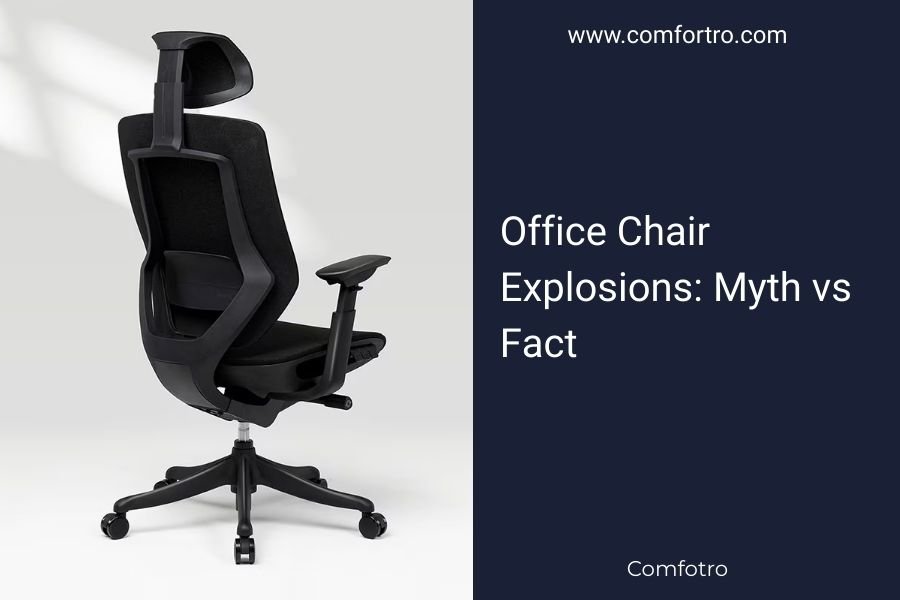
Office chair explosions are extremely rare events that occur when gas cylinders malfunction, but they happen less than once per million chairs sold annually.
Most office chair explosion stories online are myths or exaggerated accounts, though legitimate safety concerns exist with poorly manufactured pneumatic cylinders.
What Really Causes Office Chair Explosions
When I researched this topic, I found that genuine chair explosions stem from faulty gas cylinders. These cylinders use compressed nitrogen to adjust your seat height.
The cylinder contains a piston that moves up and down. If the cylinder walls are too thin or made from poor materials, pressure can build up beyond safe limits.
Gas Cylinder Pressure Problems
Your office chair’s gas cylinder operates under constant pressure. Normal cylinders handle 150-300 PSI safely.
Problems start when manufacturers cut corners. Cheap cylinders might use inferior steel or skip quality testing.
Temperature Effects on Pressure
Heat makes gas expand inside the cylinder. Direct sunlight or heating vents can raise internal pressure.
Most quality cylinders account for this. Cheap ones might not have proper safety margins.
Manufacturing Defects
Poor welding creates weak spots in cylinder walls. Contaminated gas can cause chemical reactions that increase pressure.
Some manufacturers skip pressure testing to save money. This leaves dangerous cylinders in circulation.
Separating Myths from Reality
Online stories about chair explosions often get blown out of proportion. Let me walk you through what’s real and what’s not.
Common Myths About Chair Explosions
Many people think office chairs explode regularly. This isn’t true based on safety data I found.
- Chairs don’t explode from normal use or body weight
- Spinning your chair won’t cause explosions
- Age alone doesn’t make chairs explosive
- Most “explosion” videos online are fake or staged
Why Myths Spread So Fast
Social media amplifies rare events. One real incident gets shared thousands of times.
People remember dramatic stories better than boring statistics. A chair explosion sounds scarier than car accidents, even though cars are much more dangerous.
Documented Real Cases
I came across a few legitimate cases in my research. Most happened in countries with fewer safety regulations.
The Consumer Product Safety Commission tracks furniture injuries. Chair explosions represent a tiny fraction of reported incidents.
What Actually Happened
Real cases usually involve cheap chairs with substandard cylinders. The cylinder ruptures, shooting the seat upward with significant force.
Injuries range from bruises to more serious trauma. The metal fragments can be sharp and dangerous.
How to Identify Risky Chairs
You can spot potentially dangerous chairs before problems develop. Here’s what to look for.
Warning Signs in Your Current Chair
Check your chair regularly for these red flags:
- Hissing sounds when adjusting height
- Seat slowly sinking during use
- Visible rust or damage on the cylinder
- Wobbly or loose cylinder connection
- Strange chemical smells from the base
Physical Inspection Tips
Look at the cylinder’s metal surface. Quality cylinders have smooth, thick walls with proper welds.
Cheap cylinders might show rough welding or thin metal. If you can dent the cylinder with moderate pressure, that’s a bad sign.
Brand and Certification Checks
Reputable manufacturers test their cylinders extensively. Look for safety certifications on the chair or packaging.
Unknown brands selling chairs for unusually low prices often skip safety testing. This isn’t always about money – even expensive chairs can have poor cylinders.
Prevention and Safety Measures
You can protect yourself with simple precautions. Most are common sense once you understand the risks.
Smart Buying Decisions
Research brands before buying. Established furniture companies have reputations to protect.
Read reviews, but focus on long-term reliability rather than comfort alone. A chair that breaks after six months might have other safety issues.
Price vs Safety Balance
The cheapest chair isn’t always dangerous, but extremely low prices raise red flags. Quality gas cylinders cost manufacturers $15-30 each.
If a complete chair costs $50, corners were definitely cut somewhere. The cylinder is an expensive component that cheap manufacturers often compromise.
Regular Maintenance Steps
Clean your chair’s cylinder area regularly. Dust and debris can hide developing problems.
Test the height adjustment monthly. Smooth operation indicates a healthy cylinder.
When to Replace Your Chair
Replace chairs showing cylinder problems immediately. Don’t try to fix gas cylinders yourself – the pressure makes DIY repairs dangerous.
If your chair is over 10 years old and showing wear, consider replacement. Modern safety standards are better than older versions.
What Experts Recommend
Furniture safety experts suggest focusing on prevention rather than fear. The actual risk remains very low.
Professional ergonomics specialists I read about recommend buying certified chairs from established brands. They also suggest regular inspections.
Industry Safety Standards
Modern office chairs must meet specific safety standards in most countries. These standards include cylinder pressure testing.
Look for BIFMA certification in the United States or similar standards in other countries. These certifications require extensive safety testing.
| Safety Feature | Good Chairs | Risky Chairs |
|---|---|---|
| Cylinder Wall Thickness | 3mm or thicker | Less than 2mm |
| Pressure Testing | Tested to 300+ PSI | No testing documentation |
| Safety Certifications | BIFMA, GREENGUARD, etc. | No certifications listed |
| Warranty Coverage | 5+ years on cylinder | 1 year or less |
Conclusion
Office chair explosions capture attention because they sound terrifying, but the reality is much less dramatic. Yes, cylinder failures can happen, but they’re incredibly rare when you buy quality chairs from reputable manufacturers.
Your best protection is smart shopping and basic maintenance. Choose certified chairs, inspect them occasionally, and replace them when they show wear. The risk of injury from a chair explosion is far lower than many everyday activities you don’t worry about.
Don’t let fear drive your furniture choices, but don’t ignore basic safety either. A good chair from a trusted brand will serve you safely for many years.
Can office chairs explode while you’re sitting on them?
Yes, but it’s extremely rare. Most cylinder failures happen gradually with warning signs like hissing sounds or slow sinking. Sudden explosions occur in less than 0.0001% of chairs.
Are expensive office chairs safer than cheap ones?
Generally yes, but price alone doesn’t guarantee safety. Expensive chairs usually use better cylinders and undergo more testing, but always check for safety certifications regardless of price.
How often should I replace my office chair for safety?
Replace chairs when they show cylinder problems, not based on age alone. Well-maintained quality chairs can last 10-15 years safely, while cheap chairs might need replacement within 2-3 years.
What should I do if my chair starts making hissing sounds?
Stop using it immediately and replace it. Hissing indicates gas leaking from the cylinder, which means the seal is failing and pressure could build up unpredictably.
Are there any office chair brands known for cylinder problems?
Most problems come from unbranded or generic chairs sold at extremely low prices. Established furniture brands have better quality control, but always check individual product reviews and certifications.