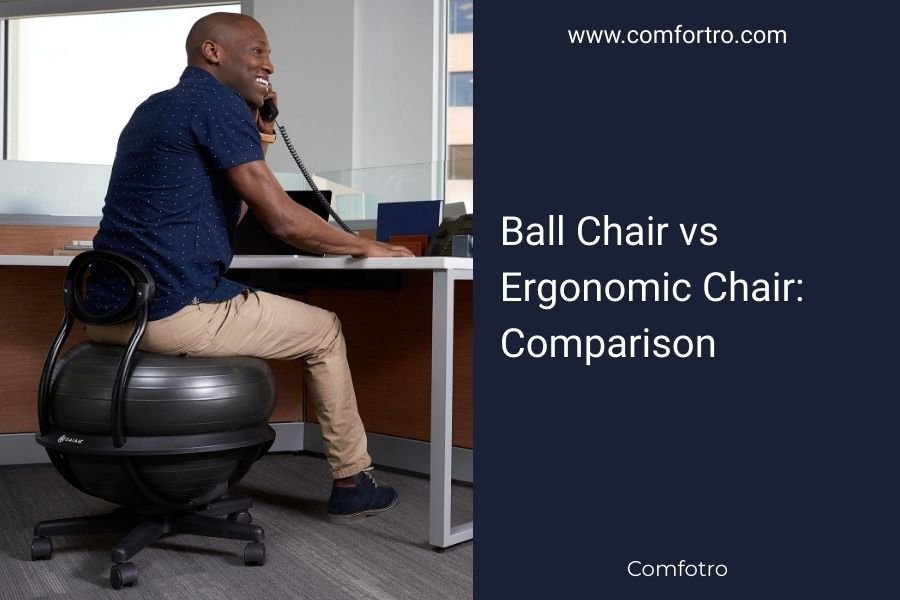
Ball chairs offer core strengthening and active sitting but lack back support, while ergonomic chairs provide better spinal alignment and comfort for long work sessions.
Ergonomic chairs typically win for office work due to adjustable support features, though ball chairs can benefit posture when used occasionally.
What Makes These Chairs So Different?
You’re probably wondering which chair will actually help your back pain and productivity. I found that these two options work in completely opposite ways.
Ball chairs force your body to stay active. You can’t slouge because there’s no backrest. Your core muscles work constantly to keep you upright.
Ergonomic chairs do the opposite. They support your body so you can focus on work instead of balance. Think of them as your body’s personal assistant.
Ball Chair Benefits You Should Know
Core Strength Development
Research from the National Institute of Health shows that unstable seating can activate deep core muscles. Your abs and back muscles stay engaged throughout the day.
You’ll feel this after just one hour. It’s like doing a gentle workout while answering emails.
Improved Balance and Coordination
Ball chairs challenge your balance system. Over time, this can improve your overall stability and body awareness.
Many physical therapists recommend balance training for office workers who sit all day.
Active Movement Throughout the Day
You can bounce gently, rock side to side, or do mini stretches. This movement helps blood flow and reduces stiffness.
Traditional office chairs keep you locked in one position for hours.
Ball Chair Drawbacks That Matter
No Back Support
This is the biggest problem. Your spine needs support during long work sessions. Without it, you might develop new pain issues.
I found that most ergonomic experts recommend back support for desk work lasting more than 30 minutes.
Fatigue Sets In Fast
Balancing all day is exhausting. Your core muscles will tire out, leading to poor posture later in the day.
Think of it like standing on one foot. You can do it for a while, but not for eight hours.
Not Suitable for All Body Types
People with back injuries, hip problems, or balance issues should avoid ball chairs. They can make existing problems worse.
Ergonomic Chair Advantages
Proper Spinal Alignment
Good ergonomic chairs support your spine’s natural curves. The lumbar support keeps your lower back in the right position.
Mayo Clinic guidelines emphasize that proper back support reduces disc pressure and muscle strain.
Adjustable Features for Custom Fit
You can adjust height, armrests, backrest angle, and seat depth. This customization helps chairs fit different body types.
It’s like having a chair tailored specifically for your body measurements.
Reduced Pressure Points
Quality ergonomic chairs distribute your weight evenly. This prevents pressure buildup in your hips, thighs, and tailbone.
Pressure point reduction helps prevent numbness and circulation problems.
Better Long-Term Comfort
You can sit comfortably for hours without fatigue. This makes ergonomic chairs better for productivity and focus.
Ergonomic Chair Disadvantages
Encourages Passive Sitting
Comfortable chairs can make you too sedentary. You might forget to move and stretch regularly.
This can lead to muscle weakness and stiffness over time.
Higher Cost
Quality ergonomic chairs cost significantly more than ball chairs. Good ones range from $200 to $1000 or more.
Learning Curve for Adjustments
Many people never properly adjust their ergonomic chairs. Without correct setup, you won’t get the full benefits.
Health Impact Comparison
| Health Factor | Ball Chair | Ergonomic Chair |
|---|---|---|
| Back Support | None | Excellent |
| Core Strengthening | High | Low |
| Long-term Comfort | Poor | Excellent |
| Movement Encouragement | High | Low |
| Posture Support | Variable | Excellent |
Who Should Choose a Ball Chair?
Young, Healthy Individuals
If you’re in good shape with no back problems, a ball chair might work for short periods. Use it for 30-60 minutes at a time.
People Seeking Core Strengthening
Ball chairs can help rebuild core strength if you’ve been sedentary. Start slowly and build up tolerance.
Short Work Sessions
Ball chairs work better for tasks under two hours. Use them for creative work or meetings, not all-day computer work.
Who Should Choose an Ergonomic Chair?
Full-Time Office Workers
If you sit for more than four hours daily, ergonomic chairs provide better support and comfort.
People with Back Problems
Anyone with existing spine issues needs proper support. Ergonomic chairs can help reduce pain and prevent worsening.
Productivity-Focused Workers
When comfort matters for concentration, ergonomic chairs win. You can focus on work instead of balance.
Cost Considerations
Ball Chair Pricing
Quality ball chairs cost $50-150. They’re much cheaper upfront but may need replacement more often.
Ergonomic Chair Investment
Good ergonomic chairs start around $200 and go up to $1000+. They last longer and provide better value for heavy use.
Think of it as investing in your health rather than just buying furniture.
The Hybrid Approach
Many ergonomic experts suggest using both. Spend most of your day in an ergonomic chair, then switch to a ball chair for 30-60 minutes.
This gives you the benefits of both without the drawbacks of either one alone.
You could also use a ball chair during phone calls or creative brainstorming sessions.
Making Your Decision
Ask Yourself These Questions
- How many hours do you sit daily?
- Do you have any back or hip problems?
- Is your budget limited?
- Do you want to strengthen your core?
- Is long-term comfort your priority?
Your answers will point you toward the right choice.
Conclusion
Ball chairs and ergonomic chairs serve different purposes in your workspace. Ball chairs excel at core strengthening and encouraging movement, but they lack the support needed for long work sessions. Ergonomic chairs provide better spinal support and comfort for extended use, making them ideal for full-time office workers.
For most people working desk jobs, an ergonomic chair is the better choice. You can always add a ball chair later for variety. Your back will thank you for choosing proper support over novelty. Remember, the best chair is one that fits your body, supports your posture, and lets you work comfortably all day.
Can I use a ball chair if I have lower back pain?
Ball chairs are generally not recommended for people with existing back pain. The lack of back support can worsen symptoms and strain your spine. Consult your doctor or physical therapist before switching to a ball chair if you have back issues.
How long should I sit on a ball chair each day?
Start with 15-30 minutes and gradually increase to no more than 2 hours total per day. Break this time into shorter sessions throughout the day rather than sitting continuously. Listen to your body and stop if you feel tired or uncomfortable.
Do ball chairs actually improve core strength?
Research shows ball chairs can activate core muscles, but the effect is relatively small. You’ll get better core strengthening from dedicated exercise. Ball chairs provide gentle muscle engagement rather than significant strength building.
What size ball chair do I need for my height?
Choose a ball chair that allows your thighs to be parallel to the floor when sitting. People 5’0″ to 5’5″ typically need a 55cm ball, while those 5’6″ to 6’0″ need 65cm, and people over 6’0″ should use 75cm balls.
Are expensive ergonomic chairs worth the cost?
High-quality ergonomic chairs often justify their cost through better materials, longer warranties, and superior adjustability. If you sit for more than 6 hours daily, investing in a good chair can prevent health problems that cost much more to treat later.