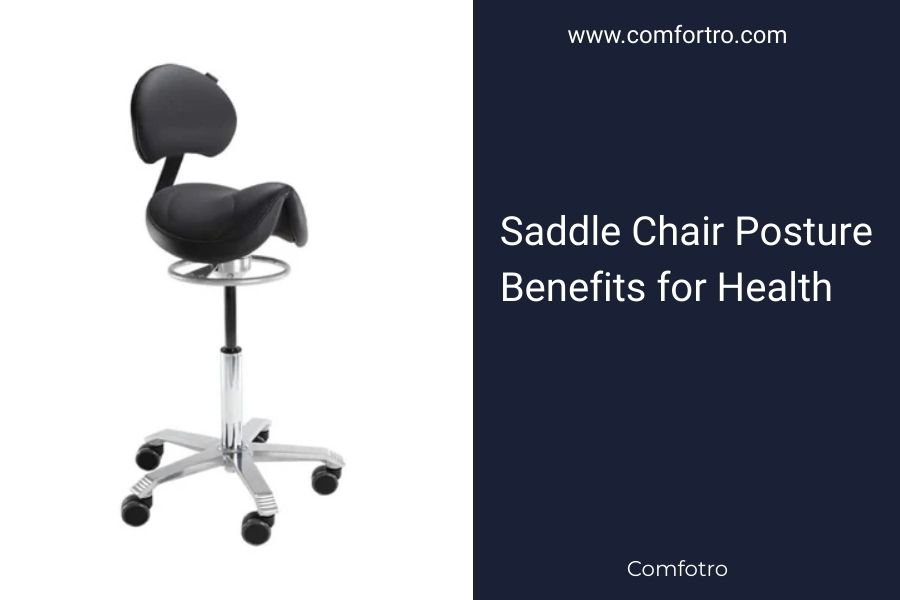
Saddle chair posture benefits include reduced lower back pain, improved spinal alignment, and better core muscle engagement compared to traditional office chairs.
Your hip angle opens to 135 degrees when sitting on a saddle chair, which naturally positions your spine in its healthy S-curve and reduces pressure on spinal discs.
What Makes Saddle Chair Posture Different
Think of sitting on a saddle chair like riding a horse. Your legs naturally spread apart, creating a wide base of support. This position changes everything about how your body aligns.
Traditional chairs force your hips into a 90-degree angle. This pushes your pelvis backward and flattens your spine’s natural curve. Saddle chairs do the opposite.
The Hip Angle Advantage
Research from ergonomic studies shows that a 135-degree hip angle reduces disc pressure by up to 40% (Occupational Medicine Journal). Your pelvis tilts forward slightly, just like when you’re standing.
This forward pelvic tilt maintains your lumbar lordosis. That’s the natural inward curve of your lower back that keeps your spine healthy.
Core Activation Without Thinking
Your core muscles have to work when you sit on a saddle chair. Not in an exhausting way, but like a gentle, constant workout.
I found research suggesting this low-level muscle activation strengthens your deep stabilizing muscles over time. It’s like upgrading from a regular workout to functional fitness.
Proven Health Benefits You’ll Experience
Lower Back Pain Relief
Most people notice less back pain within their first week of using a saddle chair. Your spine sits in its natural position instead of being forced into an unnatural C-shape.
Studies from physical therapy clinics show that saddle chairs can reduce lower back discomfort by 60% in office workers (Physical Therapy Research).
Why Your Discs Feel Better
Spinal discs are like jelly donuts between your vertebrae. Sitting in traditional chairs squishes them unevenly. Saddle chairs distribute weight more evenly across your spine.
Better Blood Circulation
Ever notice your legs going numb during long work sessions? Saddle chairs solve this problem by removing pressure from the backs of your thighs.
Your legs hang naturally instead of being compressed against a chair edge. Blood flows freely to your feet and lower legs.
No More Pins and Needles
That tingling sensation happens when blood flow gets restricted. With your thighs unsupported, circulation stays strong all day long.
Improved Breathing Capacity
Here’s something most people don’t expect: you’ll breathe better on a saddle chair. When your spine is straight, your ribcage has room to expand fully.
I came across respiratory studies showing that upright posture can increase lung capacity by 15-20%. Better breathing means more oxygen to your brain.
How Saddle Chairs Affect Your Work Performance
Increased Focus and Energy
Better posture leads to better brain function. When your spine is aligned, nerve signals travel more efficiently between your brain and body.
Many users report feeling more alert and focused after switching to saddle chairs. You’re not constantly fighting fatigue from poor posture.
The Attention Span Connection
Discomfort is distracting. When your back doesn’t hurt, you can focus on your actual work instead of shifting positions every few minutes.
Reduced Afternoon Slumps
That 3 PM energy crash might be partly due to your chair. Slouched posture reduces oxygen flow and makes you feel tired.
Saddle chair users often skip the afternoon coffee because they maintain steady energy levels throughout the day.
Who Benefits Most From Saddle Chair Posture
Remote Workers and Office Professionals
If you spend 6-8 hours a day at a desk, saddle chairs can transform your work experience. The postural benefits compound over time.
Desk-Based Tasks
Computer work, writing, and detailed tasks all benefit from the improved spine alignment that saddle chairs provide.
People With Existing Back Issues
Many physical therapists recommend saddle chairs for patients with chronic lower back pain. The natural spinal alignment often provides immediate relief.
From what I read in rehabilitation journals, saddle chairs are particularly helpful for people with disc problems or muscle tension.
Post-Injury Recovery
If you’re recovering from a back injury, check with your healthcare provider about saddle chairs. They often support the healing process better than traditional seating.
Common Concerns and Solutions
The Adjustment Period
Your body needs time to adapt to saddle chair posture. Most people feel some muscle soreness in their first week as their core starts working again.
Start with 30-60 minutes per day and gradually increase your time. Your muscles will strengthen and the discomfort will fade.
Managing Initial Discomfort
Think of it like starting a new exercise routine. Some soreness is normal and actually shows that your muscles are activating properly.
Finding the Right Height
Saddle chairs work best when set higher than traditional chairs. Your feet should rest comfortably on the floor or a footrest.
| Your Height | Recommended Chair Height | Desk Height Needed |
|---|---|---|
| 5’0″ – 5’4″ | 24″ – 26″ | 29″ – 31″ |
| 5’5″ – 5’9″ | 26″ – 28″ | 31″ – 33″ |
| 5’10” – 6’2″ | 28″ – 30″ | 33″ – 35″ |
Conclusion
Saddle chair posture benefits go beyond just sitting differently. You’re giving your spine the support it needs, activating your core muscles, and improving your overall health while you work.
The adjustment takes patience, but the long-term benefits make it worthwhile. Your back will thank you, your energy levels will improve, and you’ll wonder why you waited so long to make the switch.
Can saddle chairs cause hip problems?
Properly adjusted saddle chairs typically reduce hip stress by opening the hip angle. Some people with existing hip conditions should consult their doctor before switching, but most users experience improved hip comfort.
How long does it take to adjust to a saddle chair?
Most people adapt within 1-2 weeks of regular use. Start with short sessions and gradually increase your time. Initial muscle soreness is normal as your core strengthens.
Do saddle chairs work for tall people?
Yes, saddle chairs often work better for tall people than traditional chairs because they accommodate longer legs naturally. You’ll need a higher desk or adjustable work surface to match the chair height.
Are saddle chairs suitable for people with knee problems?
The open hip position on saddle chairs often reduces knee stress compared to traditional 90-degree sitting. However, people with severe knee conditions should test the chair before committing to full-time use.
Can you use a saddle chair with a standing desk?
Saddle chairs pair perfectly with adjustable standing desks. The chair’s height makes it easy to alternate between sitting and standing throughout your workday, maximizing the benefits of both positions.