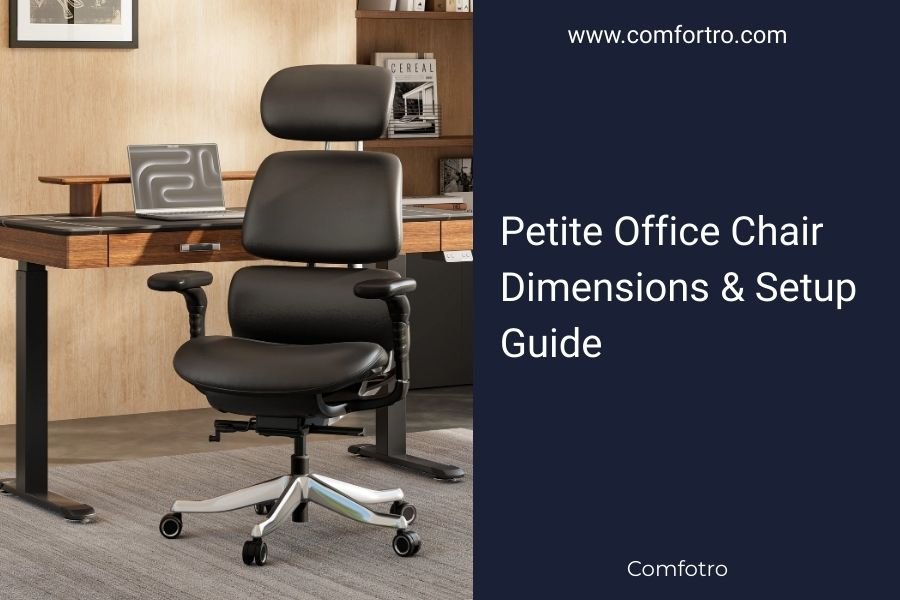
Petite office chair dimensions typically range from 15-17 inches in seat width and 14-16 inches in depth, designed specifically for smaller body frames and compact workspaces.
The ideal setup involves adjusting seat height to 16-19 inches from the floor, ensuring your feet rest flat and thighs remain parallel to the ground.
Finding the right petite office chair can feel like searching for a needle in a haystack. Most standard chairs leave smaller individuals swimming in oversized cushions or perching uncomfortably on edge.
I researched chair ergonomics and found that proper fit makes all the difference for your comfort and health. Let me walk you through everything you need to know about petite office chair dimensions and setup.
What Makes a Chair “Petite”?
Petite chairs aren’t just smaller versions of regular chairs. They’re engineered with different proportions to match shorter torsos and limbs.
Standard office chairs typically measure 18-22 inches wide. Petite chairs shrink this to 15-17 inches. The depth also reduces from 18-20 inches down to 14-16 inches.
Key Dimension Differences
Here’s how petite chairs compare to standard sizes:
| Measurement | Standard Chair | Petite Chair |
|---|---|---|
| Seat Width | 18-22 inches | 15-17 inches |
| Seat Depth | 18-20 inches | 14-16 inches |
| Seat Height Range | 16-21 inches | 14-19 inches |
| Backrest Height | 20-26 inches | 18-24 inches |
Who Needs Petite Office Chairs?
You might benefit from a petite chair if you’re under 5’4″ tall. But height isn’t the only factor.
Your hip width and leg length matter too. Some taller people with narrow builds prefer petite dimensions.
Essential Measurements to Consider
Seat Width Sweet Spot
Your hips should fit comfortably with 1-2 inches of space on each side. Too wide and you’ll lack support. Too narrow and you’ll feel squeezed.
Measure your hip width while seated. Add 2-4 inches total for the ideal seat width.
Seat Depth That Works
This measurement often gets overlooked, but it’s huge for comfort. You need 2-3 inches of space between the seat edge and your knee backs.
Sit all the way back against the chair. Your knees should bend naturally without pressure from the seat edge.
Testing Seat Depth
Try this quick test: slide your fist between your knee backs and the seat edge. If it fits easily, the depth works for you.
Height Adjustment Range
Your feet should rest flat on the floor with thighs parallel to the ground. This usually means 16-19 inches from floor to seat for most petite users.
Make sure the chair adjusts low enough for your needs. Many standard chairs bottom out too high for shorter legs.
Backrest Considerations
Lumbar Support Placement
The lumbar support should hit the natural curve in your lower back. On petite chairs, this sits about 6-9 inches above the seat.
Adjustable lumbar support helps you fine-tune the fit. Your back should feel supported without pushing you forward.
Backrest Height
A good petite backrest reaches your shoulder blade area. Too high and it might push your head forward awkwardly.
From what I read, 18-24 inches of backrest height works best for most petite users.
Armrest Specifications
Height and Width
Armrests should match your elbow height when your arms hang naturally. Your shoulders shouldn’t hike up or slump down.
Width matters too. Armrests spaced too far apart force your arms outward unnaturally.
Adjustability Features
Look for 4D adjustable armrests when possible. These move up, down, forward, back, and side to side.
Fixed armrests rarely work well for petite frames. They’re usually designed for average-sized bodies.
Setting Up Your Petite Office Chair
Step-by-Step Setup Process
Start with seat height. Adjust so your feet rest flat and thighs stay parallel to the floor.
Next, set the seat depth if adjustable. You want 2-3 inches between your knee backs and the seat edge.
Backrest Adjustment
Position the lumbar support at your lower back curve. It should feel supportive but not pushy.
Tilt the backrest to support your natural spine curve. A slight backward angle often works best.
Armrest Fine-Tuning
Set armrest height so your elbows bend at 90 degrees. Your shoulders should feel relaxed.
Adjust width so your arms fall naturally to your sides. No reaching out or cramping inward.
Testing Your Setup
Sit in your chair for 15-20 minutes. Pay attention to pressure points or discomfort.
Your weight should distribute evenly across the seat. No hot spots or numb areas.
Common Setup Mistakes
Seat Height Errors
Too high and your feet dangle, creating pressure under your thighs. Too low and your knees angle up awkwardly.
Many people set their chair too high initially. Don’t be afraid to go lower than you think.
Ignoring Seat Depth
Perching on the edge might feel normal, but it eliminates back support. Sit all the way back and adjust depth instead.
Armrest Oversight
Wrong armrest height forces your shoulders up or down. This creates neck and shoulder tension over time.
Some people remove armrests entirely rather than adjust them properly. That’s usually unnecessary.
Workspace Integration
Desk Height Coordination
Your desk and chair work together as a system. Standard desk height is 29-30 inches, which might feel too high.
Consider an adjustable desk or keyboard tray if your chair setup puts you too low.
Monitor Positioning
Your monitor top should sit at or slightly below eye level. Petite users often need monitor stands or arms to achieve this.
The screen should be 20-24 inches away from your eyes. Closer than 20 inches can cause eye strain.
Footrest Considerations
Even with a petite chair, you might need a footrest. This happens when your desk height forces your chair higher.
A good footrest supports your feet flat with knees at 90 degrees or slightly more.
Shopping Tips
What to Look For
Prioritize adjustability over fixed dimensions. Bodies vary even within the petite range.
Test chairs in person when possible. Online photos don’t show how dimensions feel on your body.
Budget Considerations
Good petite chairs often cost more than standard ones due to smaller production volumes. Budget $200-600 for quality options.
Invest in adjustability features. They help the chair grow with your changing needs.
Maintenance and Longevity
Regular Adjustments
Your body changes throughout the day. Don’t be afraid to tweak settings as needed.
Check your setup monthly. Small changes in posture habits can throw off your ergonomics.
Cleaning and Care
Follow manufacturer cleaning instructions. Petite chairs often use specialized materials that need specific care.
Lubricate adjustment mechanisms yearly. This keeps everything moving smoothly.
Conclusion
Getting petite office chair dimensions right transforms your work experience. The right measurements prevent pain and boost productivity.
Remember that setup matters as much as the chair itself. Take time to adjust everything properly. Your back will thank you for the effort.
Start with the basics: seat height, depth, and backrest position. Fine-tune from there based on how you feel during actual work sessions.
What’s the difference between petite and small office chairs?
Petite chairs are specifically designed with proportional scaling for shorter torsos and limbs, while small chairs are often just scaled-down versions of standard chairs without proper ergonomic adjustments for petite body frames.
Can I use a petite office chair if I’m 5’6″ tall?
Yes, if you have a narrow build or shorter legs relative to your height. Body proportions matter more than total height when choosing chair dimensions.
How do I measure myself for a petite office chair?
Measure your hip width while seated, thigh length from hip to knee back, and floor-to-knee height while your thighs are parallel to the ground. These measurements guide your chair dimension needs.
Why don’t regular office chairs work for petite people?
Standard chairs force petite users to perch on edges or sit without proper back support. The seat depth pushes knees forward while lumbar support hits the wrong spot on shorter torsos.
Should I get a footrest with my petite office chair?
You might need one if your desk height forces your chair higher than ideal. A footrest helps maintain proper leg angles when chair height alone can’t achieve the right position.