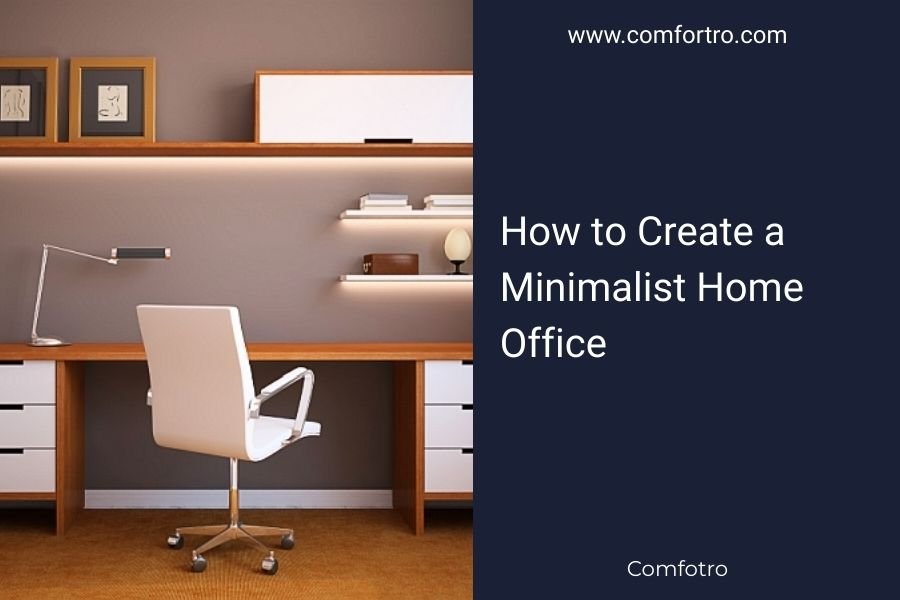
A minimalist home office requires just three elements: a clean desk, proper lighting, and organized storage that keeps clutter out of sight.
Creating a minimalist home office boosts focus and productivity by removing visual distractions and keeping only what you need within arm’s reach.
Why Choose a Minimalist Home Office Design
Your brain processes everything it sees. When your workspace is cluttered, your mind feels cluttered too. Think of it like trying to read a book while someone plays loud music – possible, but not pleasant.
I found research from UCLA showing that people in cluttered spaces have higher cortisol levels. That’s your stress hormone working overtime when it should be helping you focus on work.
A minimalist office works because it removes decisions. You don’t waste mental energy figuring out where things are or what belongs where.
Start With These Essential Items Only
Before adding anything to your office, ask yourself: “Do I use this weekly?” If the answer is no, find it a home elsewhere.
Your Core Furniture Needs
You need exactly three pieces of furniture to start. A desk that fits your computer and has space to write. A chair that supports your back for hours. Storage that hides your supplies.
That’s it. No extra side tables, decorative shelves, or “just in case” furniture pieces.
Desk Selection Guide
Pick a desk with clean lines and minimal drawers. Too many built-in compartments become junk collectors. A simple rectangular surface works best.
Size matters here. Too big tempts you to spread out and accumulate stuff. Too small creates stress. Measure your computer, notebook, and coffee cup. Add 12 inches on each side.
Chair Basics
Your chair should disappear when you’re working. You shouldn’t notice it’s there. Adjustable height is non-negotiable. Lumbar support saves your back.
Skip chairs with excessive padding or bright colors. They draw attention away from your work.
Storage That Actually Works
The best storage is invisible storage. Closed cabinets, drawers, and boxes keep your space looking clean even when you’re busy.
I came across organizing experts who recommend the “one touch rule.” Every item should have one designated spot where it always lives.
Hidden Storage Solutions
- Desk drawers with dividers for small items
- A small filing cabinet that slides under your desk
- Wall-mounted cabinets that close completely
- Storage boxes that look like books or decorative items
Color Schemes That Support Focus
Colors affect your mood whether you notice or not. Your minimalist office should use no more than three colors total.
Neutral Base Colors
White, beige, and light gray create calm feelings. They also make small spaces look bigger. Dark colors can work if your room gets lots of natural light.
From what I read in design research, blue tones help with concentration. Green reduces eye strain if you stare at screens all day.
Accent Color Strategy
Pick one accent color and use it sparingly. Maybe your notebook covers, a small plant pot, or desk lamp. This creates visual interest without chaos.
Colors to Avoid
Red and orange are too stimulating for long work sessions. Bright yellow can cause headaches. Purple often feels too playful for serious work.
Lighting Your Workspace Right
Bad lighting makes everything harder. You squint, lean forward, and tire faster. Good lighting should feel invisible – you don’t think about it.
Natural Light First
Position your desk near a window if possible. Natural light regulates your body clock and reduces eye strain. But avoid glare on your computer screen.
If direct sunlight hits your monitor, angle your desk perpendicular to the window instead of facing it.
Artificial Light Backup
You need two types of artificial light. General room lighting for overall brightness. Task lighting for detailed work like reading or writing.
Desk Lamp Selection
LED desk lamps with adjustable arms work best. They don’t get hot, last years, and let you point light exactly where you need it.
Look for lamps with dimmer switches. Bright light for detailed tasks, softer light for computer work.
Technology and Cable Management
Nothing ruins a clean look like tangled cables everywhere. Your technology should enhance your space, not clutter it.
Cable Control Methods
Route all cables behind and under your desk. Use cable clips to hold them against the desk edge. A power strip mounted under your desk keeps cords organized.
Wireless devices reduce cable mess. Consider a wireless keyboard, mouse, and printer if your budget allows.
Equipment Minimalism
Each device should serve multiple purposes when possible. A printer that also scans and copies. A monitor that charges your laptop. A keyboard with a built-in trackpad.
Plants and Natural Elements
One or two plants add life without clutter. Research from NASA shows certain plants clean your indoor air while you work.
Low-Maintenance Plant Options
- Snake plants survive in low light and need water rarely
- Pothos grow in water or soil and look good trailing
- ZZ plants tolerate neglect and fluorescent lighting
- Small succulents need minimal care and space
Plant Placement Tips
Keep plants away from your keyboard and mouse areas. Water spills damage electronics. Corner spots or window sills work better.
Daily Maintenance Habits
A minimalist office stays minimal through daily habits, not weekend cleaning marathons.
End-of-Day Reset
Spend five minutes each evening putting everything back where it belongs. Clear your desk surface completely. This makes tomorrow morning feel fresh and organized.
Weekly Quick Tasks
File any loose papers. Wipe down surfaces. Water plants if needed. Delete desktop files you don’t need anymore.
Common Mistakes to Avoid
Many people think minimalist means cold or boring. That’s not true. Your space should feel welcoming and comfortable while staying functional.
Over-Decorating Traps
Don’t add decorative items just because you have empty space. Empty space is the point. It gives your eyes and mind room to rest.
Storage Mistakes
Open shelving displays everything, including mess. Closed storage keeps things hidden but accessible. Choose function over display.
Budget-Friendly Implementation
You don’t need expensive furniture to create a minimalist office. Focus on function and simplicity over brand names.
| Item | Budget Option | Investment Option |
|---|---|---|
| Desk | Simple table from discount store | Solid wood desk with built-in storage |
| Chair | Basic office chair with lumbar support | Ergonomic chair with multiple adjustments |
| Lighting | Adjustable LED desk lamp | Smart lighting system with dimming |
| Storage | Plastic drawer units | Built-in cabinetry or solid wood filing |
Conclusion
Your minimalist home office should feel like a calm, focused space where work flows easily. Start with the basics: a clean desk, good lighting, and hidden storage. Add only what you truly need and use regularly.
Remember, minimalism isn’t about having less for the sake of less. It’s about keeping what serves you and removing what doesn’t. Your office should support your best work, not distract from it.
Take it one step at a time. Clear your current space, then slowly add back only the essentials. You’ll be surprised how much better you feel and work in a truly minimalist environment.
How much does it cost to create a minimalist home office?
You can create a basic minimalist office for $200-500 with a simple desk, basic chair, and LED lamp. Higher-end setups with quality furniture range from $800-2000, but focus on function over price.
What’s the ideal size for a minimalist home office?
A 6×8 foot space provides enough room for a desk, chair, and storage without encouraging clutter. Even a 4×6 foot corner can work well if you choose compact, multi-functional furniture.
How do I keep my minimalist office organized long-term?
Follow the “one touch rule” – everything has one designated home. Spend 5 minutes each evening clearing your desk surface and putting items back where they belong. This prevents clutter from building up.
Can a minimalist office work if I handle lots of paperwork?
Yes, but you need smart storage solutions. Use a filing cabinet with clearly labeled folders, scan documents when possible, and process papers immediately – file, act on, or discard them the same day they arrive.
Should I avoid all decorative items in a minimalist office?
Not necessarily. Choose 1-2 meaningful items that make you feel good, like a small plant or family photo. The key is intention – each item should serve a purpose, even if that purpose is making you smile.