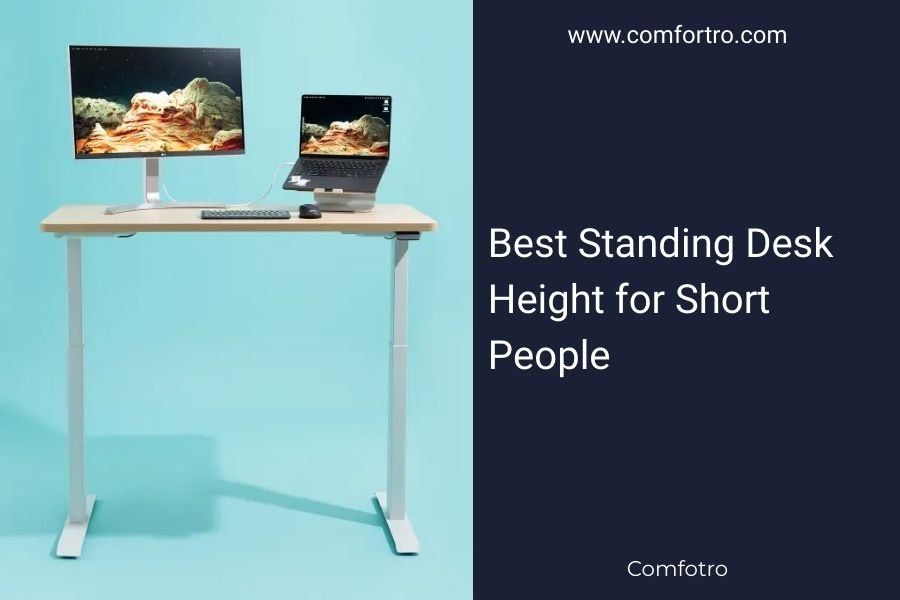
The best standing desk height for short people ranges from 35-42 inches, with most finding their sweet spot around 38-40 inches when adjusted properly.
Your ideal standing desk height should allow your elbows to bend at 90 degrees while your wrists stay straight and comfortable during typing.
Why Standard Desk Heights Don’t Work for Everyone
Most office desks sit at 29-30 inches high. Standing desks often range from 22-48 inches when adjustable. But here’s the thing: if you’re under 5’4″, you might feel like you’re reaching up to touch the clouds.
I researched ergonomic guidelines and found that proper desk height depends on your elbow height, not your total height. This makes all the difference for comfort and health.
The Perfect Standing Desk Height Formula
Measuring Your Ideal Height
Stand up straight with your shoes on. Let your arms hang naturally at your sides. Now bend your elbows to 90 degrees, like you’re typing on an invisible keyboard.
Measure from the floor to your hands. That’s your target desk height. Simple, right?
Height Ranges for Short People
Research from ergonomic studies shows these general ranges work well:
- 5’0″ to 5’2″: 35-38 inches
- 5’2″ to 5’4″: 38-40 inches
- 5’4″ to 5’6″: 40-42 inches
Remember, these are starting points. Your arm length and torso proportions matter too.
Common Problems Short People Face
Shoulder and Neck Strain
When your desk is too high, you lift your shoulders to reach the keyboard. This creates tension that can lead to headaches and upper back pain.
I found research from the Occupational Safety and Health Administration that links improper desk height to repetitive stress injuries.
Wrist Problems
High desks force your wrists to bend upward. This puts pressure on the median nerve, potentially leading to carpal tunnel syndrome over time.
The Monitor Issue
Short people often deal with monitors that sit too high when the desk is adjusted properly for typing. Your screen should be at eye level, not above it.
Choosing the Right Standing Desk
Adjustable Range Matters
Look for desks that go down to at least 24 inches. Many “standard” adjustable desks only go down to 28-30 inches. That won’t work if you’re petite.
The adjustment mechanism should be smooth and easy to use. You’ll want to change heights throughout the day.
Electric vs Manual Options
Electric desks adjust with the push of a button. Manual ones use hand cranks or pneumatic systems. Electric costs more but saves effort, especially if you adjust frequently.
Memory Settings
Some electric desks remember your preferred heights. You can program your perfect sitting and standing positions.
Setting Up Your Workspace Properly
The 90-Degree Rule
Your elbows should bend at 90 degrees when typing. Your wrists should float in a neutral position, not bent up or down.
If you can’t achieve this, your desk height needs adjustment.
Monitor Positioning
Your screen’s top should be at or slightly below eye level. You might need a separate monitor arm to achieve this while keeping your keyboard at the right height.
Distance from Screen
Sit about arm’s length from your monitor. If you’re leaning forward to read, the text is too small or the screen too far away.
Accessories That Help
Keyboard Trays
A sliding keyboard tray lets you adjust typing height independently from your monitor height. This solves many setup problems for shorter users.
Anti-Fatigue Mats
Standing on hard floors gets uncomfortable quickly. A cushioned mat reduces pressure on your feet and legs.
Footrests and Rails
Many standing desks include a footrest bar. Use it to shift weight between feet and reduce lower back stress.
Transitioning to Standing
Start Slowly
Don’t stand all day immediately. Begin with 15-30 minute sessions. Gradually increase as your body adapts.
Research from the American Heart Association suggests alternating between sitting and standing every 30-60 minutes.
Listen to Your Body
Some discomfort is normal as you adjust. But sharp pain or numbness means something’s wrong with your setup.
Warning Signs
Stop and reassess if you experience persistent back pain, swollen feet, or leg cramps. Your desk height or standing technique may need tweaking.
Budget-Friendly Alternatives
Desktop Converters
These units sit on top of your existing desk and lift your monitor and keyboard. They’re cheaper than full standing desks but offer less flexibility.
DIY Solutions
Stack books or use adjustable laptop stands as temporary solutions. This lets you test different heights before investing in furniture.
Conclusion
Finding the best standing desk height for short people comes down to proper measurement and adjustment. Start with your elbow height as a guide, then fine-tune based on comfort. Don’t settle for a desk that doesn’t fit your body properly.
Remember to transition gradually and listen to your body. The right setup will improve your posture, reduce pain, and boost your productivity. Your future self will thank you for taking the time to get it right.
What if my standing desk doesn’t go low enough for my height?
Consider adding a platform under your feet or using a keyboard tray to lower your typing surface. Some manufacturers also offer desk legs in shorter lengths as custom options.
Should I wear different shoes when using a standing desk?
Comfortable, supportive shoes with low heels work best. Avoid high heels or completely flat shoes without arch support. Your footwear affects your overall posture and comfort.
How often should I switch between sitting and standing?
Aim to change positions every 30-60 minutes. A good starting ratio is 1:1 or 1:2 (standing to sitting). Adjust based on your comfort and energy levels throughout the day.
Can using the wrong desk height cause long-term health problems?
Yes, improper desk height can contribute to repetitive stress injuries, neck problems, and back pain over time. Getting the setup right early prevents these issues from developing.
Do I need a special chair for a height-adjustable desk?
Look for chairs that adjust low enough to work with your desk’s sitting height. Some standard office chairs may not go low enough if you’re short and your desk has a limited range.
