
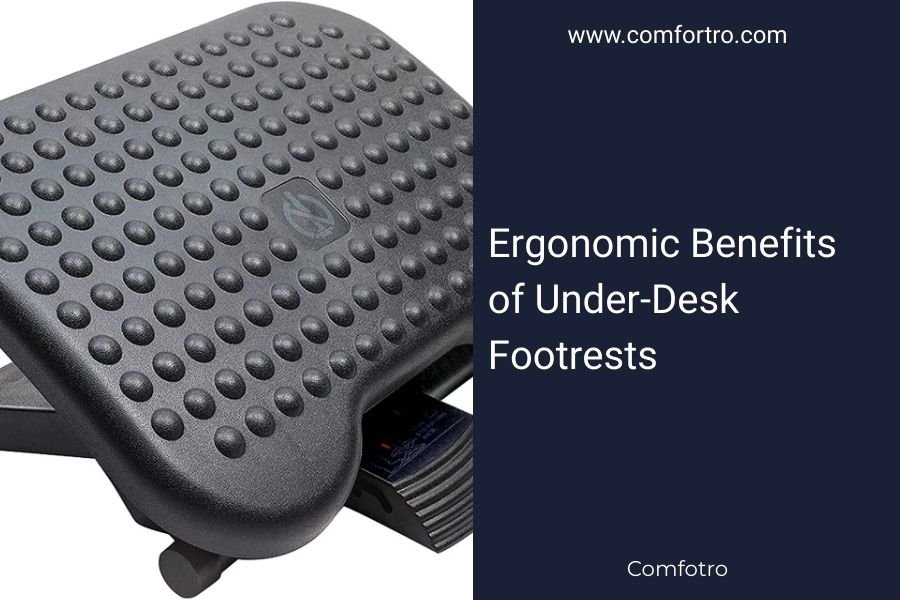
Under-desk footrests improve posture by supporting your feet at the right angle and reducing strain on your legs and lower back.
The ergonomic benefits of under-desk footrests include better blood circulation, reduced pressure on your thighs, and proper spine alignment while working.
Why Your Feet Need Support at Your Desk
Think about how you sit right now. Are your feet flat on the floor? Can you feel pressure building up behind your knees? Most office workers face this problem daily without knowing it.
When your feet dangle or rest awkwardly, your whole body compensates. Your lower back curves the wrong way. Your shoulders hunch forward. Your neck cranes to see the screen.
I found that many ergonomic experts point to foot positioning as the foundation of good sitting posture. It’s like trying to build a house on uneven ground – everything above becomes unstable.
The Science Behind Proper Foot Positioning
Your feet should rest at a 90-degree angle to your shins. This position keeps your thighs parallel to the floor and takes pressure off the back of your legs.
Research from the Occupational Safety and Health Administration shows that proper foot support reduces the risk of developing musculoskeletal disorders. When your feet have support, your entire kinetic chain stays aligned.
What Happens Without Proper Support
Without a footrest, you might experience several issues. Your feet may not reach the floor comfortably. This forces you to slide forward in your chair or sit on the edge.
Sliding forward creates a gap between your back and the chair. You lose the support your spine needs. Your muscles work harder to keep you upright.
Top Ergonomic Benefits You’ll Notice
Better Blood Circulation
When your feet hang freely, blood pools in your lower legs. This can cause swelling and that heavy, tired feeling by the end of the day.
A footrest elevates your feet slightly. This helps blood flow back to your heart more easily. You’ll notice less leg fatigue and fewer aches.
Reduced Lower Back Pain
Poor foot positioning often leads to slouching. Your lower back rounds out, putting stress on your spine and surrounding muscles.
With proper foot support, you naturally sit up straighter. Your spine maintains its natural curves. The pressure on your lower back decreases significantly.
Less Pressure on Your Thighs
Hard chair edges can dig into the back of your thighs. This pressure restricts blood flow and can cause numbness or tingling.
A footrest changes the angle of your legs. It reduces the contact pressure between your thighs and the chair edge. Your legs feel more comfortable throughout the day.
How Footrests Improve Your Posture Chain
Starting From the Ground Up
Good posture works like a chain reaction. It starts with your feet and moves up through your body. Each part affects the next.
When your feet rest properly, your ankles align correctly. Your knees bend at the right angle. Your hips sit level in the chair.
The Hip Connection
Level hips are the key to spinal alignment. When one hip sits higher than the other, your spine compensates by curving sideways.
A footrest helps keep both feet at the same level. This balances your hips and gives your spine a stable foundation to build on.
Spinal Alignment Benefits
With balanced hips, your spine can maintain its natural S-curve. This distributes your body weight evenly across your vertebrae.
Even weight distribution means less stress on individual discs and joints. You experience fewer aches and less stiffness.
Types of Footrests and Their Benefits
Fixed Platform Footrests
These simple platforms provide a stable surface for your feet. They work well if you stay in one position most of the day.
Fixed platforms are usually affordable and require no maintenance. They’re perfect for people who prefer consistency in their setup.
Adjustable Height Footrests
Height-adjustable models let you find your perfect position. You can change the angle throughout the day as your needs change.
These footrests work well for shared workspaces or if multiple people use the same desk. Everyone can adjust to their comfort level.
Rocking Footrests
Rocking models let you move your feet back and forth. This gentle movement helps with circulation and prevents stiffness.
The motion also engages your leg muscles lightly. It’s like taking micro-breaks without leaving your desk.
Massage and Textured Footrests
Some footrests include massage rollers or textured surfaces. These features stimulate blood flow and provide sensory feedback.
The gentle massage can help reduce stress and tension. It’s a small luxury that makes your workday more pleasant.
Who Benefits Most From Footrests
Shorter Individuals
If you’re shorter than average, standard desk heights often leave your feet dangling. A footrest bridges this gap perfectly.
You can keep your chair at the right height for your arms while still supporting your feet. No more choosing between comfort and proper typing position.
People With Circulation Issues
Anyone with circulation problems benefits from elevated feet. The slight elevation helps blood return to your heart.
People with diabetes, varicose veins, or other circulation concerns often find footrests helpful. Always check with your doctor about your specific needs.
Pregnant Workers
Pregnancy often brings swelling and circulation changes. Elevated feet can provide relief from these discomforts.
A footrest also helps maintain good posture as your body changes. This reduces back pain and other pregnancy-related aches.
Setting Up Your Footrest Correctly
Finding the Right Height
Your thighs should be parallel to the floor or slightly sloping down toward your knees. This usually means your knees are at or slightly below hip level.
Start with your footrest at its lowest setting. Gradually adjust upward until you find the most comfortable position.
Positioning for Maximum Benefit
Place the footrest directly under your feet. Both feet should rest comfortably on the surface without stretching or cramping.
Keep your feet flat on the footrest. Avoid pointing your toes or flexing your feet upward. A relaxed, neutral position works best.
Common Footrest Mistakes to Avoid
Setting It Too High
A footrest that’s too high pushes your knees up too far. This creates pressure under your thighs and can restrict blood flow.
Using It as a Leg Swing
Some people rest just their heels on the footrest and let their legs swing. This doesn’t provide the stability you need for good posture.
Ignoring Chair Height
Your chair height and footrest height work together. Adjust both to find the combination that works best for your body.
Conclusion
Under-desk footrests offer real ergonomic benefits that go far beyond simple comfort. They improve your circulation, reduce back pain, and help maintain proper posture throughout your workday. By supporting your feet at the right angle, you create a stable foundation for your entire body. Whether you’re tall, short, or somewhere in between, a footrest can make your desk setup more comfortable and healthier. The investment in a good footrest often pays off in reduced fatigue and fewer aches at the end of long work days.
Do footrests work for standing desks too?
Yes, but you’ll need a different setup. Standing desk footrests are usually rails or small platforms that let you rest one foot at a time. This helps reduce fatigue during long standing periods and lets you shift your weight between legs.
Can a footrest be too soft or cushioned?
Very soft footrests can actually work against you. They don’t provide stable support, and your feet may sink in too much. A firm surface with light padding usually works better than thick, squishy cushioning.
How long does it take to get used to a footrest?
Most people adjust within a few days to a week. Your body needs time to adapt to the new position. Start by using it for short periods and gradually increase the time as it becomes more natural.
Should both feet always be on the footrest?
For the best posture benefits, yes. Keeping both feet on the footrest maintains balance and proper alignment. If you need to stretch occasionally, that’s fine, but return to the balanced position for most of your sitting time.
Are expensive footrests worth the extra cost?
Not always. Basic fixed-platform footrests often work just as well as expensive models. Focus on getting the right size and height for your needs rather than fancy features. Spend more only if specific features like adjustability or massage rollers matter to you.
