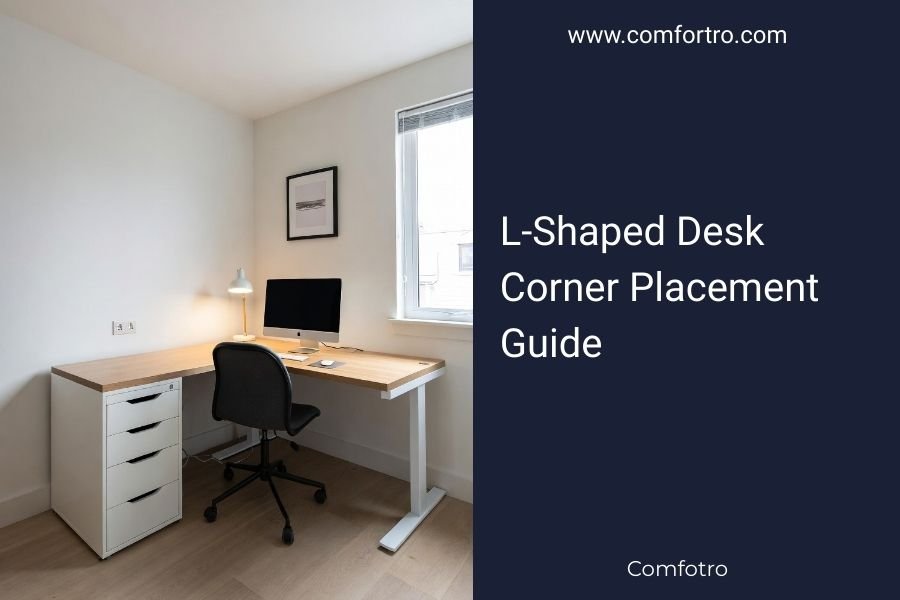
L-shaped desk corner placement works best when positioned in room corners with the longer side against your dominant wall and shorter side extending into the room. This setup maximizes workspace while keeping foot traffic clear.
You should place your L-shaped desk so the corner joint sits snugly in the room’s corner, creating an efficient work triangle between your computer, storage, and writing areas.
Quick Corner Placement Rules
Getting your L-shaped desk placement right feels like solving a puzzle. The good news? There are only a few basic rules to follow.
Position the desk so you face into the room, not the wall. This keeps you connected to your space and reduces that trapped feeling.
Make sure both desk sides have at least 3 feet of clearance behind them. You need room to push your chair back and move around comfortably.
The 60-40 Rule
Place your longer desk section against the wall that takes up about 60% of your available wall space. The shorter section should extend into the room.
This creates natural balance and prevents your desk from overwhelming the room. Think of it like arranging furniture in an L-shaped living room.
Measuring Your Corner Space
Before you move anything, grab a tape measure. You’ll need these key measurements to avoid placement headaches later.
Wall Length Requirements
Measure both walls that form your corner. Your L-shaped desk needs walls that are at least as long as each desk section, plus 6 extra inches on each side.
Most L-shaped desks range from 48-60 inches on the long side and 36-48 inches on the short side. Add those 6-inch buffers and you’ll know if your corner works.
Floor Space Calculation
You need a minimum 6×6 foot floor area for most L-shaped desks. Larger desks require up to 8×8 feet of floor space.
Don’t forget to account for your chair’s movement range. Add 3 feet behind the desk corner for comfortable chair rolling.
Room Layout Considerations
Your room’s traffic patterns matter more than you might think. Poor placement turns your desk into a roadblock.
Traffic Flow Planning
Avoid placing your desk where people naturally walk through the room. The extended arm of your L-desk shouldn’t block doorways or pathways.
I found that most people instinctively walk in straight lines from door to door. Keep these invisible highways clear.
Window and Light Positioning
Position your desk so windows provide side lighting, not direct front or back lighting. This reduces screen glare and eye strain.
If your corner has a window, place the shorter desk arm perpendicular to it. This gives you natural light without the harsh backlighting effect.
Corner Types and Desk Orientation
Not all corners are created equal. Your room’s corner type determines your best desk orientation.
Inside Corners
Standard inside corners work perfectly for L-shaped desks. Position the desk so the corner joint fits snugly into the room’s corner.
This is your classic setup. Both desk arms rest against walls, giving you maximum stability and surface area.
Outside Corners
Outside corners, like those in bay windows or room extensions, need different thinking. Float your desk away from the corner by 12-18 inches.
This prevents the cramped feeling that comes with wrapping around an outside corner. You’ll lose some wall support but gain breathing room.
Ergonomic Placement Tips
Your body will thank you for thinking about comfort during placement. Good ergonomics start with smart positioning.
Monitor Positioning
Place your primary monitor on the shorter desk arm if possible. This keeps your most-used screen at the proper distance and angle.
Research from occupational health experts suggests monitors work best when positioned 20-26 inches from your eyes (American Optometric Association).
Chair Movement Zone
Your chair needs room to swivel between both desk arms without hitting walls or furniture. Test this before finalizing your placement.
Mark a semicircle behind your desk corner with painter’s tape. This shows your chair’s movement range and helps spot potential obstacles.
Common Placement Mistakes
I’ve seen these placement errors create years of workspace frustration. Avoid them and save yourself the headache.
The Wall-Facing Trap
Don’t position yourself facing directly into the corner. This creates a claustrophobic workspace that feels like a penalty box.
Instead, angle your chair so you can easily look up and see the room. This keeps you feeling connected to your space.
Blocking Natural Pathways
The biggest mistake is extending your desk into natural walking paths. This creates daily frustration and potential safety hazards.
Walk through your room like you normally would. Your desk shouldn’t force you to change your natural movement patterns.
Power and Cable Management
Nothing ruins good desk placement like poor power planning. Think about electrical needs before you commit to a corner.
Outlet Accessibility
Check that both walls in your chosen corner have accessible outlets. L-shaped desks often need power on both arms.
Extension cords and power strips work, but built-in access keeps things cleaner and safer.
Cable Routing
Plan cable routes before placement. Cables running across walking areas create tripping hazards and look messy.
Corner placement often means longer cable runs. Factor this into your setup budget and timeline.
Small Room Strategies
Small rooms need smart L-shaped desk placement to avoid overwhelming the space. Here’s how to make it work.
Visual Weight Balance
Place the longer desk arm against the room’s longest wall. This creates visual balance instead of making the room feel lopsided.
Think of your desk as a large piece of furniture. You wouldn’t put a huge couch in a tiny room’s center, right?
Multi-Purpose Integration
In small spaces, your desk corner might need to serve multiple functions. Position it so the shorter arm can double as a console table or storage area.
This dual-purpose thinking helps justify the desk’s footprint in space-challenged rooms.
Testing Your Placement
Before committing to a corner placement, test it out. This simple step prevents major placement regrets.
The Cardboard Method
Cut cardboard pieces to match your desk’s dimensions. Place them in your chosen corner and live with the setup for a few days.
This shows you exactly how the desk will affect room flow and daily activities.
Furniture Arrangement Mock-Up
Use painter’s tape to outline your desk on the floor. Include the chair movement area and any storage pieces.
This visual guide helps you spot problems before moving heavy furniture around.
Conclusion
Getting your L-shaped desk corner placement right transforms your workspace from cramped to comfortable. Remember the key rules: face into the room, allow 3 feet of clearance, and respect natural traffic patterns. Take time to measure, test with cardboard, and think about daily workflow before committing to a corner. Your future productive self will thank you for the extra planning effort.
What if my corner doesn’t fit standard L-shaped desk dimensions?
Consider a modular L-shaped desk system or have a custom desk built to fit your specific corner measurements. Many office furniture companies offer modular components that adapt to unusual corner sizes.
Can I place an L-shaped desk away from walls instead of in a corner?
Yes, floating L-shaped desks work well in larger rooms. Position the desk corner 18-24 inches from the room corner to create a more open feel while still maximizing the L-shape benefits.
How do I handle heating vents or baseboards that interfere with corner placement?
Use desk legs or risers to elevate the desk above baseboard heaters. For floor vents, position the desk so the corner joint sits beside, not over, the vent opening to maintain proper airflow.
Should left-handed people position L-shaped desks differently than right-handed people?
Left-handed users should place their primary work area on the right side of the L-shape to avoid arm interference when writing or using the mouse. This is opposite to the standard right-handed setup.
What’s the minimum ceiling height needed for comfortable L-shaped desk corner placement?
Standard 8-foot ceilings work fine for most L-shaped desk setups. Lower ceilings under 7.5 feet can make corner placement feel cramped, especially with overhead storage or shelving.