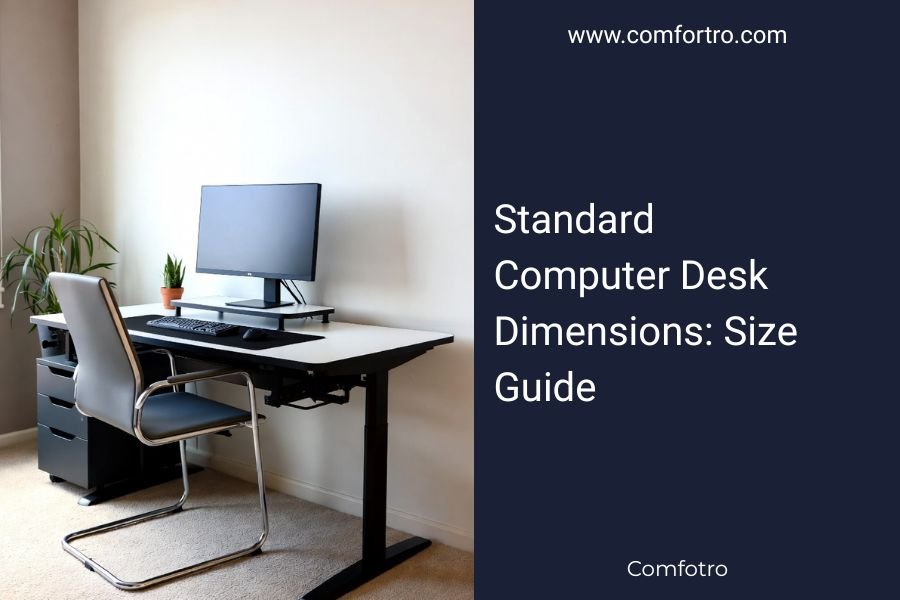
Standard computer desk dimensions typically range from 48-72 inches wide, 24-30 inches deep, and 28-30 inches high for most home office setups.
The right computer desk size depends on your available space, equipment needs, and work style preferences.
Quick Reference: Most Common Computer Desk Sizes
You need the basics first. Here are the standard measurements I found across furniture manufacturers:
- Width: 48 to 72 inches
- Depth: 24 to 30 inches
- Height: 28 to 30 inches
- Keyboard tray height: 26 to 28 inches
These measurements work for about 80% of home office workers. But your perfect size might be different.
Why Desk Height Matters Most
Your desk height affects everything. Too high? Your shoulders tense up. Too low? Your back hunches forward.
The 90-Degree Rule
Sit at your desk. Your elbows should bend at 90 degrees when typing. Your feet should rest flat on the floor.
I researched ergonomic guidelines and found that 29 inches works for most people between 5’6″ and 6’0″ tall (Occupational Safety and Health Administration).
Height Adjustments for Different Body Types
| Your Height | Best Desk Height | Notes |
|---|---|---|
| 5’0″ – 5’4″ | 26″ – 28″ | Consider a footrest |
| 5’5″ – 5’11” | 28″ – 30″ | Standard height works |
| 6’0″ – 6’4″ | 30″ – 32″ | Look for tall desk options |
Computer Desk Width: How Much Space Do You Really Need?
Width determines what fits on your desk. Think about your daily setup.
Small Desk Width: 36-48 Inches
Perfect for laptops and light work. You can fit:
- One laptop or small monitor
- A few notebooks
- Basic desk accessories
Great for small apartments or simple home offices.
Medium Desk Width: 48-60 Inches
The sweet spot for most people. Room for:
- One large monitor or two small ones
- Desktop computer tower
- Work materials and storage
Large Desk Width: 60-72 Inches
Built for serious work setups. You get space for:
- Dual monitor setups
- Multiple projects spread out
- Extra equipment and storage
Extra-Wide Desks: Over 72 Inches
These work well for creative professionals or gamers who need maximum surface area.
Desk Depth: Finding Your Comfort Zone
Depth affects how far you sit from your screen and how much workspace you have.
Shallow Desks: 20-24 Inches
Tight spaces call for shallow desks. They work if you mainly use a laptop.
The downside? You might feel cramped with a large monitor.
Standard Depth: 24-30 Inches
Most comfortable for daily computer work. You can:
- Keep your monitor at proper viewing distance
- Have room for a keyboard and mouse
- Spread out some papers
Deep Desks: 30+ Inches
Extra depth gives you more workspace in front of your monitor. Great for artists, architects, or anyone who needs project space.
Special Considerations for Different Work Styles
Gaming Desk Dimensions
Gamers often need wider desks. I found that most gaming setups work best with:
- Width: 55-72 inches minimum
- Depth: 28-32 inches
- Height: 28-30 inches
Why wider? Multiple monitors, gaming accessories, and RGB lighting take up space.
Standing Desk Height Options
Standing desks need different measurements. Most adjustable models range from 28 to 48 inches high.
Your ideal standing height? Add 10-12 inches to your sitting desk height.
Dual-Purpose Sit-Stand Desks
These desks adjust between sitting and standing positions. Look for models that go from 28 to 46 inches high.
Corner Desk Dimensions
Corner desks maximize space in small rooms. Standard L-shaped desks measure:
- Each side: 48-60 inches long
- Corner depth: 30-36 inches
- Height: 28-30 inches
Right-Angle vs Curved Corners
Right-angle corners give you more surface area. Curved corners feel more comfortable but offer less workspace.
Measuring Your Space Before You Buy
Don’t guess. Measure your room first.
Room Size Guidelines
Your desk should take up no more than one-third of your room’s floor space. Leave walking room around all sides.
Minimum Clearances
- Behind your chair: 36 inches minimum
- Beside the desk: 24 inches
- In front of the desk: 18 inches
Common Size Mistakes to Avoid
Buying Too Small
A cramped workspace hurts your productivity. You end up stacking things or working uncomfortably.
Going Too Big for Your Room
A massive desk in a small room makes everything feel crowded. Balance is key.
Forgetting About Door Clearance
Can you actually get the desk into your room? Measure doorways and hallways too.
Conclusion
The right computer desk size makes your home office work better. Start with standard dimensions: 48-72 inches wide, 24-30 inches deep, and 28-30 inches high. Then adjust based on your height, work style, and room size.
Remember the 90-degree rule for height and leave plenty of clearance around your desk. Measure your space first, and don’t forget to check if the desk fits through your door.
Your perfect desk balances your needs with your available space. Take time to get the measurements right, and you’ll create a workspace that supports your best work.
What if my ceiling is too low for a standard desk?
Look for desks under 28 inches high, or consider a wall-mounted floating desk that puts the work surface at your ideal height without legs underneath.
Do I need a bigger desk for two monitors?
Yes, dual monitors typically need at least 55-60 inches of width. You’ll also want 28-30 inches of depth to position the screens at proper viewing distance.
Can I use a dining table as a computer desk?
Dining tables usually measure 30-32 inches high, which is too tall for most people. You might need a keyboard tray or adjustable chair to make it work comfortably.
What desk size works best in a bedroom?
In bedrooms, stick to 42-48 inch wide desks to avoid overwhelming the space. A depth of 20-24 inches helps maintain walking room around your bed.
How do I know if a desk is too deep for my room?
If you can’t walk comfortably behind your chair when it’s pulled out, the desk is too deep. You need at least 36 inches of clearance behind your workspace.