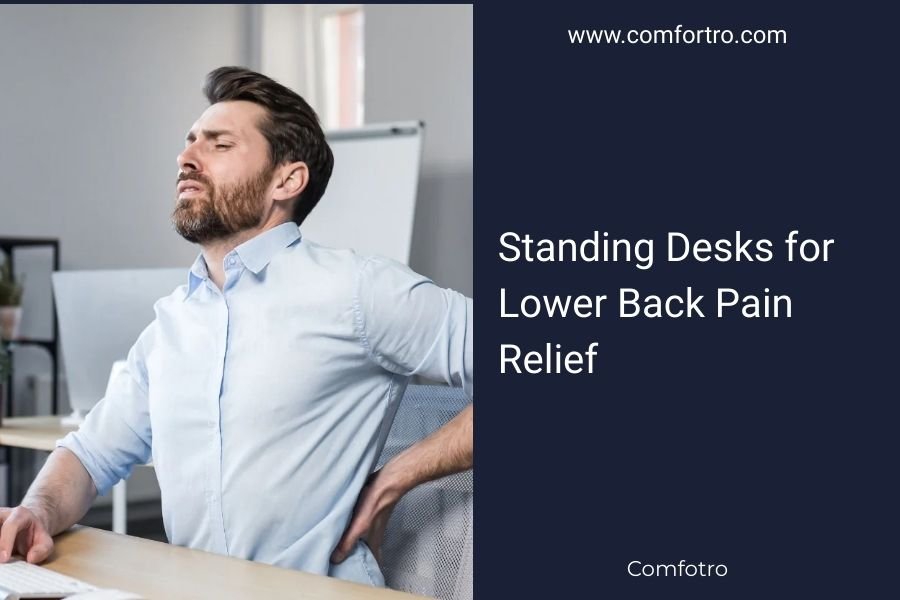
Standing desks for lower back pain relief work by reducing pressure on your spine and promoting better posture throughout your workday.
Research shows that alternating between sitting and standing can decrease lower back discomfort by up to 54% for office workers.
Why Your Lower Back Hurts When You Sit
Your spine wasn’t built for eight hours of sitting. When you slouch in a chair, you put 40% more pressure on your lower back discs than when standing (Cleveland Clinic).
Think of your spine like a garden hose. Bend it too much for too long, and the water flow gets restricted. Your blood circulation slows down. Your muscles get tight and cranky.
The Sitting Problem Gets Worse Over Time
Your hip flexors shorten from constant sitting. Your glutes forget how to work properly. Your core muscles basically take a nap.
This creates a domino effect. Weak glutes make your lower back do extra work. Tight hip flexors pull on your spine. No wonder you’re hurting.
How Standing Desks Help Your Back
Standing desks don’t magically cure back pain. But they give your spine what it needs: movement and better alignment.
When you stand properly, your spine maintains its natural curves. Your weight gets distributed evenly across your feet instead of crushing your tailbone.
Blood Flow Improves Immediately
Standing gets your blood moving again. Better circulation means more oxygen and nutrients reach your back muscles.
Your muscles can finally relax and repair themselves. It’s like giving them a drink of water after being thirsty all day.
Core Muscles Wake Up
Standing naturally engages your core muscles. You’re not using them super hard, but they’re working just enough to support your spine.
This gentle activation helps build strength over time. Stronger core muscles mean less stress on your lower back.
What the Research Says
A study from NIH tracked office workers who used standing desks for 12 weeks. They found significant improvements in lower back pain scores.
The magic wasn’t in standing all day. It was in the movement between sitting and standing. Your spine loves variety.
The 50-50 Rule
Most experts recommend splitting your time equally. Fifty percent sitting, fifty percent standing works well for most people.
Some prefer the 20-8-2 rule: sit for 20 minutes, stand for 8 minutes, then move around for 2 minutes. Find what feels right for your body.
Types of Standing Desks for Back Pain
You don’t need to spend thousands of dollars. Simple solutions often work best.
Desktop Converters
These sit on top of your existing desk. You can adjust the height manually or with a lever.
Perfect if you want to test standing desks without a big commitment. Most cost under $200.
Electric Sit-Stand Desks
Push a button and the whole desk moves up or down. Super convenient for frequent changes.
The smooth transition makes it easier to stick with your sitting-standing routine.
Manual Crank Desks
You turn a handle to adjust the height. Takes more effort but costs less than electric versions.
The manual action actually adds a bit of movement to your day, which your back appreciates.
Comparison of Standing Desk Types
| Type | Price Range | Best For | Setup Time |
|---|---|---|---|
| Desktop Converter | $100-$400 | Testing waters | 5 minutes |
| Electric Desk | $300-$800 | Frequent changes | 30 minutes |
| Manual Crank | $200-$500 | Budget conscious | 45 minutes |
Setting Up Your Standing Desk Properly
Height matters more than you think. Get it wrong and you might create new problems.
Monitor Height
Your screen should sit at eye level. You shouldn’t look up or down to see your work.
If you’re looking down, you’re putting strain on your neck and upper back. That tension travels down to your lower back.
Keyboard and Mouse Position
Your elbows should hang naturally at your sides. Your wrists should stay straight while typing.
Reaching up or out puts stress on your shoulders and back muscles. Keep everything close and comfortable.
The 90-Degree Rule
Your elbows, hips, and knees should all form roughly 90-degree angles when standing. This creates the most balanced posture.
Common Mistakes That Make Back Pain Worse
Standing all day isn’t better than sitting all day. You’re just trading one problem for another.
Locking Your Knees
Keep your knees slightly soft. Locking them cuts off circulation and makes your back work harder.
Think about standing like a tree that sways gently in the wind, not a rigid pole.
Wearing the Wrong Shoes
High heels or flat shoes with no support will kill your back. Your feet are the foundation for everything above them.
Invest in shoes with good arch support. Your back will thank you.
Shifting Your Weight
Don’t stand like a statue. Shift your weight from foot to foot. Use a footrest occasionally.
Small movements keep your muscles happy and prevent stiffness.
Building Up Your Standing Tolerance
Start slow. Your body needs time to adapt to standing more.
Begin with 15-minute standing sessions. Add five minutes each week until you reach your comfortable balance.
Week 1: Testing the Waters
Stand for 15 minutes every hour. Notice how your body feels. Some mild fatigue is normal.
Week 2-3: Building Strength
Increase to 20-30 minute sessions. Your leg and back muscles are getting stronger.
Week 4+: Finding Your Rhythm
You should find a natural rhythm that works for your body and tasks. Some people prefer longer standing sessions. Others like frequent short bursts.
Listen to Your Body
Pain means stop. Mild muscle fatigue means you’re building strength. Learn the difference.
Extra Tips for Maximum Back Relief
A standing desk alone won’t fix everything. Combine it with these simple strategies.
Add an Anti-Fatigue Mat
These cushioned mats reduce pressure on your feet and legs. Less leg fatigue means better posture all day.
Do Simple Stretches
Gentle calf raises, hip circles, and shoulder rolls keep you loose while working.
You don’t need a full workout. Just small movements throughout the day.
The Two-Minute Rule
Every hour, spend two minutes moving. Walk to get water. Do some gentle stretches. Your spine craves this movement.
When Standing Desks Might Not Help
Standing desks aren’t magic bullets. Some back problems need different solutions.
If you have herniated discs or sciatica, talk to your doctor first. Standing might make some conditions worse.
Signs to See a Professional
Sharp, shooting pain down your legs needs medical attention. So does numbness or weakness in your feet.
A standing desk can be part of your solution, but it shouldn’t be your only solution for serious back problems.
Conclusion
Standing desks can provide real relief for lower back pain when used correctly. The key is finding the right balance between sitting and standing, setting up your workspace properly, and building up your tolerance gradually.
Remember that your spine loves movement and variety. A standing desk gives you the flexibility to change positions throughout your day, reducing the constant pressure that sitting creates on your lower back.
Start small, listen to your body, and combine your standing desk with good ergonomics and simple movement breaks. Your back will feel the difference within a few weeks.
Can standing desks completely cure lower back pain?
Standing desks can significantly reduce lower back pain caused by prolonged sitting, but they’re not a complete cure for all back problems. They work best as part of a broader approach that includes proper ergonomics, regular movement, and addressing underlying muscle imbalances.
How long should I stand at my desk each day?
Most experts recommend starting with 15-30 minutes per hour and gradually building up to about 50% of your workday standing. The exact amount depends on your comfort level and physical condition. Quality movement matters more than total standing time.
Will my legs and feet hurt when I start using a standing desk?
Yes, some initial fatigue in your legs and feet is normal as your muscles adapt to standing more. This usually improves within 2-3 weeks. An anti-fatigue mat and supportive shoes can help reduce discomfort during the transition period.
Do I need an expensive electric standing desk for back pain relief?
No, you don’t need an expensive desk to get benefits. Desktop converters that sit on your existing desk can be just as effective for back pain relief. The key is proper height adjustment and regular position changes, not the mechanism used to achieve them.
Can I use a standing desk if I already have chronic back pain?
Many people with chronic back pain find standing desks helpful, but you should consult with your healthcare provider first. Certain conditions like herniated discs or spinal stenosis may require specific precautions or modifications to your standing desk setup.