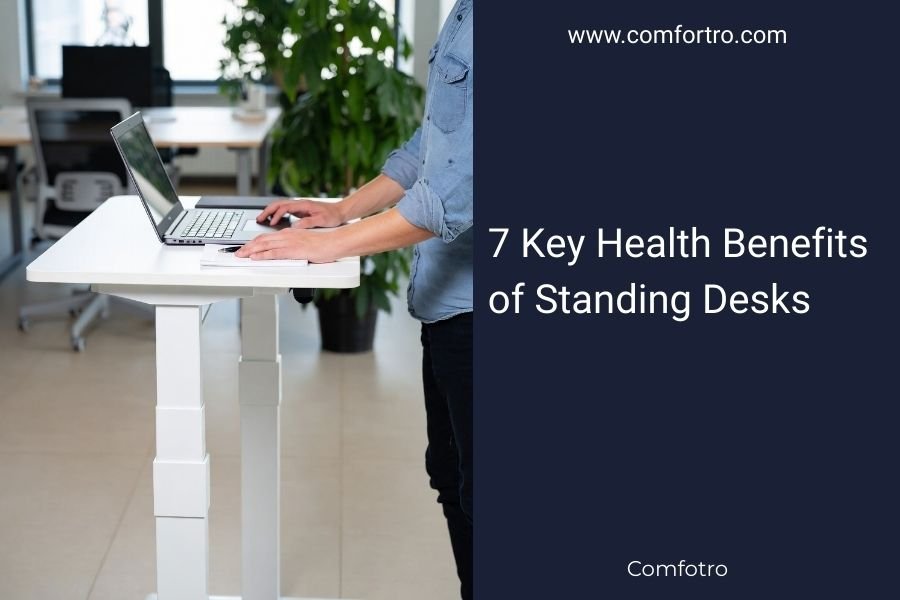
Standing desks offer seven key health benefits including improved posture, reduced back pain, increased calorie burn, better blood circulation, enhanced mood, lower blood sugar levels, and reduced risk of heart disease.
Research shows that using standing desks for 2-4 hours daily can help counteract the negative effects of prolonged sitting while boosting your overall health and productivity.
Better Posture and Spinal Alignment
Your spine wasn’t designed for eight hours of sitting. When you sit all day, your shoulders roll forward and your head juts out. This creates what experts call “forward head posture.”
Standing desks naturally encourage better alignment. Your ears sit over your shoulders. Your shoulders align over your hips. This reduces strain on your neck and upper back muscles.
How Standing Fixes Your Posture
When you stand, your core muscles engage automatically. They work to keep you balanced and upright. This strengthens your postural muscles over time.
I found that many physical therapists recommend standing as a way to retrain proper posture. The key is starting slowly and building up your standing time.
Dramatic Reduction in Back Pain
Back pain affects 80% of adults at some point in their lives. Sitting puts 40% more pressure on your spine than standing does.
Research from the Cleveland Clinic shows that alternating between sitting and standing can reduce lower back pain by up to 54%. That’s a huge improvement for such a simple change.
Why Your Back Hurts When Sitting
Sitting compresses your spinal discs. It also tightens your hip flexors. These muscles pull on your lower back when they’re tight.
Standing releases this compression. Your hip flexors can lengthen. Your spine returns to its natural curves.
Quick Relief Tips
- Start with 15-minute standing intervals
- Use an anti-fatigue mat for comfort
- Keep your monitor at eye level
- Shift your weight between feet regularly
Increased Calorie Burn and Weight Management
Standing burns more calories than sitting. The difference might surprise you.
Studies from the Mayo Clinic found that standing burns 0.15 more calories per minute than sitting. That adds up to about 54 extra calories per hour.
The Math Behind Calorie Burn
If you stand for four hours during your workday, you’ll burn around 216 extra calories. Over a year, that equals about 11 pounds of potential weight loss.
Your muscles work harder when standing. They contract to maintain balance. This constant low-level activity boosts your metabolism.
Small Changes, Big Results
You don’t need to stand all day to see benefits. Even two hours of standing can make a difference in your daily calorie burn.
Enhanced Blood Circulation
Sitting is terrible for your circulation. Your blood pools in your legs. Your heart works harder to pump blood back up to your brain.
Standing activates your calf muscles. These act like pumps, pushing blood back toward your heart. Better circulation means more oxygen to your brain and organs.
Signs of Poor Circulation
- Swollen feet and ankles
- Cold hands and feet
- Leg cramps or numbness
- Fatigue in the afternoon
How Standing Helps
When you stand, gravity works with your circulatory system instead of against it. Blood flows more easily. You feel more alert and energized.
Research from the National Institutes of Health links better circulation to improved cognitive function. Your brain literally works better when blood flows freely.
Improved Mood and Energy Levels
Ever notice how you feel sluggish after sitting for hours? That’s not just in your head.
Standing desks can boost your mood and energy. I found research showing that people who use standing desks report feeling more positive and less fatigued.
The Science Behind Better Mood
Movement increases blood flow to your brain. It also triggers the release of endorphins – your body’s natural mood boosters.
Standing engages your muscles and increases your heart rate slightly. This gentle activity can lift your spirits throughout the day.
Real-World Benefits
People using standing desks often report:
- Less afternoon energy crashes
- Better focus during meetings
- Feeling more alert and creative
- Improved overall job satisfaction
Better Blood Sugar Control
Sitting after meals causes blood sugar spikes. Your muscles aren’t active to help process glucose from your bloodstream.
Standing after eating helps your body manage blood sugar more effectively. Your leg muscles use glucose for energy when they’re engaged.
Research on Blood Sugar
Studies show that standing for just two hours after lunch can reduce blood sugar levels by 43% compared to sitting.
This is especially important if you’re at risk for diabetes or already managing blood sugar issues. Small changes like standing can have big health impacts.
Best Times to Stand
Try standing during these times for maximum blood sugar benefits:
- 30 minutes after meals
- During afternoon work sessions
- While taking phone calls
- During virtual meetings
Reduced Risk of Heart Disease
Prolonged sitting increases your risk of heart disease by 147%. That’s a scary statistic, but standing desks can help.
Research from the American Heart Association shows that reducing sitting time improves several heart disease risk factors.
How Sitting Hurts Your Heart
When you sit for long periods, your blood flow slows down. This can lead to:
- Higher blood pressure
- Increased cholesterol levels
- Greater inflammation in blood vessels
- Higher risk of blood clots
Standing for Heart Health
Standing keeps your blood moving. It engages large muscle groups that help regulate blood pressure and cholesterol.
You don’t need to stand all day to protect your heart. Breaking up sitting time with regular standing periods can significantly reduce your cardiovascular risk.
Getting Started with Your Standing Desk
Don’t try to stand all day on your first attempt. Your body needs time to adjust.
Start with 15-30 minute standing sessions. Gradually increase your standing time as you feel comfortable.
Week-by-Week Progression
| Week | Standing Time | Frequency |
|---|---|---|
| 1-2 | 15-30 minutes | 2-3 times per day |
| 3-4 | 45-60 minutes | 3-4 times per day |
| 5+ | 2-4 hours total | Throughout the day |
Listen to Your Body
Some discomfort is normal when starting. Your feet might get tired. Your legs might feel sore.
This is your body adapting to new demands. If you feel pain or excessive fatigue, sit down and rest.
Conclusion
Standing desks offer real health benefits backed by solid research. From better posture and reduced back pain to improved heart health and blood sugar control, the advantages are clear.
You don’t need to stand all day to see results. Even two to four hours of standing can make a meaningful difference in your health. Start slowly, listen to your body, and gradually increase your standing time.
Remember, the best desk is one that lets you move between sitting and standing throughout your day. Your body will thank you for the variety and movement.
How long should I stand at my standing desk each day?
Aim for 2-4 hours of standing spread throughout your workday. Start with 15-30 minute intervals and gradually increase as your body adapts to prevent fatigue and discomfort.
Can standing desks help with weight loss?
Standing burns about 54 more calories per hour than sitting, which can add up to potential weight loss over time. While not a major weight loss tool alone, it contributes to increased daily calorie burn when combined with proper diet and exercise.
What type of shoes should I wear with a standing desk?
Wear comfortable, supportive shoes with good arch support and cushioning. Avoid high heels or completely flat shoes. Many people find athletic shoes or supportive flats work best for extended standing periods.
Is it normal to feel tired when first using a standing desk?
Yes, initial fatigue in your legs and feet is completely normal. Your muscles are adapting to new demands. This discomfort typically decreases within 1-2 weeks as your body builds strength and endurance.
Do I need any accessories for my standing desk setup?
An anti-fatigue mat is the most helpful accessory for comfort during long standing periods. A footrest or balance board can also help you shift positions and reduce fatigue while maintaining good posture.
