Feet Hurt at Standing Desk? Easy Solutions
On this page (7 sections)
Feet hurt at standing desk? The main causes are poor footwear, hard flooring, incorrect desk height, and standing too long without breaks.
Quick solutions include wearing supportive shoes, using an anti-fatigue mat, adjusting your desk height, and taking regular sitting breaks every 30-60 minutes.
Why Your Feet Hurt at Your Standing Desk
Standing desks promise better health and energy. But sore feet can make you want to sit right back down. A desk hammock for your feet offers another way to rest them while seated.
Your feet weren’t designed to stay still on hard surfaces for hours. When you stand in one spot, blood pools in your lower legs. Your muscles work harder to pump it back up. This creates pressure and pain.
The Most Common Culprits
I found that four main things cause foot pain at standing desks. Let’s tackle each one.
Wrong Shoes for the Job
Flat shoes, high heels, or worn-out sneakers spell trouble. Your feet need arch support and cushioning when you stand for long periods.
Think of your shoes like shock absorbers on a car. Bad ones make every bump painful.
Hard Flooring Problems
Concrete, tile, and hardwood floors show no mercy. They reflect all the pressure right back up through your feet.
Desk Height Issues
When your desk sits too high or low, you shift your weight awkwardly. This throws off your whole body alignment.
Standing Too Long
Even with perfect setup, standing for 4+ hours straight will hurt. Your body needs movement and position changes.
Quick Fixes You Can Try Right Now
Don’t suffer through another painful workday. These solutions work fast.
Get the Right Footwear
Swap your current shoes for ones with good arch support and cushioning. Look for these features:
- Arch support that matches your foot type
- Thick, soft soles
- Room for your toes to move
- Low heel (under 1 inch)
Running shoes often work well for standing desks. They’re built for impact absorption.
Add an Anti-Fatigue Mat
These thick, cushioned mats reduce pressure on your feet. Research shows they can cut foot discomfort by up to 50% (American Journal of Industrial Medicine).
Look for mats that are 0.75 to 1 inch thick. Too thin won’t help. Too thick feels unstable.
Mat Features That Matter
- Non-slip bottom surface
- Easy-to-clean top
- Beveled edges to prevent tripping
- Size that fits your standing area
Check Your Desk Height
Your elbows should bend at 90 degrees when typing. Your screen should sit at eye level. Set your desk controls with this standing desk programming guide.
Wrong height makes you lean forward or back. This shifts weight to your toes or heels.
Smart Standing Strategies
How you stand matters as much as what you stand on.
The 30-60 Rule
Stand for 30-60 minutes, then sit for 15-30 minutes. This prevents blood from pooling in your legs.
Set a timer on your phone. It’s easy to lose track when you’re focused on work.
Keep Moving While Standing
Shift your weight from foot to foot. Rock back and forth slightly. Lift one foot, then the other.
These micro-movements keep blood flowing. Think of it like a gentle massage for your circulation.
Simple Standing Exercises
- Calf raises every 15 minutes
- Ankle circles while reading emails
- Marching in place during phone calls
- Stretching your calves against your desk
Use a Foot Rail
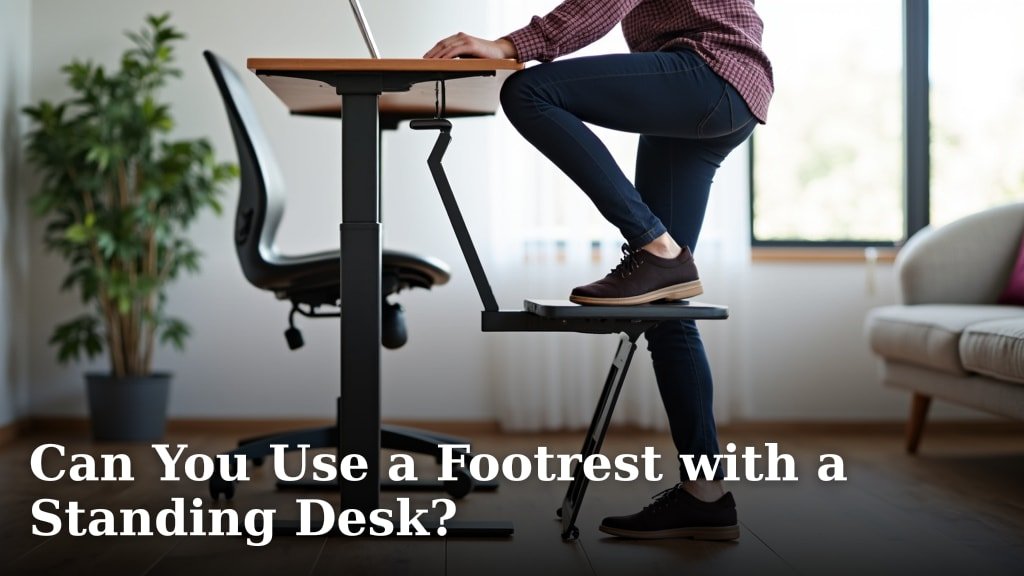
A small foot rail or bar lets you rest one foot higher than the other. This takes pressure off your lower back and changes how weight hits your feet.
You can buy a proper foot rail or use a small box. Just make sure it’s stable.
Advanced Solutions for Stubborn Pain
Still hurting after trying the basics? These options dig deeper.
Custom Orthotics
Over-the-counter insoles help many people. But custom orthotics work better for specific foot problems.
A podiatrist can check if you have flat feet, high arches, or other issues that need special support.
Compression Socks
These tight socks help blood flow back up your legs. Many people find them helpful for standing desk work.
Look for graduated compression socks. They’re tighter at the ankle and looser at the calf.
Better Flooring Options
If you control your workspace, consider softer flooring. Cork, rubber, or carpet tiles reduce impact on your feet.
When to Take Foot Pain Seriously
Most standing desk foot pain goes away with simple changes. But watch for red flags.
See a Doctor If You Have
- Severe pain that doesn’t improve with rest
- Swelling that won’t go down
- Numbness or tingling
- Pain that wakes you up at night
These could signal underlying foot problems that need professional treatment.
Building Your Perfect Standing Setup
Let’s put it all together. Here’s your action plan for pain-free standing.
| Problem Area | Quick Fix | Better Solution |
|---|---|---|
| Shoes | Wear athletic shoes | Get properly fitted supportive shoes |
| Floor | Add anti-fatigue mat | Install softer flooring |
| Standing Time | Set hourly sitting breaks | Use sit-stand scheduler app |
| Movement | Shift weight often | Add foot rail and exercises |
Start Small and Build Up
Don’t try to stand all day right away. Start with 30-minute sessions and gradually increase.
Your feet and legs need time to adapt to standing work. Be patient with the process.
Conclusion
Sore feet don’t have to end your standing desk dreams. Simple changes like better shoes, an anti-fatigue mat, and regular breaks solve most problems quickly.
Remember the 30-60 rule for standing time. Keep moving while you work. Listen to your body and adjust as needed.
With the right setup and habits, you can enjoy all the benefits of standing while keeping your feet happy and healthy.
Why do my feet hurt more in the afternoon at my standing desk?
Your feet naturally swell throughout the day due to gravity and fluid retention. This makes afternoon standing more uncomfortable. Try compression socks and take more frequent breaks after lunch.
Can I use a regular yoga mat instead of an anti-fatigue mat?
Yoga mats are too thin for standing desk use. They provide minimal cushioning compared to proper anti-fatigue mats. You need at least 0.75 inches of thickness for real relief.
How long should I stand at my desk when starting out?
Begin with 15-30 minute standing sessions and sit for equal time between them. Gradually increase standing time by 15 minutes per week until you reach your comfort zone.
Do rocker shoes or balance boards help with standing desk foot pain?
These can help by encouraging micro-movements and engaging different muscles. Start slowly though – they take time to get used to and may cause fatigue initially.
What’s the best way to transition from sitting all day to using a standing desk?
Make the change gradually over 2-4 weeks. Week one: stand 25% of the time. Week two: 50%. Week three: 75%. Adjust the timeline based on how your body feels.