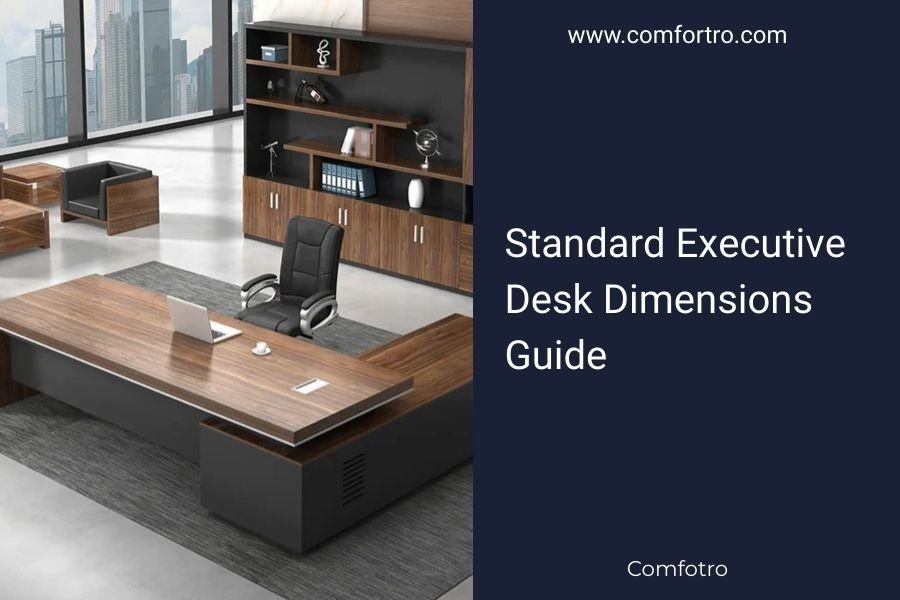
Standard executive desk dimensions typically range from 60-72 inches wide, 30 inches deep, and 29-30 inches high, with premium models extending up to 84 inches in width.
These measurements provide the workspace and professional presence most executives need, though your specific requirements may vary based on your office size and work style.
Quick Size Reference for Executive Desks
You’re shopping for an executive desk, and the numbers can feel overwhelming. Let me break this down simply.
Most executive desks fall into three main categories. Small executive desks measure 60 inches wide. Medium ones hit 66-72 inches. Large executive desks stretch 78-84 inches across your office.
The depth stays pretty consistent at 30 inches. Some go deeper to 36 inches if you need extra workspace. Height is almost always 29-30 inches – that’s the sweet spot for most people.
Why These Measurements Matter
Your desk size affects everything. Too small, and you’ll feel cramped during important meetings. Too large, and your office feels awkward.
I researched office design guidelines and found that your desk should take up no more than one-third of your office space. This leaves room for chairs, filing cabinets, and movement.
Standard Width Measurements
Width is where executive desks really vary. You have options, and each serves a different purpose.
60-Inch Executive Desks
These work great for smaller offices. You get executive styling without overwhelming your space. Perfect if your office is 10×12 feet or smaller.
Many professionals choose this size for home offices. It looks impressive on video calls but doesn’t dominate your room.
66-72 Inch Executive Desks
This is the most popular range. You get plenty of workspace for documents, computers, and meeting materials.
From what I read, most corporate executives prefer desks in this range. They balance functionality with office space requirements.
78-84 Inch Executive Desks
These are statement pieces. You need a large office – at least 12×15 feet – to make these work properly.
High-level executives often choose these sizes. They create an impressive presence for client meetings and board discussions.
Depth Considerations
Depth might seem less important, but it affects your daily comfort.
Standard 30-Inch Depth
This gives you enough space for a computer monitor, keyboard, and documents. Most people find this comfortable for daily work.
You can reach across the desk easily. Your monitor sits at a good viewing distance.
Extended 36-Inch Depth
Choose this if you spread out lots of documents. Architects, lawyers, and consultants often prefer deeper desks.
The trade-off? You might strain to reach items at the back of your desk.
Height Standards
Height varies less than other dimensions. There’s a good reason for this.
29-30 Inch Standard Height
This height works for most adults. Office chair manufacturers design their products around this measurement.
I found research showing that 29-30 inches allows proper elbow positioning for typing and writing (Occupational Safety and Health Administration).
Adjustable Height Options
Some executive desks offer adjustable legs. These usually range from 28-32 inches.
Great if multiple people use the desk or if you have specific ergonomic needs.
Room Size Planning
Your office dimensions determine which desk size works best.
| Office Size | Recommended Desk Width | Comfort Level |
|---|---|---|
| 10×10 feet | 60 inches | Cozy but functional |
| 10×12 feet | 60-66 inches | Good balance |
| 12×14 feet | 66-72 inches | Comfortable |
| 14×16 feet | 72-84 inches | Spacious |
Measuring Your Space
Before you buy, grab a measuring tape. Measure your office length and width.
Now subtract 6 feet from each dimension. That’s your maximum desk footprint including walking space.
L-Shaped Executive Desks
L-shaped desks change the measurement game completely.
Standard L-Desk Dimensions
The main section typically measures 60-72 inches. The return section adds 36-48 inches.
Total footprint becomes much larger. You need at least 12×12 feet of office space.
Corner Placement Benefits
L-desks maximize corner space that often goes unused. Smart choice for oddly shaped offices.
You get two distinct work areas – one for computer work, one for meetings or paperwork.
Executive Desk Features That Affect Size
Some features add to standard dimensions.
Built-In Storage
Pedestals add 2-3 inches to overall width. Hutches add 12-18 inches to height.
File drawers might extend the depth by 6 inches on one side.
Wire Management Systems
These usually don’t change external dimensions. But they might affect knee space underneath.
Check the specs if you’re tall or need specific legroom.
Material Impact on Measurements
Different materials can slightly change dimensions.
Solid Wood Desks
These often have thicker tops – 2-3 inches compared to 1 inch for engineered wood.
Legs might be bulkier too. This can reduce knee space slightly.
Metal and Glass Combinations
Usually have thinner profiles. You might gain an inch of legroom compared to solid wood.
Glass tops are typically 0.5 inches thick, sitting on metal frames.
Ergonomic Considerations
Size affects your physical comfort during long work days.
Monitor Distance
Your computer screen should sit 20-26 inches from your eyes. A 30-inch deep desk puts your monitor in the perfect spot.
Deeper desks might push your monitor too far away.
Leg Clearance
You need at least 24 inches of width for comfortable leg positioning. Most executive desks provide 40+ inches.
Height clearance should be 27+ inches from floor to desk bottom.
Budget Impact of Size
Larger desks cost more, but not always proportionally.
Size vs. Price Relationship
A 72-inch desk might cost 30-40% more than a 60-inch model in the same line.
Materials and construction quality affect price more than size alone.
Assembly and Delivery Considerations
Large desks create logistical challenges.
Doorway Clearance
Standard doors are 32-36 inches wide. Your 72-inch desk top won’t fit through assembled.
Most executive desks ship in pieces for this reason.
Stairway Access
Getting pieces to second-floor offices can be tricky. Measure your stairway width and ceiling height.
Some delivery services charge extra for stairs or tight spaces.
Future-Proofing Your Choice
Think beyond your current needs.
Career Growth
Will you move to a larger office? A smaller desk might limit your options.
Will you host more client meetings? Larger desks create better impression management.
Technology Changes
Monitors keep getting larger. Multiple monitor setups are becoming common.
A wider desk gives you flexibility for future tech upgrades.
Conclusion
Choosing the right executive desk dimensions comes down to balancing your space, needs, and professional image. Standard dimensions of 60-72 inches wide, 30 inches deep, and 29-30 inches high work for most situations, but measure your office first. Remember that your desk should enhance your productivity, not cramp your style. Take time to visualize how the desk will fit with chairs, filing cabinets, and foot traffic. The right size will serve you well for years and make your office a place where great work happens.
What’s the minimum office size needed for a 72-inch executive desk?
You need at least a 12×14 foot office for a 72-inch desk to allow comfortable movement and additional furniture placement around the workspace.
Can I fit an L-shaped executive desk in a 10×12 office?
An L-shaped desk typically requires at least 12×12 feet of space, so a 10×12 office would feel cramped and limit your furniture arrangement options.
Do executive desk heights work for people under 5’6″?
Standard 29-30 inch heights may be too tall for shorter individuals, but an adjustable office chair with proper lumbar support usually solves this comfort issue.
How much weight can a standard executive desk support?
Most quality executive desks support 100-200 pounds evenly distributed, though solid wood models often handle more weight than engineered wood alternatives.
What’s the difference between executive and standard office desk dimensions?
Executive desks are typically 12-24 inches wider than standard office desks, offer more storage features, and use premium materials for enhanced professional appearance.