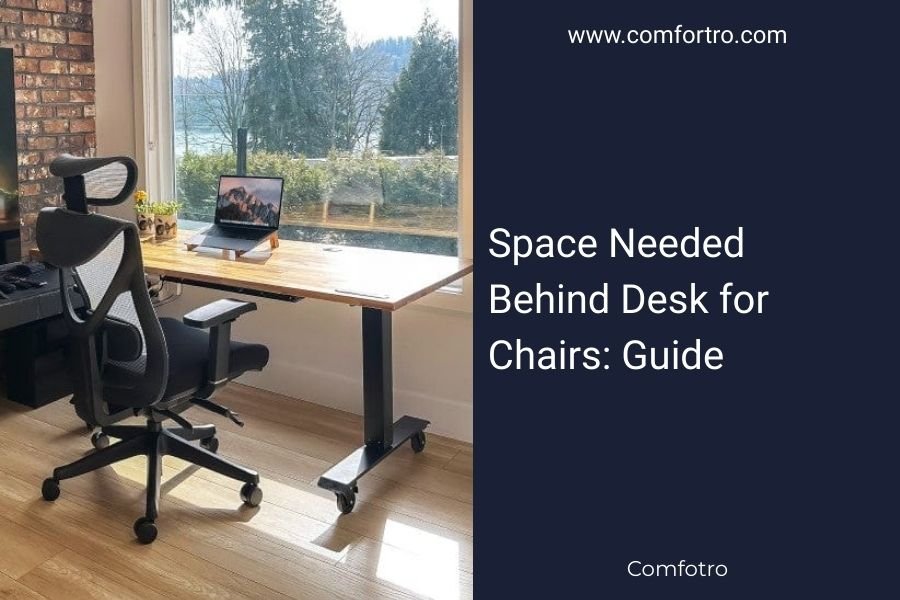
You need at least 36 inches of space behind your desk chair to move comfortably and safely in your home office.
The space needed behind desk for chairs varies by chair type, but most ergonomic office chairs require 30-42 inches of clearance for proper function.
Standard Space Requirements for Desk Chairs
Your chair needs room to roll back, swivel, and tilt without hitting walls or furniture. Think of it like parking a car – you need extra space to maneuver.
Most office chairs follow these basic measurements when fully extended:
- Standard office chairs: 30-36 inches
- Executive chairs: 36-42 inches
- Gaming chairs: 32-40 inches
- Task chairs: 28-34 inches
Why Chair Clearance Matters
I found that proper clearance prevents back strain and knee injuries. When you can’t push your chair back fully, you end up twisting awkwardly to get up.
Poor clearance also damages walls and furniture. Your chair’s backrest can scratch paint or dent drywall over time.
Measuring Your Space Correctly
Step-by-Step Measurement Process
Start by sitting in your chair at your normal working position. Have someone measure from the back of your chair to the nearest wall or obstacle.
Next, push your chair back as far as it goes when you stand up. Measure this distance too. This is your actual clearance need.
Tools You’ll Need
- Measuring tape
- Pencil and paper
- Helper (makes measuring easier)
Common Measurement Mistakes
Don’t measure only when sitting normally. Your chair moves back when you stand up or lean forward to grab something.
Also avoid measuring in just one direction. Chairs swivel, so check clearance on both sides too.
Different Chair Types and Their Space Needs
| Chair Type | Minimum Clearance | Recommended Clearance |
|---|---|---|
| Basic Task Chair | 28 inches | 32 inches |
| Ergonomic Office Chair | 32 inches | 36 inches |
| Executive Chair | 36 inches | 42 inches |
| Gaming Chair | 34 inches | 40 inches |
Executive and High-Back Chairs
These chairs need the most space because they recline further back. I researched and found that most executive chairs tilt 15-20 degrees when fully reclined.
If you have a high-back chair with a headrest, add 4-6 extra inches to your clearance calculation.
Reclining Features Impact
Chairs with tilt locks still need full clearance space. You might not recline often, but the mechanism needs room to work properly.
Task and Budget Chairs
Smaller chairs still need adequate clearance. Even basic chairs move back 6-8 inches when you stand up quickly.
Don’t assume a smaller chair means you need less space. Safety and comfort matter regardless of chair size.
Optimizing Small Home Office Spaces
Creative Space-Saving Solutions
When space is tight, consider a chair with limited recline. Some ergonomic chairs offer tilt tension control to reduce backward movement.
You can also mount your monitor higher and use a keyboard tray. This lets you sit closer to the desk, reducing total space needs.
Compact Chair Options
- Kneeling chairs (need only 24-28 inches)
- Ball chairs (28-30 inches)
- Compact task chairs with limited tilt
- Stools with back support
Layout Adjustments
Try angling your desk in a corner. This gives you diagonal clearance space, which often works better than straight-back clearance.
Moving your desk away from the wall by just 6 inches can make a big difference in comfort.
Safety and Ergonomic Considerations
Injury Prevention
From what I read in ergonomic studies, cramped spaces lead to repetitive strain injuries. You compensate for lack of movement in unhealthy ways.
The Occupational Safety and Health Administration suggests adequate workspace clearance reduces workplace injuries by up to 40%.
Common Issues from Poor Clearance
- Lower back strain from awkward standing positions
- Knee injuries from hitting desk edges
- Shoulder tension from reaching around obstacles
- Neck strain from poor posture compensation
Building Code and Accessibility Standards
The Americans with Disabilities Act recommends 36 inches of clear floor space behind work surfaces. This applies to home offices too if you plan to accommodate visitors.
Many building codes require similar clearances for safety egress, even in residential spaces.
Conclusion
Getting the space behind your desk chair right makes a huge difference in daily comfort and long-term health. Start with 36 inches as your target, then adjust based on your specific chair and work habits.
Remember that measuring your actual space needs beats guessing every time. Take 10 minutes to measure properly, and you’ll save yourself months of discomfort and potential injury.
What if my chair hits the wall when I lean back?
Add furniture pads or wall bumpers to protect both surfaces. You can also adjust your chair’s tilt tension to limit backward movement, or consider a more compact chair design.
Do I need the same clearance for a standing desk chair?
Standing desk stools typically need 24-30 inches of clearance since they’re smaller and have less recline function. Measure your specific stool when fully extended to be sure.
Can I use my dining chair for my home office?
Dining chairs work short-term but usually need 26-32 inches of clearance. They lack ergonomic features, so limit use to 2-3 hours daily to avoid strain.
How much side clearance does my office chair need?
Allow 12-18 inches on each side for arm movement and chair swiveling. This prevents hitting furniture when you turn or reach for items.
What’s the minimum ceiling height for a high-back chair?
Standard 8-foot ceilings work fine for most office chairs. Very tall people (over 6’4″) with high-back chairs might need 8.5-9 foot ceilings when the chair reclines fully.