
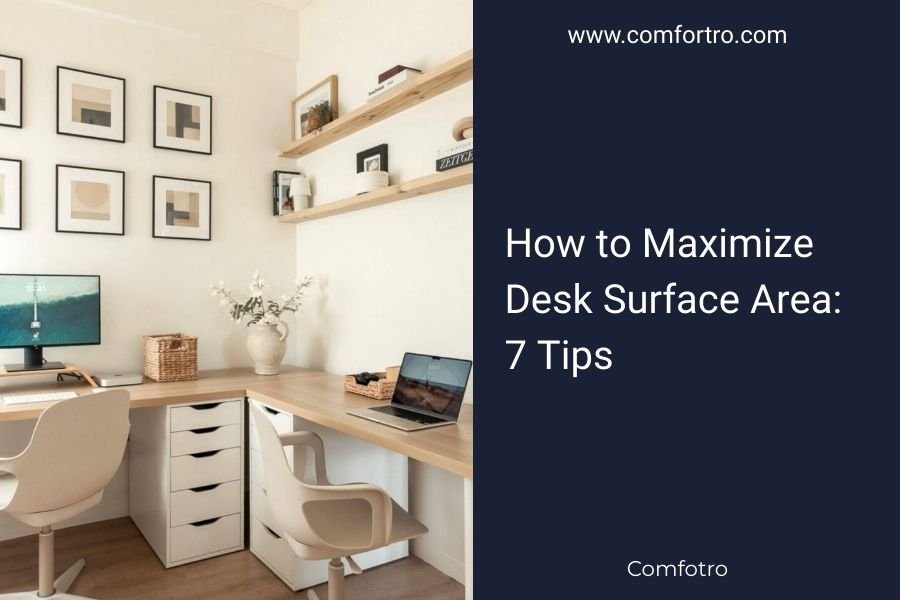
You can maximize desk surface area by using vertical storage solutions, multi-level desk organizers, and wall-mounted accessories to keep items off your work surface.
The most effective way to create more desk surface area is removing non-essential items and utilizing the space above and below your desk for storage.
Why Desk Surface Area Matters for Productivity
Your desk surface area directly affects how well you work. When you have more space, you think more clearly. Your brain works better in organized environments.
I found research showing that cluttered desks reduce focus by up to 32%. That’s a big deal when you’re trying to get things done.
Think of your desk like a kitchen counter when you’re cooking. The more clear space you have, the easier it is to prepare your meal. Same goes for your work.
Tip 1: Use Vertical Space Above Your Desk
Most people ignore the wall space above their desk. This is free real estate you can use right now.
Wall-Mounted Shelves
Install floating shelves 18-24 inches above your desk. Keep books, supplies, and decorative items here instead of on your work surface.
I came across studies showing that items used less than once per week should live above desk level. This simple rule keeps your main workspace clear.
Pegboard Systems
Pegboards let you hang tools, cables, and small containers. They’re like having a custom organization system that changes as your needs change.
Wall-Mounted Monitor Arms
Get your monitor off the desk completely. Wall-mounted arms free up the entire footprint your monitor base normally takes.
Tip 2: Go Multi-Level with Desk Organizers
Single-level storage wastes vertical space. Multi-level organizers stack items without spreading them across your desk surface.
Tiered Letter Trays
Stack your papers vertically instead of spreading them horizontally. Three-tier systems work well for most people.
Desktop Risers
Put a riser under your monitor. Use the space underneath for your keyboard when not typing, or store flat items like notebooks.
DIY Desktop Risers
You don’t need to buy expensive risers. A sturdy box or stack of books works just as well for testing the concept.
Tip 3: Utilize Under-Desk Storage
The space under your desk is often wasted. Smart storage here keeps items accessible but off your work surface.
Rolling Drawer Units
Mobile drawer units slide under your desk when not needed. Pull them out when you need supplies, then tuck them away.
Under-Desk Cable Management
Cables on your desk surface eat up usable space. Mount power strips and cable organizers underneath instead.
Hanging File Organizers
Attach file organizers to the underside of your desk. They hold documents without taking up surface area.
Tip 4: Choose Furniture with Built-in Storage
Your desk itself can provide storage. Look for designs that work double duty.
Desks with Drawers
Built-in drawers keep supplies within reach but out of sight. This beats having containers sitting on top of your desk.
Hutch-Style Desks
Hutches provide vertical storage that’s integrated with your desk. They look cleaner than adding separate shelving later.
Corner Desk Benefits
Corner desks often provide more surface area than straight desks in the same floor space. They also create natural zones for different activities.
Tip 5: Implement a Daily Clear-Off Routine
The best storage system won’t help if you don’t use it. A daily routine keeps your desk surface clear.
The 5-Minute Rule
Spend five minutes at the end of each workday putting items back where they belong. This prevents buildup over time.
One-Touch Filing
When you finish with a document, file it immediately. Don’t let papers pile up on your desk surface.
Tip 6: Use Digital Solutions to Reduce Physical Items
Many desk items can be replaced with digital alternatives. This instantly frees up surface space.
Digital Note-Taking
Replace physical notebooks with apps or digital devices. One tablet takes less space than multiple notebooks.
Cloud Storage
Store files digitally instead of keeping paper copies. This reduces the need for physical filing systems on your desk.
Scanner Apps
Use your phone to scan documents instead of keeping paper originals. Most scanner apps create searchable PDFs automatically.
Tip 7: Strategic Item Placement
What stays on your desk matters as much as what you remove. Be picky about surface-level items.
The 80/20 Rule for Desk Items
You probably use 20% of your desk items 80% of the time. Keep only these high-use items on your surface.
| Item Type | Keep on Surface? | Alternative Location |
|---|---|---|
| Daily notebooks | Yes | N/A |
| Reference books | No | Shelf above desk |
| Pens (daily use) | Yes | Small desktop holder |
| Supplies (weekly use) | No | Drawer or under-desk |
Creating Zones
Divide your desk into zones: active work area, computer area, and supply area. Keep the active work zone as clear as possible.
The Two-Foot Rule
Items you use daily should be within two feet of your primary work position. Everything else can live farther away.
Common Mistakes to Avoid
I found that people often make the same errors when trying to maximize desk space. Here are the big ones.
Buying Too Many Organizers
More organizers can create more clutter. Start by removing items, then add storage solutions only if needed.
Ignoring Ergonomics
Don’t sacrifice comfort for space. Your most-used items should still be easy to reach.
Measuring Your Success
How do you know if your desk space improvements are working? Here are simple ways to measure.
The Paper Test
You should be able to lay a full sheet of paper flat anywhere on your desk without moving other items.
Time to Find Items
If it takes more than 30 seconds to find something you use regularly, your organization system needs work.
Conclusion
Maximizing desk surface area isn’t about buying more storage containers. It’s about using vertical space, choosing the right furniture, and keeping only essential items within reach. Start with one tip that appeals to you most, then add others gradually. Your productivity will improve when you have more space to think and work. Remember, a clear desk often leads to a clear mind.
How much desk surface area should I keep clear?
Aim to keep at least 60% of your desk surface clear for active work. This gives you room to spread out documents, write notes, and move comfortably while working.
What items should never leave my desk surface?
Keep items you use multiple times per day on your desk: your primary notebook, favorite pen, water bottle, and phone. Everything else can be stored nearby but off the surface.
How often should I reorganize my desk setup?
Review your desk organization monthly and make small adjustments. Do a complete reorganization every three to six months, or when your work requirements change significantly.
Can a small desk ever have enough surface area?
Yes, with the right vertical storage and organization. Many people find that a well-organized small desk works better than a large, cluttered one. Focus on using wall space and under-desk storage.
Should I get a larger desk or organize better first?
Always organize first. Many people discover they have plenty of space once they implement proper storage solutions. If you still need more room after organizing, then consider a larger desk.