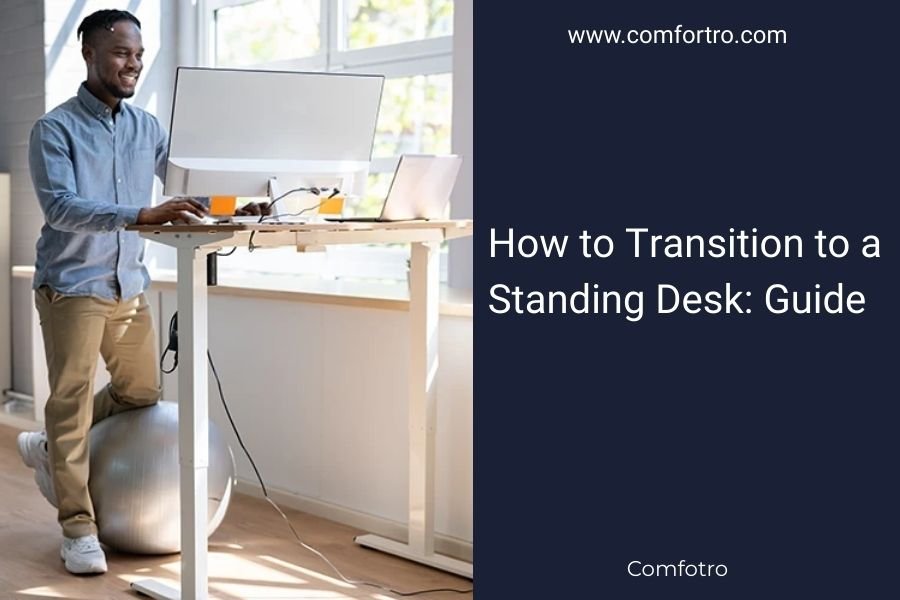
Transitioning to a standing desk takes 2-4 weeks when you gradually increase standing time by 15-30 minutes daily. Start with 15 minutes every hour and slowly build up to avoid fatigue and discomfort.
The key to a successful standing desk transition is patience – your body needs time to adapt to this new way of working.
Why Your Body Needs Time to Adapt
Think of switching to a standing desk like starting a new workout routine. You wouldn’t run a marathon on day one, right?
Your muscles, joints, and circulatory system need time to adjust. I found research showing that most people experience some initial discomfort when they first start standing while working.
This happens because your leg muscles aren’t used to supporting your weight for extended periods. Your feet might feel sore, and your back could ache at first.
The Smart Way to Start Standing
Here’s the approach that works best for most people. Start small and build gradually.
Week 1: Testing the Waters
Begin with just 15 minutes of standing every hour. Set a timer on your phone to remind yourself.
During these 15 minutes, focus on maintaining good posture. Keep your shoulders back and your weight evenly distributed on both feet.
Week 2: Building Momentum
Increase your standing time to 20-25 minutes per hour. You should start feeling more comfortable by now.
Pay attention to how your body feels. Some mild muscle soreness is normal, but sharp pain isn’t.
Week 3: Finding Your Rhythm
Try standing for 30-40 minutes each hour. Many people find this feels natural by week three.
You can also experiment with longer standing periods. Maybe stand for the first half of your morning, then sit after lunch.
Week 4: Full Adaptation
By week four, you should be able to stand comfortably for 45-50 minutes per hour. Some people prefer a 50/10 split (50 minutes standing, 10 sitting).
Setting Up Your Standing Desk Properly
The right setup makes your transition much easier. Poor ergonomics can cause unnecessary pain and slow your progress.
Monitor Height and Distance
Your screen should be at eye level when you’re standing straight. If you have to look up or down, adjust the height.
Keep your monitor about arm’s length away. This reduces eye strain and helps maintain good posture.
Keyboard and Mouse Position
Your elbows should be at a 90-degree angle when typing. Your wrists should stay straight, not bent up or down.
If your desk is too high, use an adjustable keyboard tray. If it’s too low, you might need a different desk or conversion unit.
Anti-Fatigue Mat Benefits
A good anti-fatigue mat makes a huge difference. It reduces pressure on your feet and encourages subtle movements that improve circulation.
Look for mats that are about 3/4 inch thick. Avoid mats that are too soft – they can actually make you more tired.
Common Mistakes That Slow Your Progress
I’ve come across several mistakes that make the transition harder than it needs to be.
Going Too Fast
The biggest mistake? Trying to stand all day from the start. This leads to pain, fatigue, and often giving up entirely.
Remember, slow and steady wins this race. Your body will thank you for being patient.
Poor Footwear Choices
High heels and flat shoes with no support make standing much harder. Wear comfortable shoes with good arch support.
Some people even keep a pair of standing shoes at their desk. It’s worth the investment in your comfort.
Staying Too Still
Standing like a statue isn’t healthy either. Shift your weight occasionally. Take a few steps. Stretch when you feel stiff.
Managing Discomfort During Transition
Some discomfort is normal, but you can minimize it with the right strategies.
Foot and Leg Relief
If your feet get sore, try this simple exercise: lift your toes while keeping your heels on the ground. Hold for a few seconds, then relax.
You can also shift your weight from one foot to the other every few minutes. This keeps blood flowing and reduces fatigue.
Back Pain Prevention
Lower back pain often comes from poor posture. Keep a slight bend in your knees – don’t lock them straight.
Engage your core muscles gently. Think about pulling your belly button slightly toward your spine.
When to Sit Down
Listen to your body. If you feel sharp pain, dizziness, or extreme fatigue, sit down immediately.
There’s no shame in taking breaks. The goal is building up your tolerance over time.
Creating Your Personal Schedule
Everyone’s ideal standing schedule looks different. Here are some popular approaches I found that work well.
| Schedule Type | Standing Time | Sitting Time | Best For |
|---|---|---|---|
| Beginner | 15 minutes | 45 minutes | First 2 weeks |
| Intermediate | 30 minutes | 30 minutes | Weeks 3-4 |
| Advanced | 50 minutes | 10 minutes | After 1 month |
Morning vs Afternoon Standing
Many people find they have more energy for standing in the morning. Try standing more before lunch and sitting more in the afternoon.
Others prefer the opposite – sitting during focused morning work and standing during afternoon tasks.
Task-Based Standing
Consider standing for certain activities and sitting for others. Phone calls, emails, and brainstorming often work well while standing.
Detailed writing, data analysis, or design work might be easier while sitting.
Tools That Make Transition Easier
The right accessories can speed up your adaptation and increase comfort.
Balance Boards
These add gentle movement while you stand. Start with just 5-10 minutes at a time to avoid overworking your stabilizing muscles.
Footrests and Rails
A small footrest lets you prop one foot up occasionally. This changes your posture and reduces lower back strain.
Compression Socks
These improve circulation and can reduce swelling in your feet and ankles. Many people find them helpful during the first few weeks.
Tracking Your Progress
Keep a simple log of your standing time for the first month. Note how you feel each day.
This helps you identify patterns. Maybe you stand better on certain days or times. Use this information to optimize your schedule.
Signs You’re Adapting Well
You’ll know the transition is working when standing feels natural. You won’t need to think about it constantly.
Your energy levels should improve, not decrease. Many people report feeling more alert and focused after adapting.
Long-Term Success Strategies
Once you’ve made the transition, staying consistent is key. Research from various ergonomics experts suggests that regular movement patterns become habit within 6-8 weeks.
Don’t get stuck in a rigid routine. Mix up your standing and sitting times based on your daily tasks and energy levels.
Dealing with Setbacks
If you take time off or feel like you’re going backward, don’t panic. Getting back into your standing routine usually takes just a few days, not weeks.
Be gentle with yourself. Progress isn’t always linear, and that’s perfectly normal.
Conclusion
Transitioning to a standing desk doesn’t have to be overwhelming. Start with 15 minutes per hour and gradually increase your standing time over 2-4 weeks. Focus on proper setup, wear supportive shoes, and listen to your body throughout the process.
Remember that everyone adapts at their own pace. Some people feel comfortable after two weeks, while others need a full month. The key is consistency and patience with yourself as your body adjusts to this healthier way of working.
How long should I stand at my desk on the first day?
Start with just 15 minutes every hour on your first day. This gives your body time to adjust without causing excessive fatigue or discomfort.
Is it normal for my feet to hurt when transitioning to a standing desk?
Yes, mild foot soreness is common during the first week or two. Use an anti-fatigue mat and wear supportive shoes to minimize discomfort. Sharp or severe pain isn’t normal and should be addressed.
Can I use a standing desk if I have back problems?
Many people with back issues find standing desks helpful, but consult your doctor first. Start very gradually and focus on maintaining proper posture with a slight knee bend and engaged core muscles.
What’s the ideal ratio of standing to sitting throughout the day?
After fully adapting, most experts recommend a 1:1 to 2:1 ratio of standing to sitting. This typically means 30-50 minutes of standing for every 10-30 minutes of sitting, depending on your comfort level.
Should I invest in special shoes for my standing desk?
While not required, supportive shoes with good arch support make standing much more comfortable. Many people keep a dedicated pair of comfortable, low-heeled shoes at their desk for standing work.
