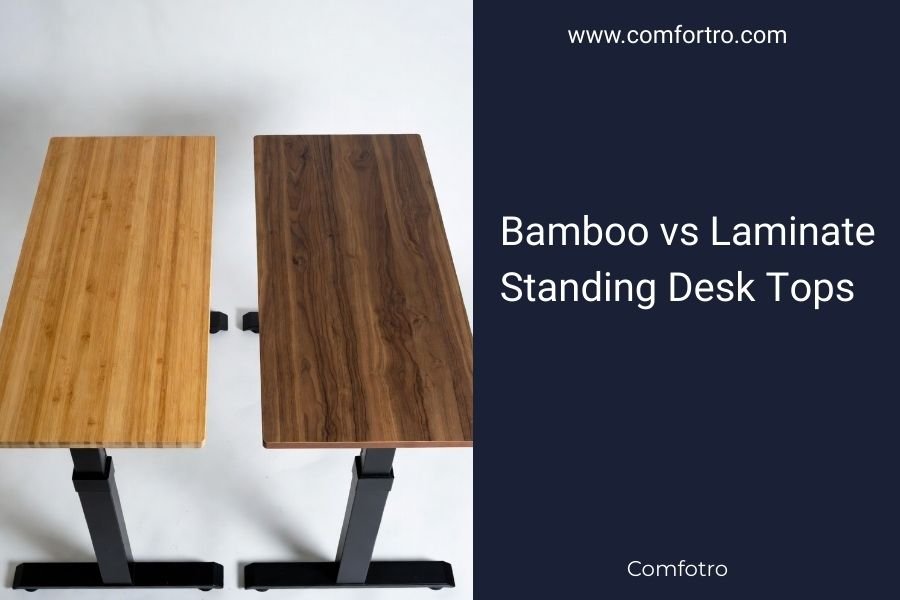
Bamboo standing desk tops offer superior sustainability and natural aesthetics, while laminate tops provide more color options and consistent patterns at lower costs.
Your choice between bamboo vs laminate standing desk tops depends on your budget, style preferences, and environmental priorities.
Quick Comparison: Bamboo vs Laminate Standing Desk Tops
Let me cut straight to what you need to know. Bamboo tops cost $150-400 and last 10-15 years with proper care. Laminate tops run $80-250 and typically last 5-10 years.
Bamboo feels warmer and more natural. Laminate gives you endless design choices. Both work well for most home offices.
| Feature | Bamboo | Laminate |
|---|---|---|
| Price Range | $150-400 | $80-250 |
| Lifespan | 10-15 years | 5-10 years |
| Water Resistance | Good with finish | Excellent |
| Style Options | Limited natural tones | Hundreds of patterns |
What Makes Bamboo Standing Desk Tops Special
Bamboo isn’t actually wood. It’s a grass that grows incredibly fast. This makes it one of the most sustainable materials you can choose.
Bamboo’s Natural Beauty
The grain patterns in bamboo create a calm, organic look. You’ll see subtle variations that make each top unique. It pairs beautifully with modern or traditional office setups.
I found that bamboo tops photograph really well if you work on video calls. The natural texture adds warmth to your background.
Durability You Can Count On
Bamboo is surprisingly strong. It’s actually 25% harder than red oak when properly processed. Your desk won’t dent easily from dropped items or daily use.
The surface develops a beautiful patina over time. Small scratches often blend into the natural grain, making them less noticeable.
Environmental Benefits
Here’s where bamboo really shines. It regenerates from its root system after harvesting. No replanting needed. It also produces 35% more oxygen than equivalent forests.
If you care about your carbon footprint, bamboo is hard to beat. Many manufacturers use low-VOC finishes too.
Why Choose Laminate Standing Desk Tops
Laminate gets a bad reputation, but modern versions look amazing. High-pressure laminate (HPL) feels solid and sophisticated.
Design Freedom
Want a white marble look? Done. Prefer dark walnut? Easy. Laminate gives you design options bamboo can’t match.
You can find laminates that mimic expensive woods, stone, metal, and abstract patterns. Some are so realistic you need to touch them to tell the difference.
Practical Performance
Spill your coffee? No problem. Laminate surfaces resist stains and water damage better than bamboo. They’re also easier to clean.
The surface stays consistent over time. You won’t see color changes or patina development like with natural materials.
Budget-Friendly Option
Quality laminate costs significantly less than bamboo. You can get a professional-looking desk top without breaking your budget.
This leaves more money for a good desk frame, monitor arms, or other office upgrades.
Performance Comparison
Weight Capacity
Both materials handle typical office loads well. Bamboo tops usually support 150-200 pounds evenly distributed. Laminate handles similar weights.
The desk frame matters more than the top material for weight capacity. Don’t let this factor drive your decision.
Temperature and Touch
Bamboo feels warmer to the touch. It doesn’t conduct heat away from your arms like laminate can. This makes typing more comfortable during long work sessions.
Laminate can feel cold initially but warms up quickly with contact.
Noise Levels
Bamboo absorbs sound slightly better than laminate. Your keyboard clicks and mouse movements will be a bit quieter.
The difference is small but noticeable in quiet home offices.
Maintenance and Care
Daily Cleaning
Laminate wins for easy maintenance. Wipe it down with any standard cleaner. It won’t stain or water-spot.
Bamboo needs gentler care. Use mild soap and water, then dry immediately. Avoid harsh chemicals that can damage the finish.
Long-term Care
Bamboo benefits from periodic oiling or waxing. This keeps the finish looking fresh and protects against moisture.
Laminate just needs regular cleaning. The surface doesn’t require conditioning or special treatments.
Scratch Repair
Light bamboo scratches often sand out and refinish well. Deep gouges are trickier but still repairable.
Laminate scratches can’t be repaired easily. Prevention is key with laminate surfaces.
Cost Analysis
Initial Investment
Expect to pay 50-80% more for bamboo initially. A quality 60×30 inch bamboo top costs $200-350. Similar laminate runs $120-220.
Long-term Value
Bamboo’s longer lifespan helps justify the higher cost. Over 15 years, the cost difference becomes smaller.
Factor in your plans too. If you might move or upgrade in 5 years, laminate makes financial sense.
Installation Considerations
Weight Differences
Bamboo tops weigh more than laminate. Make sure your frame can handle the extra weight during height adjustments.
Mounting Options
Both materials accept standard mounting hardware well. Pre-drilled holes are common on both types.
Which Should You Choose?
Pick bamboo if you want natural beauty, plan to keep your desk long-term, and don’t mind extra maintenance. It’s perfect for calm, organic office aesthetics.
Choose laminate if you prefer design flexibility, easy maintenance, and lower costs. It works great for busy offices or rental spaces.
Both materials will serve you well. Your personal preferences matter more than small performance differences.
Conclusion
The bamboo vs laminate standing desk top decision comes down to your priorities. Bamboo offers natural beauty and sustainability at higher costs. Laminate provides design flexibility and easy care at budget-friendly prices.
Both materials perform well for typical office work. Consider your budget, style preferences, and maintenance willingness. Either choice will give you years of productive workspace.
Can bamboo desk tops handle hot items like coffee mugs?
Bamboo handles moderate heat well, but use coasters for hot mugs and plates. Extreme heat can damage the finish and leave white marks that are difficult to remove.
Do laminate desk tops look cheap compared to real wood?
High-quality laminate looks surprisingly realistic and professional. Textured surfaces and edge banding make modern laminate hard to distinguish from real wood at normal viewing distances.
How often should I oil my bamboo standing desk top?
Oil bamboo tops every 6-12 months depending on use and humidity. Look for drying or dull areas as signs it needs conditioning. Use food-safe mineral oil or specialized bamboo conditioner.
Will laminate tops chip or peel over time?
Quality laminate rarely chips with normal use. Avoid hitting edges with hard objects and clean up spills promptly. Cheap laminate may show wear sooner than premium versions.
Which material works better in humid climates?
Laminate handles humidity better since it doesn’t expand or contract like bamboo. Bamboo can warp or crack in very humid conditions without proper sealing and climate control.