
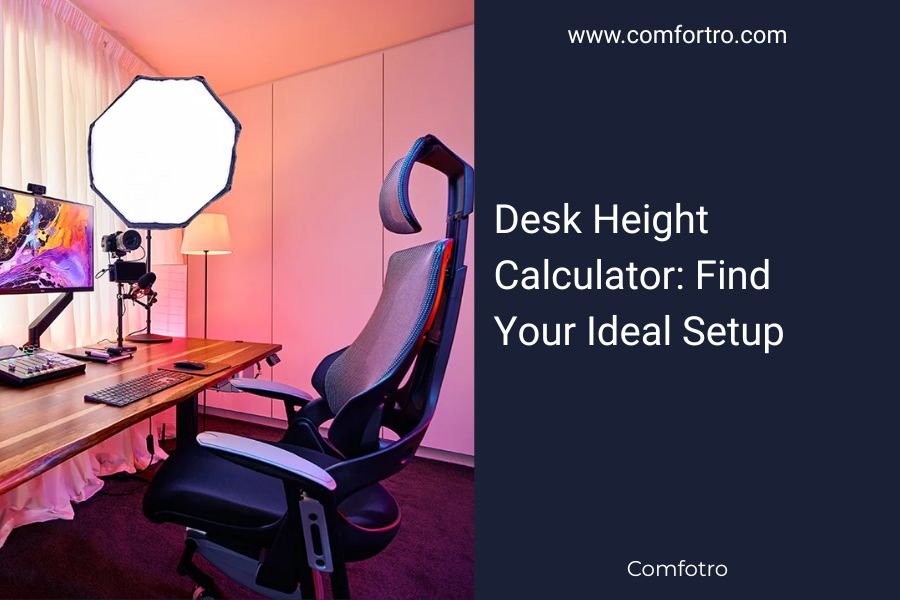
Your desk height calculator shows the perfect setup when your elbows form a 90-degree angle while typing, with feet flat on the floor.
For most people, desk height falls between 28-30 inches, but your personal measurements determine your ideal workspace setup.
Why Desk Height Matters More Than You Think
Getting your desk height wrong can mess up your entire workday. I researched workspace ergonomics and found that poor desk height causes neck pain, shoulder tension, and wrist problems.
Think about it this way: you spend 8+ hours at your desk daily. That’s like sitting in an uncomfortable chair for a third of your life. Your body deserves better than that constant strain.
The Hidden Costs of Wrong Desk Height
When your desk sits too high, you hunch your shoulders up like a stressed cat. Too low? You bend forward and crane your neck down.
Research from the Occupational Safety and Health Administration shows that repetitive strain injuries cost companies billions yearly. Most of these problems start with basic setup mistakes.
How to Calculate Your Perfect Desk Height
Here’s the simple math that works for everyone:
Standing Desk Height Formula
Multiply your height in inches by 0.63. This gives you your ideal standing desk height.
For example: if you’re 5’8″ (68 inches), your standing desk should be about 43 inches high.
Sitting Desk Height Formula
Take your elbow height while sitting and add 1-2 inches. This accounts for keyboard thickness and natural arm positioning.
Most standard desks are 29 inches tall. But “standard” doesn’t mean right for you.
Quick Measurement Steps
- Sit in your chair with feet flat on the floor
- Keep your back straight against the chair
- Let your arms hang naturally at your sides
- Bend your elbows to 90 degrees
- Measure from floor to your elbow height
Desk Height by Person Height Chart
| Your Height | Sitting Desk Height | Standing Desk Height |
|---|---|---|
| 5’0″ – 5’2″ | 25″ – 27″ | 38″ – 40″ |
| 5’3″ – 5’5″ | 26″ – 28″ | 40″ – 42″ |
| 5’6″ – 5’8″ | 27″ – 29″ | 42″ – 44″ |
| 5’9″ – 5’11” | 28″ – 30″ | 44″ – 46″ |
| 6’0″ – 6’2″ | 29″ – 31″ | 46″ – 48″ |
What If You’re Between Sizes?
Go with the lower height first. It’s easier to add a keyboard tray or raise your monitor than to lower a fixed desk.
Monitor Height Matters Too
Your screen setup works hand-in-hand with desk height. I found that many people get their desk right but mess up their monitor placement.
The 20-20-20 Rule for Monitor Placement
Position your monitor 20-26 inches away. The top of your screen should sit at or below eye level. Tilt it back 10-20 degrees.
This prevents that forward head posture that makes you look like a curious turtle.
Multiple Monitor Setup
Put your primary monitor directly in front of you. Secondary screens should be at the same height and distance.
Don’t make your neck do gymnastics all day switching between different height screens.
Adjustable Solutions for Every Budget
Budget-Friendly Fixes
Can’t buy a new desk right now? No problem. Here are some clever workarounds:
- Add keyboard tray to lower your typing surface
- Use desk risers to add height
- Stack books under your monitor
- Get an adjustable footrest
DIY Desk Riser Ideas
PVC pipes, wooden blocks, or even sturdy storage containers work as desk risers. Just make sure they’re stable and level.
Professional Adjustable Desks
Sit-stand desks give you the best of both worlds. Research from the American Journal of Preventive Medicine shows that alternating between sitting and standing improves health outcomes.
Electric vs Manual Adjustable Desks
Electric desks cost more but you’ll actually use them. Manual cranks get annoying fast, and most people stop adjusting after a few weeks.
Common Desk Height Mistakes
The “One Size Fits All” Trap
Your spouse’s perfect desk height might be torture for you. Even a 2-inch difference in height changes your ideal setup.
Ignoring Your Chair
Your chair height affects everything else. Start with proper chair adjustment, then work on desk height.
Chair Height Basics
Your thighs should be parallel to the floor. Feet should rest flat without pressure behind your knees.
Forgetting About Keyboard and Mouse
These need to be at the same level as your elbows. Many people get their desk height right but place their keyboard on the desktop instead of using a tray.
Special Considerations for Different Work Styles
Writers and Heavy Typists
You need your keyboard and mouse at elbow level more than anyone. Consider a keyboard tray even if your desk height seems perfect.
Wrist Support Reality Check
Wrist rests should support your palms during breaks, not while you’re actively typing. Your wrists should float while you work.
Designers and Creative Professionals
Drawing tablets and graphics work need different positioning than standard typing. You might need multiple work surfaces at different heights.
Tablet and Touch Screen Considerations
These should be closer and at a steeper angle than regular monitors. Your arm shouldn’t have to reach far for touch interactions.
Signs Your Desk Height Is Wrong
Your body sends clear signals when your setup doesn’t work:
- Shoulder tension and upper back pain
- Neck strain from looking up or down
- Wrist pain or tingling fingers
- Eye strain and headaches
- Feeling tired after short work sessions
The Two-Week Test
Give any height adjustment two weeks before deciding if it works. Your body needs time to adapt to new positioning.
Conclusion
Your desk height calculator gives you a starting point, but your body gives you the final answer. Start with the measurements, then fine-tune based on how you feel after working.
Remember that small adjustments make big differences. Even an inch up or down can transform your comfort level and productivity. Don’t settle for “good enough” when “just right” is within reach.
What’s the difference between sitting and standing desk heights?
Standing desks need to be 15-16 inches higher than sitting desks. This accounts for the difference in elbow height when you’re standing versus sitting in a chair.
Should I buy an adjustable desk or use a fixed height?
Adjustable desks work better for most people because you can fine-tune the height and switch between sitting and standing. Fixed desks only work if they happen to match your measurements perfectly.
How often should I adjust my desk height?
Once you find your perfect height, you shouldn’t need daily adjustments. But check your setup every few months, especially if you change chairs, shoes, or develop any discomfort.
Can I use a regular desk with a tall chair instead of buying a new desk?
This creates new problems because your feet won’t reach the floor properly. You’d need a footrest, and even then, the proportions might not work well for your body mechanics.
What if my calculated desk height doesn’t feel comfortable?
Trust your body over the calculator. The formulas give you a good starting point, but personal comfort, arm length, and torso proportions can change your ideal height by several inches.
