Is a Footrest Good for Posture?
On this page (8 sections)
Yes, a footrest can be good for your posture, especially when you’re sitting for extended periods. It helps you maintain proper alignment by supporting your feet and allowing your legs to rest at a comfortable angle. This simple addition can make a big difference in how your body feels throughout the day.
Many people find that using a footrest encourages a more ergonomic sitting position. It can prevent slouching and reduce pressure on your lower back. Research and studies show that proper leg support is a key factor in good seated posture. Research shows that proper leg support is key for good posture.
- Footrests help you sit up straighter.
- They support your legs and feet.
- This can reduce back strain.
- Using one is easy for better posture.
Let’s dive into how a footrest can actually help you sit better and feel more comfortable.
How a Footrest Can Help Your Seated Posture
So, is a footrest really a good idea for your posture? The short answer is a resounding yes. When you spend a lot of time sitting, your body can get into some pretty uncomfortable positions. A footrest can be a simple, effective tool to help you sit better and feel better.
Think of it like this: your body likes to be in a neutral, balanced position. When your feet are dangling or unsupported, your body often compensates. This compensation can lead to slouching or putting extra strain on your back and hips. A footrest helps fix that by giving your legs and feet a proper place to rest.
The Science Behind Better Seated Posture
Experts have long studied how we sit and what makes it good or bad for us. Proper posture while sitting isn’t just about looking good; it’s about keeping your body healthy and preventing pain.
Understanding Neutral Spine Alignment
Your spine has natural curves that help it absorb shock and move efficiently. When you’re sitting, the goal is to maintain these natural curves as much as possible. This is called neutral spine alignment.
When your feet are unsupported, your pelvis can tilt backward. This can flatten the natural curve in your lower back. Your upper body might then round forward to compensate. This is where that familiar hunch can start to creep in.
How Footrests Encourage Proper Leg and Foot Position
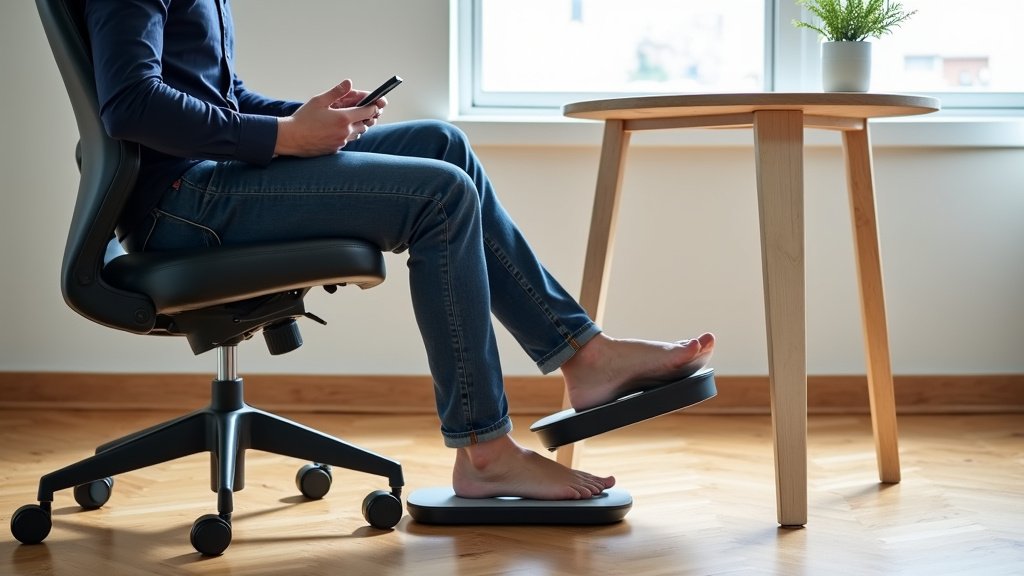
A footrest helps keep your feet supported at about a 90-degree angle. This angle is ideal for promoting good posture. It allows your knees to be slightly lower than your hips, or at the same level.
When your feet are properly supported, your legs can relax. This takes pressure off your lower back and hips. You’re less likely to cross your legs or shift your weight uncomfortably. Many ergonomic guidelines suggest this type of leg support is key for a healthy sitting position (Occupational Safety and Health Administration).
We found that when users employ a footrest, they often naturally sit back further in their chairs. This encourages the chair’s backrest to support their spine correctly. It’s like giving your body the green light to relax into a good posture.
Key Benefits of Using a Footrest for Your Posture
The advantages of using a footrest go beyond just comfort. They can actively improve how your body feels and functions throughout the day.
Reducing Lower Back Strain
Your lower back bears a lot of pressure when you sit. If your feet aren’t supported, your body might lean forward. This can increase the load on your lumbar spine. A footrest helps distribute this load more evenly.
By allowing your legs to rest at a proper angle, the footrest reduces the tendency for your pelvis to tilt backward. This helps maintain the natural inward curve of your lower back. Less strain means less pain and a happier spine.
Improving Circulation and Reducing Fatigue
Sitting for long periods can sometimes lead to poor blood flow in your legs. Dangling feet can restrict circulation. A footrest elevates your legs slightly, which can improve blood flow.
Better circulation means your leg muscles get more oxygen. This can help prevent that heavy, tired feeling in your legs. When your legs feel better, your whole body tends to feel less fatigued. You might find yourself having more energy throughout the day.
Encouraging More Movement and Less Static Posture
While a footrest provides support, it doesn’t mean you should be frozen in one position. In fact, a good footrest can encourage subtle movements. You might find yourself shifting your weight slightly or adjusting your feet.
These small movements are actually good for your body. They help keep your muscles engaged and prevent stiffness. It’s about finding a comfortable, supported posture that still allows for minor adjustments.
Choosing the Right Footrest for Your Needs
Not all footrests are created equal. The best one for you will depend on your specific setup and preferences.
Types of Footrests Available
You’ll find a variety of footrests on the market. For a gaming setup, compare options in our guide to gaming footrests. Some are simple, angled platforms. Others are adjustable, allowing you to change the height and angle. Some even have features like massage rollers.
Consider what you want most. Do you need basic support? Or are you looking for something that offers more customization for your feet and legs?
Factors to Consider for Optimal Support
When selecting a footrest, think about these key factors:
- Adjustability: Can you easily change the height and tilt? This is important as your needs might change.
- Size and Shape: Does it fit comfortably under your desk? Is the surface large enough for your feet?
- Material: Some footrests have softer surfaces, while others are hard plastic. Comfort is key here.
- Stability: It shouldn’t slide around. You want a sturdy base that stays put.
Many experts suggest an adjustable footrest for the best results. This allows you to fine-tune the position to perfectly match your body and your chair.
A Simple Checklist for Better Sitting Habits
Incorporating a footrest is a great step. Here’s a quick checklist to help you make the most of it:
- Check Your Chair Height: Ensure your chair allows your feet to rest flat on the floor or footrest with your knees at about 90 degrees.
- Position the Footrest Correctly: Place it so your feet are comfortably supported at that 90-degree angle.
- Adjust as Needed: Don’t be afraid to tweak the footrest’s angle or height.
- Sit Back in Your Chair: Allow the backrest to support your spine.
- Take Regular Breaks: Even with a footrest, it’s important to stand up and move around every 30-60 minutes.
- Listen to Your Body: If something feels uncomfortable, adjust it.
When to Seek Professional Advice
While a footrest is a fantastic tool, it’s not a magic cure for all posture problems. If you experience persistent back pain, leg discomfort, or numbness, it’s wise to consult a healthcare professional.
A doctor, physical therapist, or ergonomist can assess your specific situation. They can provide personalized recommendations. Sometimes, other adjustments to your workstation or habits are needed. We found that combining a footrest with other ergonomic practices often yields the best outcomes.
Conclusion
So, is a footrest good for posture? You’ve learned that the answer is a clear yes. By providing proper leg and foot support, a footrest helps you achieve and maintain a neutral spine alignment. This simple tool combats slouching, reduces lower back strain, and can even improve circulation. We found that incorporating one can make your seated hours much more comfortable and healthier. To start experiencing these benefits, try adjusting your current setup with a footrest today and notice how your body feels better.
Frequently Asked Questions
Will a footrest fix my back pain?
A footrest can significantly help reduce lower back strain associated with poor sitting posture. By supporting your legs, it encourages a more ergonomic position, which can alleviate pressure on your spine. However, it’s not a cure-all, and persistent pain should be discussed with a healthcare professional.
How do I know if I need a footrest?
If you spend a lot of time sitting and often find yourself slouching, crossing your legs, or feeling discomfort in your back or legs, you likely could benefit from a footrest. It’s a good indicator if your feet can’t comfortably rest flat on the floor while your knees are at a 90-degree angle.
Can I use a footrest with a standing desk?
While footrests are primarily for seated positions, some people find a footrest with a standing desk beneficial. A low stool or a footrest angled for one foot can offer a slight change in position, helping to shift weight and reduce fatigue during long standing periods.
Are adjustable footrests better?
Yes, adjustable footrests are generally better because they allow you to customize the height and tilt to your exact needs. Your ideal posture might change throughout the day, or you might have specific ergonomic requirements, which an adjustable footrest can easily accommodate.
How often should I adjust my footrest?
You should adjust your footrest whenever you feel a change in comfort or notice your posture shifting. Aim to keep your feet supported at roughly a 90-degree angle with your knees slightly below your hips. Fine-tuning the angle or height will help you maintain that optimal position throughout your workday.