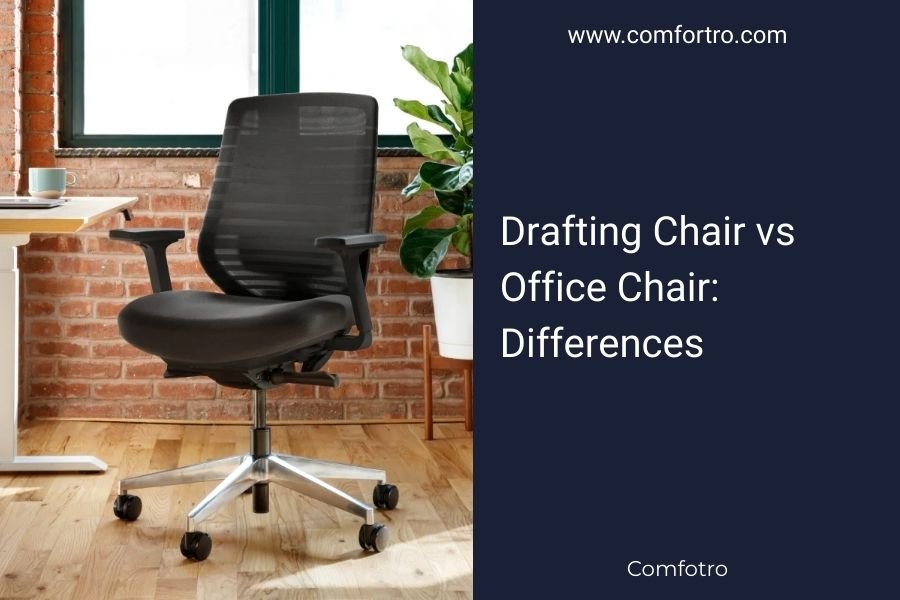
A drafting chair sits higher than a regular office chair, typically 24-34 inches from the floor, and includes a foot ring for support while working at elevated surfaces like standing desks or drafting tables.
The main difference between drafting chair vs office chair lies in height adjustment range, with drafting chairs offering extended cylinder mechanisms and foot rings that standard office chairs lack.
What Makes Drafting Chairs Different
You’ve probably seen these tall chairs in architect offices or design studios. They look like regular office chairs that grew a few inches. That’s basically what they are.
Drafting chairs were originally built for people who work at tilted drawing boards. Think of those angled desks where architects sketch building plans. You need to sit higher to reach the work surface comfortably.
Height is the Main Game Changer
Regular office chairs adjust from about 16 to 21 inches high. Drafting chairs start where office chairs end. They go from 21 inches up to 34 inches or more.
This extra height comes from a longer gas cylinder. It’s the same mechanism that lets you pump your chair up and down, just stretched taller.
The Foot Ring Makes All the Difference
Here’s where it gets smart. When you sit up high, your feet dangle. That’s uncomfortable and bad for circulation.
Drafting chairs have a circular foot ring around the base. It’s like a built-in footrest that moves with your chair. You can rest your feet there instead of letting them hang.
When You Actually Need a Drafting Chair
Most people buy drafting chairs for the wrong reasons. They think taller equals better. Not always true.
Standing Desk Users
If you have a standing desk that adjusts height, a drafting chair makes sense. You can perch at different levels throughout the day. It’s like having a tall stool with back support.
Counter-Height Workspaces
Some people work at kitchen islands or bar-height tables. A regular office chair leaves you too low. A drafting chair brings you to the right level.
Creative Professionals
Artists, architects, and designers often work on large surfaces or easels. The extra height gives them better viewing angles and reach.
Lab and Medical Settings
Researchers often work at tall lab benches. Medical professionals use drafting chairs at examination stations. The height keeps them at the right level for their work.
Comfort Differences You Should Know
Sitting higher changes how your body feels. Not always in good ways.
Back Support Changes
When you sit taller, your posture shifts. Your back curve changes slightly. Some people find this more comfortable. Others feel less supported.
I found online that many physical therapists recommend trying before buying. Your spine might react differently than expected.
Circulation Considerations
Higher seating can reduce blood flow to your legs if the foot ring isn’t positioned right. Make sure you can rest your feet flat on the ring without stretching.
Armrest Adjustments
Drafting chair armrests need more adjustment range. They have to work at multiple heights. This usually means more complex mechanisms.
Simple fixed armrests don’t work well on drafting chairs. You need height adjustment at minimum.
Price and Value Comparison
Drafting chairs cost more than similar office chairs. The extended cylinder and foot ring add manufacturing complexity.
| Feature | Office Chair | Drafting Chair |
|---|---|---|
| Basic Model Price | $100-200 | $150-300 |
| Height Range | 16-21 inches | 21-34 inches |
| Foot Support | Floor only | Adjustable ring |
| Best For | Standard desks | High surfaces |
Long-term Investment Considerations
You’re paying extra for features you might not use. If you work at a regular 29-30 inch desk, that extra height range is wasted money.
Replacement Parts Cost More
Extended cylinders and specialized foot rings cost more to replace. Standard office chair parts are more common and cheaper.
Common Mistakes People Make
Don’t buy a drafting chair just because it looks professional. Here’s what goes wrong.
Wrong Height for Your Desk
Many people buy drafting chairs for regular desks. You end up sitting too high and straining your arms downward. That causes shoulder tension.
Ignoring Your Monitor Height
Sitting higher puts your eyes above most monitor stands. You’ll look down at your screen, creating neck strain. You need to raise your monitor too.
Foot Ring Positioning Problems
The foot ring needs to hit the right spot on your legs. Too high and it presses your thighs. Too low and your feet dangle.
Most rings adjust up and down the chair base. Test this adjustment range before buying.
Making the Right Choice for Your Setup
Measure your workspace first. Here’s what matters most.
Desk Height Measurement
Standard office desks are 28-30 inches high. You want your elbows at 90 degrees when typing. That puts your seat around 16-20 inches high.
For higher surfaces like standing desk converters or drafting tables, you need the extra height range.
Your Body Proportions Matter
Tall people with long legs might prefer drafting chairs even at regular desks. The extra adjustment range gives more positioning options.
Short people often find drafting chairs overwhelming. Even at the lowest setting, they might sit too high.
Work Style Assessment
Do you switch between sitting and standing? A drafting chair makes this transition smoother. You can perch at different heights instead of fully standing or sitting.
Movement Requirements
Some drafting chairs roll less smoothly due to their taller design. The higher center of gravity affects stability. Consider this if you move around your workspace frequently.
Conclusion
The choice between a drafting chair vs office chair comes down to your actual workspace needs. If you work at elevated surfaces, need variable height positioning, or use a sit-stand desk regularly, a drafting chair makes sense. The foot ring and extended height range serve real purposes in these situations.
For standard desk work at 29-30 inch surfaces, a regular office chair will serve you better and cost less. Don’t get caught up in the professional appearance of drafting chairs if you don’t need their specific features. Measure your workspace, consider your daily tasks, and choose based on function rather than looks.
Can I use a drafting chair at a regular desk?
You can, but it’s not ideal. Most drafting chairs will position you too high for standard 29-30 inch desks, causing you to reach down awkwardly for your keyboard and mouse. This creates shoulder and neck strain over time.
Do drafting chairs provide better back support than office chairs?
Not necessarily. The quality of back support depends on the chair’s design, not its height. Many office chairs offer superior ergonomic features compared to basic drafting chairs. The higher seating position can actually change your spine curve in ways that feel less supportive.
How do I know if the foot ring is at the right height?
Your thighs should be parallel to the floor with your feet flat on the ring. You shouldn’t feel pressure against the back of your thighs, and your feet shouldn’t dangle or stretch to reach the ring. Most rings adjust 4-6 inches up and down the chair base.
Are drafting chairs more durable than regular office chairs?
Drafting chairs often use reinforced components to handle the taller design, which can increase durability. But the extended cylinder and foot ring are additional parts that can break. Overall durability depends more on build quality than chair type.
What’s the maximum weight limit difference between these chair types?
Weight limits are similar between comparable chair models. The taller design of drafting chairs doesn’t significantly affect weight capacity. Most quality drafting chairs support 250-300 pounds, same as office chairs. Always check the specific model’s rating rather than assuming based on chair type.