Using a standing desk mat with shoes provides better support and hygiene, while barefoot offers superior balance and natural foot movement.
Your choice between shoes or barefoot on a standing desk mat depends on your comfort needs, foot health, and workplace environment.
Shoes vs Barefoot: The Quick Answer
Most people wonder if they should keep their shoes on when using a standing desk mat. The answer isn’t one-size-fits-all.
Shoes give you arch support and protect your feet from cold floors. Going barefoot lets your feet move naturally and improves your balance. Both have real benefits.
I researched this topic and found that podiatrists often recommend trying both approaches. Your feet will tell you what feels right.
Why Shoes Work Well on Standing Desk Mats
Wearing shoes on your standing desk mat isn’t just about looking professional. There are solid health reasons too.
Better Arch Support
Your shoes provide arch support that most standing mats can’t match. If you have flat feet or high arches, your shoes help distribute weight properly.
Good work shoes also have heel cushioning. This extra layer works with your mat to reduce impact on your joints.
Protection from Temperature
Office floors get cold, especially in winter. Cold feet can make you tense up and change how you stand.
Shoes keep your feet warm and comfortable. This helps you maintain better posture throughout the day.
Professional Appearance
Let’s be honest – most workplaces expect shoes. Client calls, surprise meetings, and office culture all play a role.
You don’t want to scramble for shoes every time someone walks by your desk.
The Case for Going Barefoot
Taking off your shoes might sound unprofessional, but your feet might thank you for it.
Natural Foot Movement
Your feet have 26 bones and over 100 muscles. Shoes restrict how these parts move and work together.
Going barefoot on your mat lets your feet spread naturally. This can help with balance and reduce foot fatigue.
Better Mat Connection
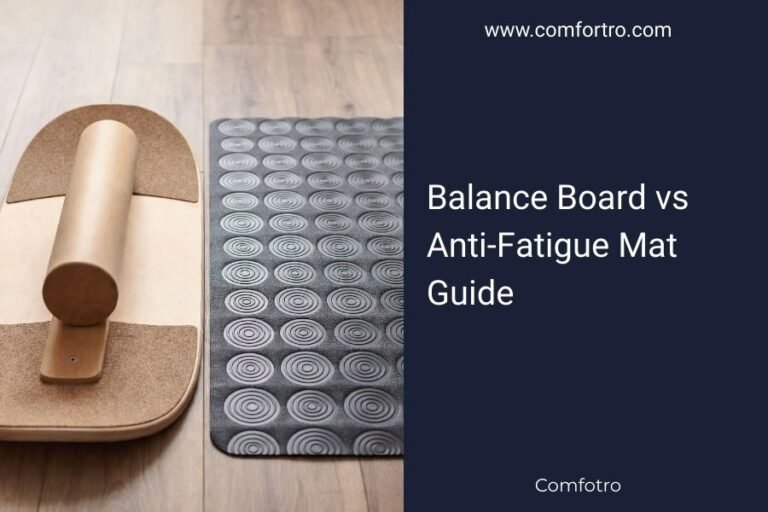
Standing mats work by creating small instabilities that engage your leg muscles. Your bare feet feel these movements better than shoes do.
This improved feedback can lead to better posture adjustments throughout the day.
Foot Muscle Strengthening
When you go barefoot, your foot muscles work harder to maintain balance. Over time, this can strengthen your feet and lower legs.
Research from Harvard Medical School suggests that barefoot walking can improve foot strength and flexibility.
Health Considerations for Each Option
Your foot health should guide your decision more than comfort or convenience.
When to Choose Shoes
Some foot conditions work better with shoes on your standing mat.
- Plantar fasciitis or heel pain
- Flat feet or fallen arches
- Diabetic foot issues
- Recent foot injuries
- Very cold work environment
The American Podiatric Medical Association often recommends proper footwear for people with these conditions.
When Barefoot Makes Sense
If you have healthy feet, going barefoot can offer benefits.
- No foot pain or injuries
- Good balance and stability
- Warm office environment
- Private workspace
- Desire to strengthen foot muscles
Choosing the Right Standing Desk Mat
Your mat choice affects whether shoes or barefoot works better.
For Shoe Wearers
Look for firmer mats with good stability. You want something that won’t compress too much under your shoe’s heel.
Thicker mats (around 3/4 inch) work well with shoes. They provide cushioning without being too soft.
Texture Considerations
Smooth surfaces work fine with shoes. You don’t need special textures when wearing footwear.
For Barefoot Standing
Softer, more textured mats feel better on bare feet. Look for materials that aren’t too rough or too slippery.
Medium thickness (around 1/2 inch) often works best. Too thick and you lose stability. Too thin and you lose comfort.
Material Matters
Anti-microbial materials help if you’re going barefoot regularly. This prevents odor and bacteria buildup.
Hygiene Factors to Consider
Going barefoot means thinking about cleanliness more than usual.
Mat Cleaning
You’ll need to clean your mat more often if you use it barefoot. Foot oils and sweat can build up quickly.
Most mats clean easily with soap and water. Some are even dishwasher safe.
Foot Care
Keep your feet clean and dry if you’re going the barefoot route. Consider bringing slippers or socks to slip on when needed.
Workplace Culture and Etiquette
Your office environment plays a big role in this decision.
Open Office Considerations
Open offices usually mean staying in shoes. Your coworkers and visitors expect professional appearance.
If you want to try barefoot, consider discussing it with your manager first.
Private Office Freedom
Your own office gives you more options. You can easily switch between shoes and barefoot as needed.
Keep a pair of slip-on shoes nearby for quick meetings or visitors.
Finding Your Personal Balance
Many people find that a mixed approach works best.
Time-Based Strategy
Try wearing shoes during busy morning hours and going barefoot during quieter afternoon periods.
This gives you professional appearance when needed and comfort when possible.
Seasonal Adjustments
Summer might be perfect for barefoot standing, while winter calls for warm shoes.
Listen to your body and adjust based on temperature and comfort.
Common Mistakes to Avoid
Don’t make these errors when deciding between shoes and barefoot.
Ignoring Foot Pain
If your feet hurt, don’t push through it. Switch methods or take breaks from standing.
Not Cleaning Your Mat
Dirty mats can cause skin problems and odors. Clean regularly regardless of your footwear choice.
Wrong Mat for Your Method
A mat designed for shoes might not work well barefoot, and vice versa.
Making the Switch Safely
If you want to try a different approach, do it gradually.
Transition Period
Start with 30-minute periods of your new method. Build up slowly over a week or two.
Your feet need time to adjust to different support and movement patterns.
Listen to Your Body
Some discomfort is normal when changing habits. Sharp pain or lasting soreness isn’t.
If problems persist after a few days, go back to your previous method.
Conclusion
The choice between shoes and barefoot on your standing desk mat comes down to your personal needs, foot health, and work environment. Shoes provide support and professionalism, while barefoot offers natural movement and better mat feedback. Many people find success with a mixed approach, wearing shoes during busy periods and going barefoot when privacy allows. Start with what feels comfortable and don’t be afraid to experiment. Your feet will guide you to the right choice for your situation.
Should I wear supportive shoes or regular shoes on my standing desk mat?
Supportive shoes with good arch support and cushioning work best on standing desk mats. Athletic shoes or quality work shoes designed for long periods of standing will reduce foot fatigue better than dress shoes or flats.
How do I keep my standing desk mat clean if I use it barefoot?
Clean your mat weekly with mild soap and warm water, then let it air dry completely. For daily maintenance, wipe it down with antibacterial wipes. Choose mats with antimicrobial properties to reduce odor and bacteria growth.
Can going barefoot on a standing desk mat cause foot problems?
Going barefoot is generally safe for people with healthy feet, but those with plantar fasciitis, flat feet, or diabetes should stick with supportive shoes. If you experience new pain after switching to barefoot, return to wearing shoes.
What type of standing desk mat works best for barefoot use?
Look for mats with medium firmness, textured surfaces for grip, and antimicrobial materials. Avoid mats that are too soft (which reduce stability) or too firm (which feel uncomfortable on bare feet).
Is it unprofessional to use a standing desk mat barefoot in the office?
This depends on your workplace culture and office setup. Private offices offer more flexibility, while open offices typically require maintaining a professional appearance with shoes. When in doubt, ask your supervisor about the company’s footwear expectations.