
The easiest way to soundproof a home office involves a combination of sealing gaps, adding mass, and using sound absorption materials to block unwanted noise. You can dramatically reduce distractions, creating a more peaceful and productive workspace without major renovations.
Working from home has its perks, but noisy neighbors, barking dogs, or even household chatter can make focusing tough. We found that a few strategic improvements can turn your office into a quiet sanctuary. Don’t you deserve a little peace and quiet while you work?
- Seal gaps around doors and windows.
- Add mass to walls and doors.
- Use sound-absorbing panels or furniture.
- Block flanking noise paths.
- Improve window sound insulation.
Let’s walk through exactly how to achieve that much-needed quiet in your home office, step by step.
Optimizing Your Home Office for Quiet
You’re ready to create a peaceful workspace. That’s a great goal! We found that successful soundproofing starts with understanding how sound travels. It’s not magic; it’s physics. Sound travels through vibrations, both through the air and through solid materials (National Institute of Health).
Think of sound like water. If there’s a crack, water will find its way through. Sound does the same thing. So, our first mission is to seal up any sound leaks. This means looking at doors, windows, and even electrical outlets. Don’t worry, you don’t need to be a contractor to do this.
Sealing Gaps for Better Sound Isolation
Even small gaps can let a lot of sound in and out. Have you ever noticed how much street noise comes through a slightly open window? The same applies to tiny cracks. Sealing these gaps is often the most cost-effective first step.
Door Sweeps and Weatherstripping
Your door is usually the biggest culprit for sound leaks. Look at the bottom of your office door. Can you see light coming through? That’s an open invitation for sound. A simple door sweep can block this gap. We found many affordable options that are easy to install.
Next, check around the door frame itself. Is there a consistent seal when the door is closed? If not, adhesive weatherstripping can make a big difference. It creates a tighter seal, stopping sound from seeping around the edges. This small change can surprisingly reduce ambient noise.
Window Seals and Caulking
Windows are another common entry point for noise. Just like doors, they can have tiny gaps. Inspect the caulking around your window frames. Is it cracked, old, or missing? Re-caulking with an acoustic sealant can effectively block these sound paths.
For windows that don’t seal tightly, you might consider adding a removable window insert. These act like a second pane of glass, creating an air gap that helps to dampen outside sounds. They are especially useful if you live in a noisy area.
Increasing Mass to Block Noise
Once you’ve sealed the obvious gaps, the next step is to add mass. Why mass? Because denser, heavier materials are much better at stopping sound waves. Imagine trying to shout through a thin sheet versus a thick concrete wall. The thicker wall does a much better job.
Thickening Your Doors
Most interior doors are hollow-core. They are light and offer very little sound protection. If replacing your door isn’t an option, you can still improve it. Adding a layer of mass to your existing door can help. We found that sound-absorbing panels or even a thick moving blanket can be draped over the door on the inside.
You can also attach a sheet of mass loaded vinyl (MLV) to the door. This material is heavy and flexible, making it excellent for sound blocking. Just make sure your door hinges can support the added weight. It’s a simple way to upgrade your door’s sound insulation without major construction.
Wall Treatments for Enhanced Sound Blocking
Your walls might be letting more sound through than you realize. Standard drywall is not very dense. If you’re serious about soundproofing and willing to do a bit more work, adding mass to your walls can have a dramatic effect.
Adding Drywall Layers
One common method is to add another layer of drywall. This significantly increases the mass of your wall. For even better results, use “green glue” or a similar viscoelastic damping compound between the two layers of drywall. This compound converts sound energy into heat, further reducing transmission.
Furniture Placement Against Walls
Don’t underestimate the power of your existing furniture. A tall, heavy bookshelf filled with books pushed against a shared wall can act as an effective sound barrier. Books are surprisingly good at absorbing and blocking sound. It’s an easy way to add mass without construction For more tips on optimizing your workspace, consider how to maximize desk surface area..
Absorbing Sound Within Your Space
Blocking sound is one thing, but absorbing echoes and reverberations inside your office is another. Sound absorption focuses on reducing the noise *within* your room. This makes your space feel calmer and can improve your focus by making conversations clearer and reducing background hum.
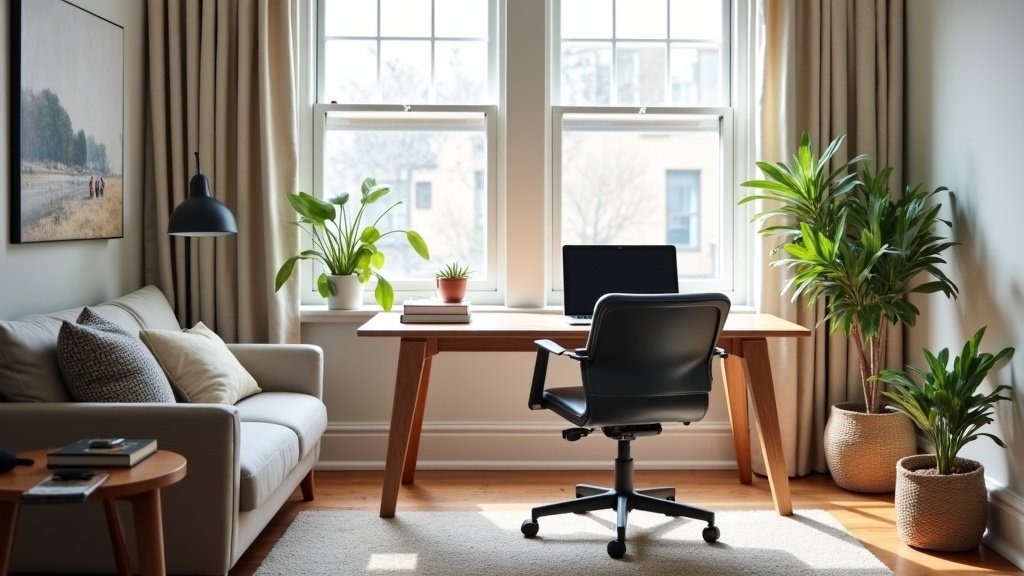
Using Soft Furnishings and Fabrics
Hard surfaces reflect sound, causing echoes. Think about how an empty room sounds versus a furnished one. Soft materials soak up sound waves. This is where your decorating choices can also serve a soundproofing purpose.
- Thick Curtains: Replace thin blinds with heavy, floor-to-ceiling curtains. They’ll absorb sound from outside and reduce echoes within the room.
- Area Rugs: If you have hardwood or tile floors, a thick area rug (especially one with a pad underneath) will make a noticeable difference in reducing sound bounce.
- Upholstered Furniture: Choose chairs or couches with fabric upholstery over leather or plastic.
Acoustic Panels and Art
For more targeted sound absorption, consider dedicated acoustic panels. These are designed specifically to trap sound waves. They come in various colors and sizes, some even disguised as art. Placing them strategically on walls or ceilings can greatly reduce echo.
You don’t need to cover every surface. We found that placing panels on opposing walls, or where sound typically reflects (like behind your desk), can be very effective. Many companies offer decorative acoustic solutions that blend into your home office aesthetic. You can also explore options for wall-mounted shelves to further enhance your office’s functionality and aesthetic.
Addressing Flanking Noise Paths
Sometimes sound doesn’t come directly through a wall or door. It can “flank” or go around them. This means sound travels through adjacent structures, like ducts, shared ceiling spaces, or even through the floor joists. Identifying these paths is key to truly quietening your space.
HVAC Ducts and Vents
If your office shares an HVAC vent with a noisy area, sound can easily travel through the ductwork. You can install acoustic duct liners or baffles within the duct near your office to help absorb some of this sound. Make sure these solutions don’t restrict airflow too much.
Electrical Outlets and Light Fixtures
Surprising, right? Electrical boxes can be direct conduits for sound through a wall. You can install acoustic putty pads behind outlet and switch plates. These are dense, pliable materials that block sound transmission through these small openings. Remember to always turn off the power before working with electrical components.
Improving Window Sound Insulation
Windows are often the weakest link in a soundproofed room. Beyond sealing gaps, there are several ways to boost their sound-blocking power.
Secondary Glazing or Window Inserts
As mentioned before, a secondary glazing system or a custom window insert can be a game-changer. These create an extra air gap, which is excellent for sound insulation. They are installed on the inside of your existing window frame and can be removable for cleaning or seasonal use.
Heavy Drapes and Blinds
While we covered this under absorption, it’s worth reiterating for windows specifically. The heavier and denser your window coverings, the better they will block sound. Layering a blackout blind underneath a heavy curtain provides double the acoustic benefit. Plus, they look great!
Here’s a quick checklist to help you prioritize your soundproofing efforts:
- Seal all door and window gaps with sweeps, weatherstripping, and caulk.
- Add mass to your door, potentially using MLV or heavy blankets.
- Place heavy furniture or filled bookshelves against shared walls.
- Incorporate thick rugs and upholstered furniture into your decor.
- Install acoustic panels or art to absorb echoes.
- Check HVAC vents and electrical outlets for sound leaks.
- Consider window inserts or heavy, layered drapes for improved window insulation.
Remember, you don’t have to do everything at once. Start with the easiest and most affordable options. You’ll likely be surprised by how much of a difference even small changes can make. Enjoy your new, quieter workspace!
Conclusion
You now have a solid understanding of how to transform your home office into a quiet oasis. We’ve walked through sealing gaps, adding mass, and using sound absorption techniques. Remember, even small, strategic changes can yield significant results. You don’t need a complete overhaul to achieve a more peaceful environment.
Start with the simplest, most accessible steps first. Feel the difference as your space becomes more conducive to concentration. You deserve a workspace where you can truly focus and thrive. Take these steps and reclaim your peace and productivity today!
Frequently Asked Questions
Can houseplants help soundproof an office?
While attractive, houseplants offer minimal soundproofing benefits. Their ability to absorb sound is very limited compared to dense materials or dedicated acoustic panels. They are best for improving aesthetics and air quality, not for significant noise reduction.
Is painting my walls with soundproof paint effective?
Soundproof paint is generally not very effective for blocking noise. It might offer a tiny reduction in echo within a room, but it won’t stop sound from traveling through walls. You’ll get much better results from adding mass, like an extra layer of drywall.
How much does it typically cost to soundproof a home office?
The cost varies greatly depending on how extensive you go. Basic solutions like door sweeps and weatherstripping can be under $50. More advanced steps like window inserts or acoustic panels can range from a few hundred to over a thousand dollars. Prioritize based on your budget and noise issues.
Will rearranging my furniture really make a difference in sound?
Yes, strategic furniture placement can help. Placing large, upholstered items like bookshelves (especially when filled with books) or thick sofas against shared walls adds mass and absorption. This can help dampen sound transmission and reduce echoes within the room.
Can I soundproof a room completely?
Achieving 100% soundproofing in a home setting is extremely difficult and usually cost-prohibitive. The goal is typically sound reduction or sound isolation, aiming for a significant decrease in noise levels. You can create a much quieter and more productive space, even if some minimal sound still gets through.