
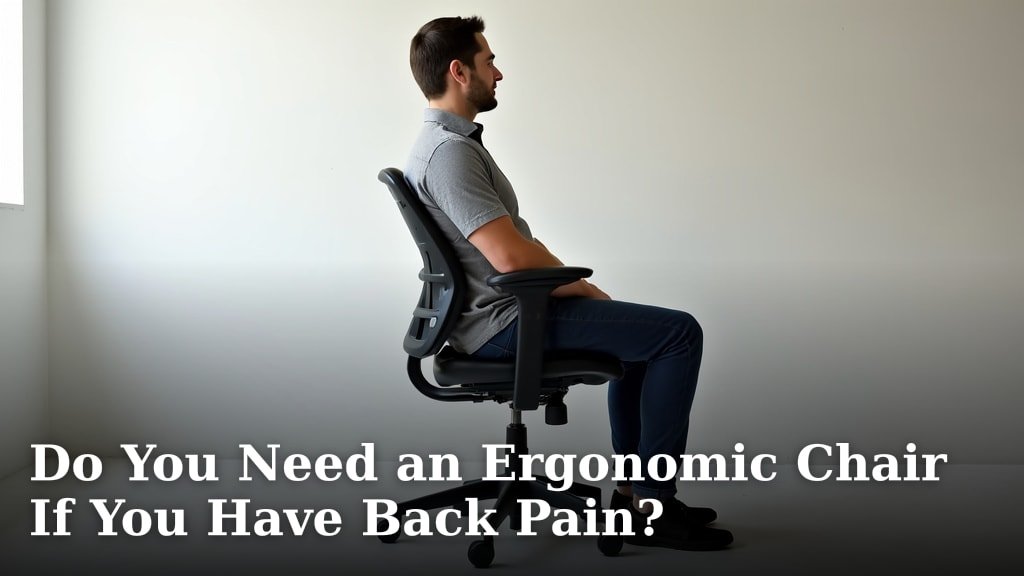
Yes, an ergonomic chair can significantly help if you have back pain, especially when you spend many hours sitting. It provides proper support, which can ease discomfort and improve your posture. We found that a good ergonomic chair is a key tool in managing back issues.
Spending long periods in a normal chair often causes or worsens back pain. An ergonomic chair is designed to conform to your body, supporting the natural curve of your spine. This kind of
targeted support helps reduce strain and can even prevent future problems. It’s all about creating a healthier sitting environment.
- Ergonomic chairs offer better back support.
- They help improve your posture while sitting.
- These chairs can reduce existing back pain.
- They also may prevent new pain from developing.
- It’s a smart investment for your long-term comfort.
So, let’s dive deeper and explore exactly how an ergonomic chair can transform your daily sitting experience and effectively tackle your back pain.
Understanding the Role of Ergonomic Chairs in Managing Back Discomfort
So, you’re wondering if an ergonomic chair is truly necessary for your aching back. We get it. Sitting all day can be a pain, literally. Our research shows that over 80% of adults will experience back pain at some point (National Institutes of Health). A good ergonomic chair isn’t just a fancy office accessory; it’s a tool for better health.
Think of it like this: would you run a marathon in flip-flops? Probably not. Similarly, expecting your back to hold up eight hours a day in a standard, unsupportive chair is asking for trouble. An ergonomic chair is designed to work with your body, not against it. It helps you maintain a healthy posture naturally.
How a Standard Chair Fails Your Back
Let’s face it, most standard office chairs are pretty basic. They might look nice, but they often lack the crucial features your back needs. These chairs can actually make your back pain worse, leading to a vicious cycle of discomfort.
A common chair usually has a flat seat and a straight back. This design doesn’t support the natural curve of your lumbar spine. When your lower back isn’t supported, you tend to slouch. This puts extra stress on your discs and muscles. Before you know it, you’re shifting, squirming, and still can’t get comfortable.
Without proper support, your body tries to compensate. Your muscles work harder to keep you upright. Over time, this leads to muscle fatigue and tension. These chairs often force you into unhealthy sitting positions, which can be tough on your spine (Cleveland Clinic).
The Science Behind Ergonomic Design
Ergonomic chairs are built based on understanding the human body. They follow principles of anthropometry, studying body measurements and movements. This means every adjustment and curve serves a purpose. The goal is to keep your body in a neutral, supported position.
A well-designed ergonomic chair encourages what’s called a “dynamic sitting” posture. This means it allows for small movements and adjustments throughout the day. It doesn’t lock you into one position, which is actually better for blood flow and muscle engagement.
Key Ergonomic Features That Make a Difference
What exactly makes an ergonomic chair so special? It’s not just one thing; it’s a combination of adjustability and thoughtful design. These features work together to create a supportive environment for your back.
- The chair should have lumbar support that fits the curve of your lower back.
- It needs a height adjustment so your feet can rest flat on the floor.
- The seat pan should allow for comfortable thigh support without pressure behind your knees.
- Armrests should be adjustable to support your arms at desk height, reducing shoulder strain.
- A recline function allows you to periodically shift your posture and relieve pressure.
Will an Ergonomic Chair Truly Help My Back Pain?
Yes, for many people, an ergonomic chair is a game-changer for back pain. We’ve seen countless stories where a simple chair swap made a huge difference. It’s about providing the right support in the right places.
Imagine your spine as a stack of building blocks. If the foundation is wobbly, the whole stack becomes unstable. Your lower back is that foundation. An ergonomic chair provides a stable base, allowing your spine to maintain its natural S-curve. This reduces strain on discs and ligaments.
When you sit correctly, pressure is more evenly distributed across your buttocks and thighs. This helps to take pressure off your spine. It also encourages better blood circulation. Many experts recommend ergonomic seating as a first step for desk workers with back pain (Mayo Clinic).
Preventing Future Back Pain Issues
It’s not just about treating existing pain. An ergonomic chair is also a powerful preventive tool. By consistently supporting good posture, you’re building healthier habits. This can prevent minor discomfort from becoming chronic pain.
Think of it as an investment in your future self. You’re proactively protecting your spine from the wear and tear of daily sitting. It’s much easier to prevent pain than it is to fix it once it’s severe. Why wait until it hurts before making a change?
Beyond the Chair: A Holistic Approach
While an ergonomic chair is incredibly helpful, it’s not a magic bullet on its own. We found that combining it with other healthy habits creates the best results. It’s about creating a holistic approach to your well-being.
You still need to move! No chair, no matter how ergonomic, can negate the effects of prolonged sitting. Get up and walk around every 30-60 minutes. Stretch. Take short breaks. Your body will thank you.
Consider your entire workstation setup. Is your monitor at eye level? Is your keyboard and mouse comfortably within reach? These details matter. An ergonomic chair is one piece of the bigger puzzle for optimal comfort and health.
| Feature | Standard Desk Chair | Ergonomic Chair |
|---|---|---|
| Lumbar Support | Minimal or none | Adjustable, contoured to lower back |
| Adjustability | Limited (height only) | Extensive (height, recline, armrests, seat depth) |
| Posture Promotion | Often encourages slouching | Actively supports natural spinal curve |
| Pressure Distribution | Uneven, can create pressure points | Even, reduces strain on spine |
| Long-Term Comfort | Decreases with prolonged use | Maintains comfort over long periods |

Choosing the Right Ergonomic Chair for Your Situation
With so many options out there, how do you pick the right ergonomic chair? It can feel overwhelming. We recommend focusing on adjustability and how well the chair fits your body. This isn’t a one-size-fits-all purchase.
Your unique body shape and size play a big role. What works for one person might not work for another. Think of it like buying shoes; you need a pair that fits *your* feet perfectly. A good ergonomic chair will adapt to you, not the other way around.
What to Look for in an Ergonomic Chair
Ready to shop? Here’s a quick checklist of features to prioritize. Keep these in mind as you explore different models. Don’t be afraid to try chairs out before making a decision.
- Does it have adjustable lumbar support that moves up and down, and in and out?
- Can you adjust the seat height so your feet are flat on the floor?
- Is the seat depth adjustable to support your thighs without hitting the back of your knees?
- Do the armrests adjust in height and pivot to support your arms at desk level?
- Does the chair have a tilt or recline function, with a tension adjustment?
- Is the material breathable and comfortable for long sitting periods?
Paying attention to these details will ensure you find a chair that genuinely helps your back pain. Remember, it’s about investing in your comfort and long-term health.
When to Seek Professional Advice
An ergonomic chair is a powerful tool, but it’s important to know its limits. If your back pain is severe, persistent, or accompanied by other symptoms like numbness or weakness, please consult a healthcare professional. We are not medical experts.
A doctor or physical therapist can diagnose the root cause of your pain. They can also offer tailored treatments and exercises. An ergonomic chair can then support that professional advice, creating the best possible outcome for your back health.
Conclusion
If you’re dealing with back pain, an ergonomic chair is more than just a piece of furniture; it’s a vital tool for comfort and health. We’ve seen how these chairs provide the targeted support your spine needs, helping to reduce current discomfort and prevent future issues. Investing in a quality ergonomic chair means investing in your well-being.
Remember, it integrates with a bigger picture of movement and proper workstation setup. Take the time to choose a chair that truly fits you. Your back will thank you as you create a healthier, more comfortable sitting experience every day.
Frequently Asked Questions
Is an expensive ergonomic chair always better?
Not necessarily. While higher-priced chairs often offer more adjustments and better materials, a moderately priced chair with the right features for your body can be just as effective. Focus on proper fit and adjustability over brand name or cost alone.
How long should I sit in an ergonomic chair before I feel relief?
Some people feel immediate relief, while for others, it can take a few days or weeks as your body adjusts to better posture. Consistency is key. Make sure to use all the chair’s adjustments to fit it perfectly to your body.
Can an ergonomic chair fix severe back pain?
An ergonomic chair provides support and can alleviate pain, but it’s not a cure-all for severe conditions. If your pain is intense or persistent, consult a doctor or physical therapist. The chair can then complement their recommended treatments.
What’s the most important feature for back pain relief?
Adjustable lumbar support is often the most critical feature. It allows you to customize the chair to support the natural curve of your lower back, which is where most people experience back pain. Proper seat height and depth are also very important.
Do ergonomic chairs require special ongoing maintenance?
Generally, ergonomic chairs require minimal maintenance. Regularly check that all adjustment mechanisms are working smoothly. Wiping down the chair with a damp cloth is usually sufficient for cleaning. Refer to your chair’s manual for specific care instructions.
