
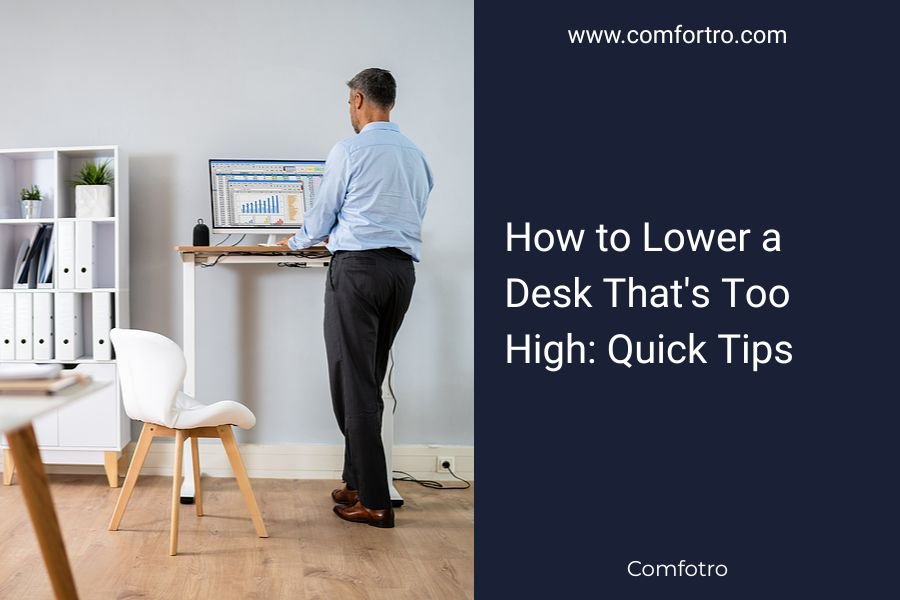
You can lower a desk that’s too high by adjusting the desk legs, adding a keyboard tray, or using a footrest to improve your seated position.
Most height adjustments involve simple tools and take less than 30 minutes to complete.
Why Your Desk Height Matters
Working at a desk that’s too high feels like trying to eat soup with a fork. Your shoulders bunch up. Your wrists bend at weird angles. Your neck cranes forward like a turtle.
I found that ergonomic experts recommend your elbows should sit at 90 degrees when typing. Your feet should rest flat on the floor. If your desk forces you into awkward positions, you’re setting yourself up for pain.
Signs Your Desk Is Too High
Your body tells you when something’s wrong. Here are the warning signs:
- Your shoulders feel tense or raised
- Your wrists bend upward while typing
- Your feet dangle or barely touch the floor
- You get neck pain from looking down at your screen
- Your arms feel tired after short work sessions
Quick Solutions to Lower Your Desk
Let’s get straight to fixing this problem. You have several options, from simple tweaks to more involved adjustments.
Method 1: Adjust the Desk Legs
Many modern desks come with adjustable legs. Check under your desk for these features:
Threaded Leg Adjusters
Look for round metal pieces at the bottom of each leg. Turn them counterclockwise to lower the desk. Make small adjustments and test the height as you go.
Pin-Style Adjusters
Some desks use pins or clips to lock legs at different heights. Pull out the pin, slide the leg to your desired height, and push the pin back in.
Crank Mechanisms
Electric or manual crank desks make height changes easy. Use the controls to lower the surface to your comfort zone.
Method 2: Modify Fixed-Height Desks
Got a desk that won’t budge? Don’t panic. You still have options.
Cut the Legs Down
This sounds scary, but it’s doable with basic tools. Measure twice, cut once. You’ll need:
- A saw (hand saw or power saw)
- Measuring tape
- Sandpaper
- Safety goggles
Mark your desired length on each leg. Cut slowly and evenly. Sand the cut edges smooth. This method works best on wooden legs.
Remove Desk Risers
Some desks sit on platforms or risers. Check if yours has removable blocks under the legs. Taking them off might give you the height drop you need.
Alternative Workspace Adjustments
Sometimes changing your setup works better than modifying the desk itself.
Raise Your Chair
This seems backwards, but hear me out. Raising your chair can help if your desk is only slightly too high. Just make sure to add a footrest so your feet don’t dangle.
Add a Footrest
A good footrest supports your feet when your chair sits higher. Research shows proper foot support reduces leg fatigue and improves posture (American Physical Therapy Association).
Install a Keyboard Tray
Keyboard trays mount under your desk and slide out when needed. They lower your typing surface without changing the desk height. This fix works great for computer work.
Types of Keyboard Trays
| Type | Best For | Price Range |
|---|---|---|
| Fixed Mount | Single user, consistent setup | $30-60 |
| Adjustable | Multiple users, flexible positioning | $60-150 |
| Under-desk slide | Clean look, saves space | $40-100 |
Switch to a Standing Setup
If your desk works perfectly for standing, why not embrace it? Add an anti-fatigue mat and alternate between sitting and standing throughout your day.
Tools You’ll Need
Most desk adjustments require basic tools you probably already have.
Essential Tools
- Measuring tape
- Screwdriver set
- Level (to keep things straight)
- Allen wrench set
- Adjustable wrench
For Major Modifications
- Saw (hand saw or circular saw)
- Sandpaper or electric sander
- Safety equipment (goggles, gloves)
- Wood stain or paint (if needed)
Safety Tips
Making desk modifications can be risky if you’re not careful.
Before You Start
Clear everything off your desk. You don’t want your laptop taking a dive while you’re making adjustments. Take photos of your setup so you can put things back if needed.
During Modifications
Wear safety gear when cutting or sanding. Work slowly and double-check measurements. Get help lifting heavy desk pieces. Your back will thank you.
After Changes
Test the desk stability before loading it up again. Sit at it for a few minutes to make sure the height feels right. Small adjustments are easier than big fixes later.
When to Call for Help
Some situations need professional attention.
Complex Electric Desks
Electric sit-stand desks have motors and electronics. If yours isn’t adjusting properly, contact the manufacturer before taking it apart.
Expensive Furniture
That gorgeous hardwood desk might need a furniture repair expert. Don’t risk ruining a valuable piece with DIY modifications.
Structural Concerns
If your desk feels wobbly or unstable, get professional help. A collapsing desk can cause serious injury.
Cost Breakdown
Here’s what different solutions might cost you:
DIY Solutions
- Keyboard tray: $30-150
- Footrest: $20-80
- Basic tools: $50-100 (one-time cost)
- Chair adjustment: Free
Professional Services
- Furniture modification: $100-300
- Custom keyboard tray installation: $75-200
- Ergonomic consultation: $150-400
Conclusion
Fixing a desk that’s too high doesn’t have to be complicated or expensive. Start with simple solutions like adjusting existing mechanisms or adding a keyboard tray. If those don’t work, consider more involved modifications like cutting legs or raising your chair with a footrest.
Remember, the goal is comfort and productivity. Your body will tell you when you’ve got it right. Take breaks during the adjustment process to test different heights. What feels good for five minutes might not work for eight hours.
I found that most people solve this problem with one or two simple changes. You don’t need to rebuild your entire workspace. Small adjustments often make the biggest difference in your daily comfort.
What’s the ideal desk height for most people?
For most adults, desk height should be 28-30 inches, allowing elbows to bend at 90 degrees while typing. Your specific height depends on your body proportions and chair height.
Can I damage my desk by adjusting the legs?
Modern adjustable desks are designed for height changes and won’t be damaged by normal adjustments. Fixed desks require more care, especially when cutting legs or removing parts.
How much should I lower my desk at once?
Make small adjustments of 1-2 inches at a time. Test each change for several hours before making additional modifications. This prevents overcorrection and helps you find the perfect height.
Will a keyboard tray solve all my height problems?
Keyboard trays help with typing comfort but don’t fix issues with writing, mouse work, or other desk activities. They’re best combined with other ergonomic adjustments.
Should I replace my desk instead of modifying it?
Consider replacement if modifications would cost more than 50% of a new desk’s price, if the desk lacks stability, or if you need multiple height settings for different users.
