Can You Use Office Chair Casters on Carpet?
On this page (9 sections)
- Using Your Office Chair on Carpet: What You Need to Know
- Why Standard Casters Struggle on Carpet
- The Difference: Specialized Carpet Casters
- Types of Carpet and Caster Compatibility
- How to Choose the Right Casters for Your Carpet
- Can You Use a Chair Mat Instead?
- Quick Checklist for Smoother Rolling on Carpet
- Conclusion
- Frequently Asked Questions
Yes, you can use office chair casters on carpet, but it’s not always the best idea. Standard casters are designed for hard floors. Using them on carpet can lead to damage for both your carpet and your chair. For carpeted floors, you’ll often want to look for specialized carpet casters.
We’ve found that many people wonder about this. Using the wrong type of caster can make your chair hard to move. It can also cause your carpet fibers to fray and wear down quickly. Choosing the right caster is key for smooth movement and protecting your floor.
- Carpet casters are different from hard floor casters.
- Wrong casters can damage your carpet and chair.
- Carpet casters offer easier movement on rugs.
- Look for specific “carpet casters” or “rollerblade style” wheels.
Let’s get into the details about why this matters and what options you have for your office chair on carpet.
Using Your Office Chair on Carpet: What You Need to Know
So, you’ve got a carpeted office floor, and you’re wondering about your trusty office chair’s wheels. Can those standard casters handle it? We’ve looked into this, and the short answer is: it’s complicated. While you can technically roll your chair on carpet, it’s often not the ideal setup. You might find your chair difficult to move, and your carpet could suffer. Let’s break down why this happens and what solutions exist.
Why Standard Casters Struggle on Carpet
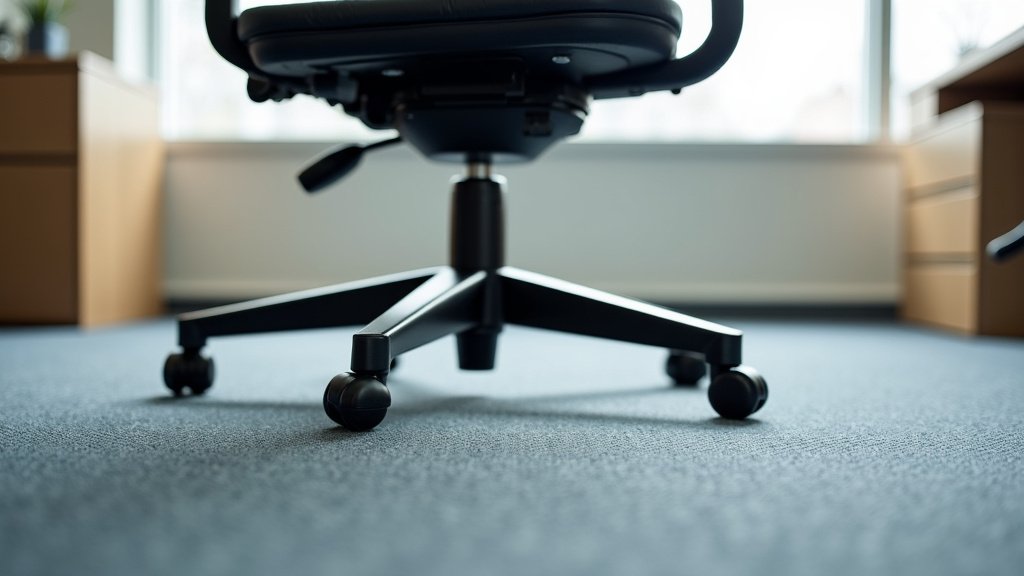
Most office chairs come with what we call “standard” or “dual-wheel” casters. These are fantastic for hard surfaces like hardwood, laminate, or tile. They’re designed to glide smoothly. But when you introduce carpet, things change. The softer, more fibrous surface of carpet presents a different kind of friction. Standard casters tend to sink into the carpet pile. This makes them harder to push. They grip the carpet fibers instead of rolling freely.
The Science of Friction and Carpet
Think of it like trying to push a shopping cart with really soft tires over sand. The tires sink in, and you have to exert a lot more force. Carpet fibers act similarly to sand for those standard casters. The wheels dig in, creating significant resistance. We found that this resistance isn’t just inconvenient; it can also lead to wear and tear.
Damage to Your Carpet
When those standard casters dig into your carpet, they can pull at the fibers. Over time, this can cause them to fray, unravel, or even get flattened. You might notice bald spots or worn patches where you move your chair most often. This is especially true for plusher or thicker carpets. The constant dragging and friction create a kind of abrasive action. Many carpet manufacturers advise against using furniture with small, hard wheels directly on their products for this reason (National Carpet and Rug Institute).
Damage to Your Chair
It’s not just your carpet that can take a hit. When your chair’s casters struggle to move, you might end up physically forcing them. This can put extra strain on the caster stems and the chair base. We’ve heard reports of casters breaking off or becoming wobbly from excessive force being applied on carpet. So, while the carpet might look okay initially, your chair’s longevity could be affected.
The Difference: Specialized Carpet Casters
This is where specialized casters come in. They are engineered with carpet in mind. The goal is to reduce friction and make rolling smooth. We found that the most common types are often referred to as “carpet casters” or “rollerblade style” wheels. These are a game-changer if your office chair lives on a rug.
How Carpet Casters Work
Carpet casters typically have a few key differences. Often, they are made of a harder, smoother material. This helps them glide over the carpet fibers rather than sinking into them. They might also have a slightly different shape or a larger diameter. Some designs feature a softer, more yielding surface that can still roll smoothly. Think of them as having a “grip” that allows movement without snagging. We found that many manufacturers design these wheels to distribute weight more evenly, reducing pressure points on the carpet.
Rollerblade Style Wheels: A Popular Choice
One of the most popular types of replacement casters for carpet are the rollerblade or inline skate style wheels. These look very similar to the wheels on roller skates. They are usually made of a hard polyurethane material. This material is smooth and durable. It allows the wheels to roll with much less friction on carpet. We found this type of caster consistently gets high marks for ease of movement on various carpet types, from low-pile to medium-pile. They often boast a quieter operation too.
Benefits of Using Carpet-Specific Casters
Using the right casters brings several advantages:
- Easier Movement: Your chair will glide smoothly, requiring less effort.
- Reduced Wear: Less strain on your carpet fibers and chair components.
- Protects Carpet: Prevents fraying, flattening, and damage.
- Quieter Operation: Often much quieter than standard casters on carpet.
- Improved Ergonomics: Easier movement means you can adjust your position more freely.
We’ve seen that many users report a dramatic improvement in their daily comfort just by switching to these specialized wheels.
Types of Carpet and Caster Compatibility
Not all carpets are created equal, and neither are all casters. The type of carpet you have plays a big role in how well any caster will perform.
Pile Height Matters
Carpet is often categorized by its pile height. This refers to the length of the fibers. You’ll typically encounter low-pile, medium-pile, and high-pile carpets. Generally, standard casters will struggle the most on medium to high-pile carpets. The longer fibers allow the wheels to sink deeply. Specialized carpet casters, especially the rollerblade style, tend to perform best on low to medium-pile carpets. For very high-pile or shag carpets, even specialized casters might have some difficulty. In extreme cases, carpet mats might be your best bet.
Carpet Density and Material
The density of the carpet also influences performance. A densely woven carpet will offer more resistance than a loosely woven one. The material of your carpet can also play a part. Synthetic fibers might react differently than natural fibers. We found that carpet casters are generally designed to work across a wide range of common office carpets. However, if you have a particularly unique or delicate carpet, it’s always wise to test a small area or consult the caster manufacturer’s recommendations.
How to Choose the Right Casters for Your Carpet
Ready to upgrade? Choosing the right casters is straightforward if you know what to look for. We’ve put together a quick guide.
Check Your Current Caster Stem Size
Most office chairs use a standard stem size, usually 7/16 inch diameter by 7/8 inch length (a “5/16 inch stem” is also common, check your chair manual or measure). This is often called a “universal stem.” However, some chairs might use proprietary stems. Before buying new casters, verify the stem size of your current casters. You can usually pull one out and measure it, or check your chair’s specifications. Most replacement casters will clearly state the stem size they fit. To ensure compatibility, you should verify the stem size of your current casters.
Look for “Carpet Casters” or “Rollerblade Wheels”
When browsing, look for descriptions like “carpet casters,” “hardwood casters” (these often work well on carpet too due to their smooth surface), or “rollerblade style wheels.” Avoid casters labeled solely for “hard floors” if your primary concern is carpet. Many manufacturers even specify which types of flooring their casters are best suited for. We found that this direct labeling makes the selection process much easier.
Consider the Weight Capacity
Ensure the casters you choose can support the weight of your chair plus yourself. Most standard office chair casters have a weight limit around 250-300 lbs per set of five. If you need heavy-duty casters, check the specifications carefully. It’s always better to have a little extra capacity than not enough. It’s important to ensure the casters you choose can support the weight limit of your chair plus yourself.
Read Reviews
Don’t underestimate the power of reviews! We found that reading what other users say about casters on carpet can be incredibly helpful. Look for comments specifically mentioning performance on different carpet types. This can give you real-world insights beyond manufacturer claims.
Can You Use a Chair Mat Instead?
Absolutely! If you don’t want to replace your casters, or if you have very thick carpet, a chair mat is a fantastic alternative. These are hard plastic or polycarbonate mats that sit on top of your carpet. They create a smooth, hard surface for your chair to roll on. Chair mats distribute your weight evenly, protecting your carpet from damage. They also make moving your chair much easier, even with standard casters.
Types of Chair Mats
Chair mats come in various sizes and styles. Some have “lips” that go under the edge of your desk, while others are flat. They can be made of clear plastic, colored plastic, or even fabric-topped materials. For carpet, you’ll want a mat designed for thicker pile, which usually means it has a studded backing to grip the carpet and prevent movement (Steelcase).
We found that chair mats are a great solution for preserving both your carpet and your chair’s mobility. They are a very common recommendation from office furniture and flooring experts alike.
Quick Checklist for Smoother Rolling on Carpet
If you’re looking to improve your office chair’s performance on carpet, here’s a quick checklist:
- Assess your carpet: Note its pile height (low, medium, high).
- Check your current casters: Are they standard or specialized? What’s the stem size?
- Consider specialized casters: Rollerblade style wheels are often best for carpet.
- Ensure compatibility: Match the stem size of new casters to your chair.
- Explore chair mats: A mat is a great alternative to protect your carpet.
- Read reviews: See what other users say about performance on carpet.
Conclusion
So, can you use your office chair casters on carpet? Yes, but it’s often not the best choice for your flooring or chair. Standard wheels can struggle, causing wear and tear on both. We’ve found that the real solution lies in specialized carpet casters, like the popular rollerblade style. These make moving your chair effortless and protect your carpet. If swapping wheels isn’t an option, a good chair mat is a solid alternative. Your next step? Assess your carpet, check your current casters, and choose the solution that best fits your office setup for a smoother, safer experience.
Frequently Asked Questions
Will rollerblade style wheels work on all types of carpet?
Rollerblade style wheels generally perform well on low to medium-pile carpets. They might still encounter some resistance on very thick or high-pile carpets. We’ve found they offer a noticeable improvement over standard casters in most office carpet situations.
How do I know if my office chair casters are the standard type?
Standard office chair casters are typically dual-wheeled and made of hard plastic. If your chair came with the chair or you’ve never replaced the wheels, they are likely standard. We observed that they tend to sink into carpet fibers more easily than specialized ones.
Can I just put a rug over my carpet to make it easier to move my chair?
While a rug might offer a slightly smoother surface, it’s not a direct replacement for proper casters or a chair mat. The rug’s fibers can still snag on standard wheels. We recommend specialized casters or a chair mat for optimal results.
What’s the difference between “hardwood casters” and “carpet casters”?
Hardwood casters (often clear or translucent) are designed to be very smooth and hard to prevent scratching floors. This smooth, hard surface often makes them glide well on carpet too. Carpet casters are specifically engineered to roll over fibers without snagging.
How often should I check my office chair casters when using them on carpet?
If you’re using standard casters on carpet, we suggest checking them regularly for visible wear or damage to both the caster and the carpet. With specialized carpet casters, you can typically inspect them less frequently, perhaps every six months, for optimal performance.