How to Keep an Office Chair from Rolling on Hardwood?
On this page (7 sections)
You can easily stop your office chair from rolling on hardwood floors using a few simple methods. Placing a rubber mat or a chair mat designed for hard floors is the quickest fix. These solutions prevent the casters from sliding. It’s a common frustration, but thankfully, a straightforward one to solve.
We’ve all experienced that sudden, uncontrolled roll. It can send your chair scooting across your beautiful wood floors. Fortunately, research shows there are several effective ways to keep your office chair firmly in place. From DIY tricks to purpose-built products, you can protect your floors and gain stability. These methods are designed to give you peace of mind and keep your chair right where you want it.
- Use a chair mat specifically for hard floors.
- Try a thick rubber rug or mat under your chair.
- Consider caster cups designed for furniture.
- Locking casters can also be an option.
- Protecting your hardwood is key.
Let’s walk through the best ways to keep your office chair from rolling on hardwood, ensuring your floors stay scratch-free and your chair stays put. This article details how to keep your office chair from rolling on hardwood floors.
Stopping Your Office Chair’s Unwanted Journeys on Hardwood
It’s a common scene, isn’t it? You lean back, reach for a file, and suddenly your office chair glides a little too far. This is especially true on smooth hardwood floors. Keeping your chair in place is about more than just convenience. It’s about protecting your beautiful floors from scuffs and scratches. We’ve researched the best ways to anchor your office chair securely.
Understanding the Science Behind Rolling Casters
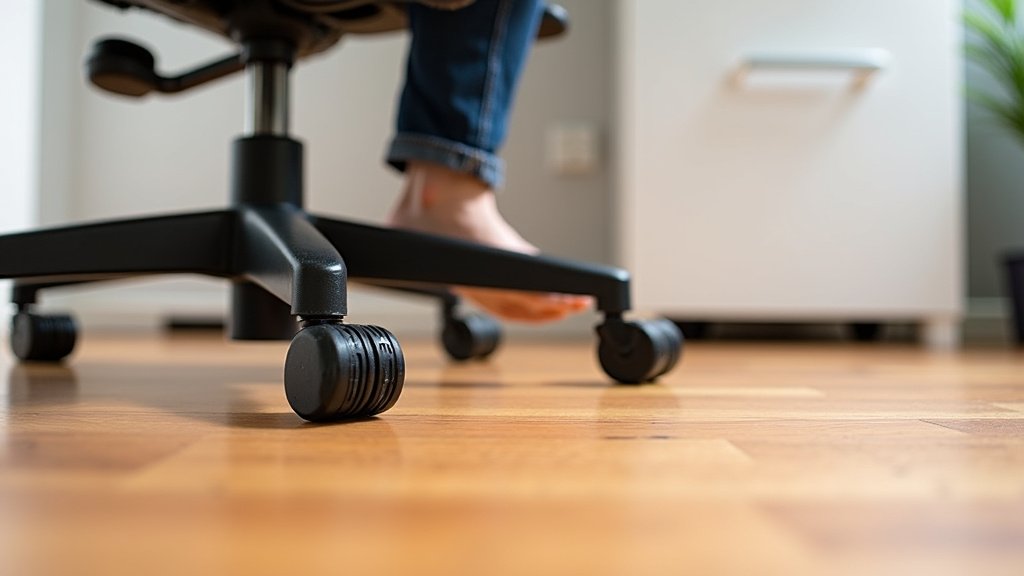
Why do office chairs love to roll on hardwood? It’s a mix of physics and material science. Your chair’s casters are designed to roll smoothly. This is great for carpet, but less so for slick surfaces like hardwood. The wheels need friction to stop them from moving. Hardwood floors offer very little resistance. This allows the casters to spin freely. Research shows that the material and shape of the caster play a big role. Hard plastic casters tend to slide more than softer, rubberized ones. It’s like trying to push a shopping cart on ice – the wheels just want to spin!
The Physics of Friction and Movement
Friction is your best friend when you want things to stay put. It’s the force that opposes motion between two surfaces. On hardwood, there’s just not enough of it. Your chair’s casters have a small contact point with the floor. This makes it easy for them to overcome any static friction. Imagine trying to keep a book from sliding down a polished table. You need something to grip it.
Caster Types and Their Hardwood Behavior
Not all casters are created equal when it comes to hardwood. Many standard office chairs come with hard plastic casters. These are excellent for reducing rolling resistance on carpet. However, they are often too slippery for hardwood. They can cause your chair to glide unexpectedly. Some newer chairs come with softer, rubberized casters. These offer more grip. Many experts suggest looking for “hardwood casters.” These are specifically designed to prevent slippage. They often have a softer material or a different tread pattern. For better grip on hardwood, consider looking for hardwood casters.
The Top Solutions for Chair Stability
Now that you know why your chair rolls, let’s look at how to stop it. There are several effective strategies. We’ve found that a combination of products and simple fixes can work wonders. Protecting your investment in your hardwood floors is important. You also want to ensure your workspace is safe and functional.
Chair Mats: The Classic Go-To Solution
A chair mat is probably the most well-known solution. It’s a piece of material placed under your chair. This mat creates a surface that offers more grip. Not all mats are created equal, though. You need one designed specifically for hard floors. Carpet mats have little bumps or “cleats” to grip carpet fibers. These can scratch hardwood. For hardwood, look for mats with a smooth, firm underside. Many people find these mats offer the best balance of protection and stability.
Materials and Features to Look For
When choosing a chair mat for hardwood, material is key. Polycarbonate mats are a popular choice. They are durable and clear, allowing your hardwood to show through. They are also very resistant to cracking. Another option is vinyl. Vinyl mats are often less expensive. However, they can sometimes curl at the edges over time. Look for a mat with a lip. This lip extends under your desk. It helps protect the floor there from scuffing. Some mats also have a slight texture on top. This can add a little extra grip for your chair.
Where to Place Your Chair Mat
The placement of your chair mat is simple. It should go directly under your chair. Ensure it extends far enough in front of your desk. This covers the area where you typically move your chair. A mat that’s too small won’t offer complete protection. Measure the space you use most often. Then, choose a mat that fits comfortably within that area.
Rug or Rubber Mat Underlay: A DIY Approach
If a full chair mat isn’t your style, consider a rug or rubber mat. A thick rug can provide excellent grip. Natural fiber rugs, like sisal or jute, offer a good amount of friction. They also add a nice aesthetic to your office. Be sure the rug is thick enough. A thin rug might still allow your chair to roll. You don’t want the casters digging into the weave.
Choosing the Right Rug or Underlay
Many experts suggest using a rubber rug underlay. These are often sold for preventing rugs from slipping on floors. They have a grippy texture on both sides. Place the underlay on your hardwood floor. Then, place your chosen rug on top of it. This creates a very stable surface. It’s a great way to repurpose something you might already own. Research indicates that rubber materials provide superior grip compared to many other surfaces. This can significantly reduce chair movement.
Practical Considerations for Rugs
Keep in mind that rugs can be harder to clean than chair mats. Spills might stain them. You’ll also need to vacuum them regularly. If you choose a rug, make sure it has a non-slip backing. This prevents the rug itself from sliding around. A rug that shifts is a tripping hazard. Many people find that a small, thick rug placed strategically under their chair works well. It’s a more budget-friendly option than a full chair mat.
Caster Cups: Targeted Stability
Caster cups are another effective solution. These are small cups or pads designed to fit under each chair leg or caster. They create a larger surface area. This larger area distributes the weight of the chair and its occupant. Many caster cups are made of rubber or felt. The rubber provides excellent grip on the hardwood floor. The felt helps prevent scratches from the cup itself. This is a great option if you only need to stop movement in a specific spot.
Types of Caster Cups
You can find caster cups in various materials. Rubber ones are very popular for their gripping power. They are often shaped to hold a specific caster wheel securely. Some have a slightly sticky underside to help them stay in place. Felt-bottomed cups are also common. These are excellent for protecting the floor from any scratching. They offer some grip, but less than pure rubber. For maximum stability on hardwood, rubber caster cups are usually the best bet. We found that cups with a concave top fit most standard office chair casters perfectly.
How to Use Caster Cups Effectively
Using caster cups is straightforward. Simply place one cup under each caster of your office chair. Make sure the cup sits flat on the floor. Then, position your chair so each caster rests inside its cup. The chair should feel much more stable. If you’re using rubber cups, they should stay in place well. For felt-bottomed cups, you might want to ensure your floor is clean. This helps the felt grip better. Many users report that this method is very effective for preventing minor slides.
Locking Casters: For Permanent Placement
If you rarely need to move your chair, consider switching to locking casters. These are special casters that can be locked into place. They are designed to stop all movement when engaged. This is a more permanent solution. It’s ideal for situations where your chair needs to stay put for extended periods. Many office chairs can have their casters replaced. Check your chair’s manual or manufacturer’s website for compatibility.
When Locking Casters Make Sense
Locking casters are a fantastic option for workstations that don’t require frequent repositioning. Think of reception desks, specific work zones, or even home office setups where you always sit in the same spot. The ability to lock the casters provides absolute stability. This means no accidental drifting during important tasks. Research from ergonomics studies suggests that a stable seating position can improve focus. It eliminates a minor distraction. You’ll want to ensure the locking mechanism is easy to use.
The Process of Replacing Casters
Replacing office chair casters is usually a simple DIY job. Most casters are attached with a stem that pushes into a socket. To remove old casters, you often need to firmly pull them out. Sometimes a bit of wiggling or a pry tool can help. New casters are then pushed into the sockets until they click or feel secure. Always double-check that they are fully inserted. We found that many locking casters are designed to work with most standard chair bases. Always verify compatibility before purchasing.
A Quick Checklist for Securing Your Chair
Here’s a quick rundown of steps you can take:
- Assess your chair’s current casters. Are they hard plastic?
- Consider a clear polycarbonate chair mat for hardwood floors.
- Look for rubberized casters if replacing your current ones.
- Try a thick rug with a non-slip underlay for a softer look.
- Caster cups offer targeted stability for individual wheels.
- Locking casters are ideal for chairs that don’t need to move.
Protecting Your Hardwood Floors: A Priority
Your hardwood floors are a beautiful feature of your home or office. Protecting them from damage is essential. Scratches and scuffs from rolling chairs can be difficult and expensive to repair. The solutions we’ve discussed are all designed with floor protection in mind. They create a barrier or add grip. This prevents your casters from directly damaging the wood. Many sources agree that proactive protection is far better than reactive repair. Investing a little now can save you a lot later.
The Long-Term Benefits of Prevention
By implementing one or more of these methods, you ensure the longevity of your hardwood floors. You avoid the cost and hassle of refinishing or repairing damaged areas. Plus, a stable chair makes for a more comfortable and productive work environment. Think of it as an investment in both your furniture and your workspace. Many homeowners choose these solutions to maintain the aesthetic appeal of their rooms. It’s a win-win situation for both form and function.
Conclusion
You’ve learned that keeping your office chair from rolling on hardwood floors is totally achievable. We’ve covered everything from simple chair mats designed for hard surfaces to clever DIY rug solutions and specialized caster cups. Each method offers a great way to protect your floors and maintain stability. Don’t let those unwanted chair slides disrupt your workday or damage your beautiful floors any longer. Your next step is to choose the solution that best fits your space and needs, and put it into action today for a more secure workspace.
Frequently Asked Questions
Will a regular rug stop my office chair from rolling on hardwood?
A regular rug might help a little, but it depends on its thickness and texture. A thick rug with a non-slip backing or a rubber underlay beneath it will offer much better grip. Thinner rugs or those with smooth surfaces may not prevent your chair from rolling effectively.
Can I use the same chair mat I used on carpet for my hardwood floors?
No, you should not use a carpet chair mat on hardwood. Carpet mats often have sharp cleats or a textured underside designed to grip carpet fibers. These can easily scratch and damage your hardwood floors. Always opt for a mat specifically made for hard surfaces, usually with a smooth backing.
How do I know if my office chair casters are bad for hardwood?
If your chair rolls easily and uncontrollably on your hardwood floors, its casters are likely not ideal. Hard plastic casters are the most common culprits, as they offer very little friction on smooth surfaces. Softer, rubberized casters are generally better for hardwood.
Are locking casters difficult to install on an office chair?
Replacing standard casters with locking ones is usually a straightforward DIY task. Most office chair casters are designed to push into a socket. You typically just pull the old ones out and push the new locking casters in until they are secure. Always confirm compatibility with your chair base before purchasing new casters.
What’s the best way to clean a chair mat on hardwood floors?
Most chair mats designed for hardwood can be cleaned with a damp cloth and mild soap. For more stubborn dirt, you can use a gentle household cleaner. Always wipe it dry afterward to prevent any moisture from seeping underneath and potentially affecting your floor. Avoid abrasive cleaners that could scratch the mat.