Deep vs Shallow Desk for Gaming: Which is Best?
Deep gaming desks offer more workspace for multiple monitors and equipment, while shallow desks save space and promote better posture by keeping everything within arm’s reach. For most gamers, a…


Deep gaming desks offer more workspace for multiple monitors and equipment, while shallow desks save space and promote better posture by keeping everything within arm’s reach. For most gamers, a…
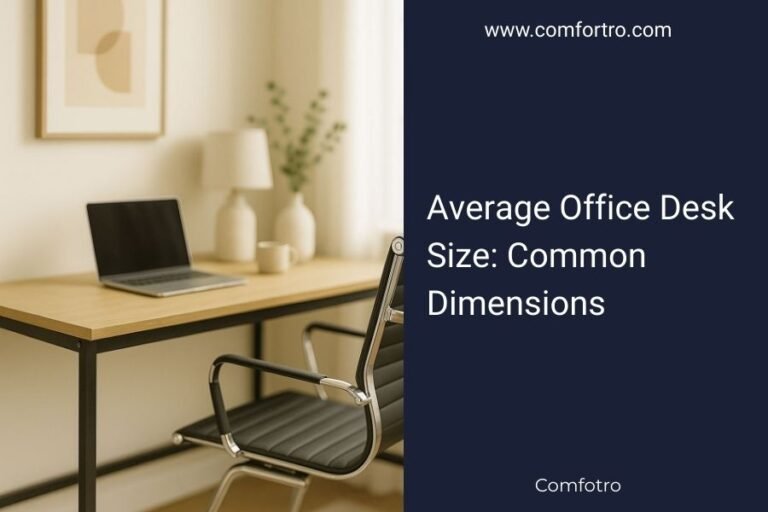
The average office desk size is typically 48 to 72 inches wide, 24 to 36 inches deep, and 28 to 30 inches high. Most standard office desks fall within these…
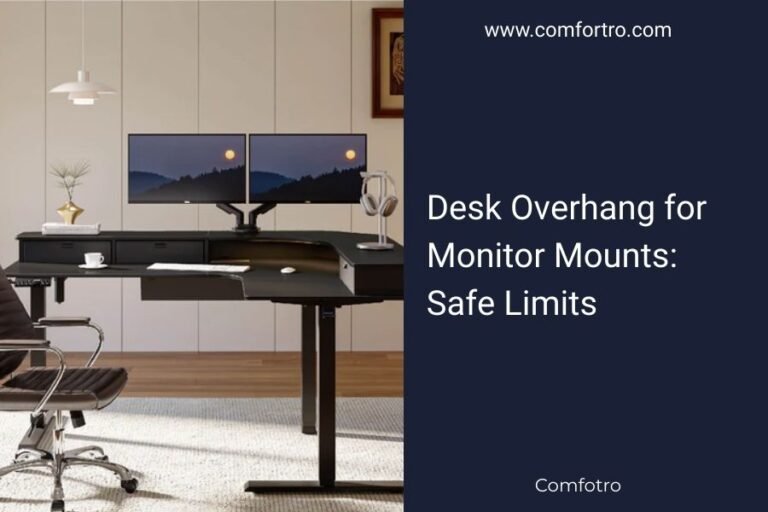
Most desk overhangs can safely support monitor mounts when the overhang measures 3 inches or less from the desk edge. For desk overhang beyond 3 inches, you’ll need additional support…

To sit at a desk properly, keep your feet flat on the floor, your back against the chair, and your computer screen at eye level. Good posture reduces neck pain,…

The best desk posture for lower back pain relief involves sitting with your feet flat on the floor, back straight against your chair, and computer screen at eye level. Proper…

The standard height for a writing desk ranges from 28-30 inches, while computer desks typically measure 28-30 inches tall, making them essentially the same height for most users. Your ideal…

The correct elbow angle for typing is 90 degrees, which keeps your arms relaxed and reduces strain on your shoulders and wrists. This position helps prevent repetitive stress injuries and…

The optimal monitor distance for eye health is 20-26 inches (arm’s length) from your eyes to the screen. Your monitor should be positioned so the top of the screen sits…

The best desk dimensions for small spaces are 48 inches wide by 24 inches deep, which provides enough workspace while fitting comfortably in tight areas. Compact desks measuring 36-48 inches…
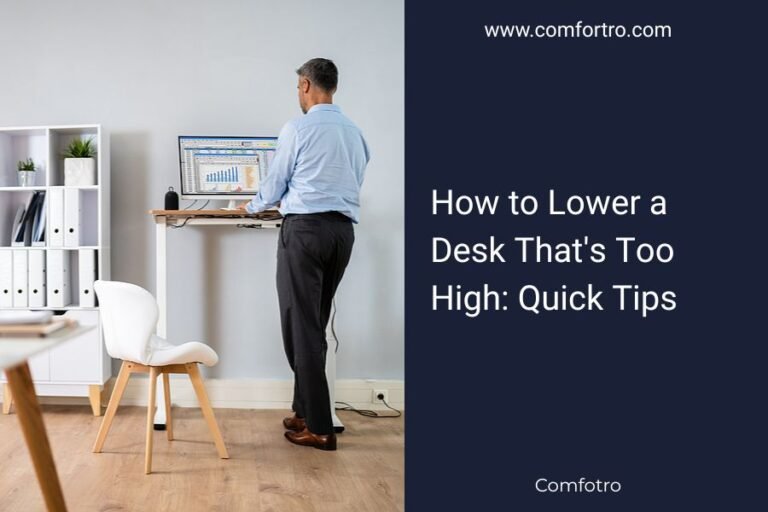
You can lower a desk that’s too high by adjusting the desk legs, adding a keyboard tray, or using a footrest to improve your seated position. Most height adjustments involve…