Can You Use a Drafting Chair at a Regular Desk?
On this page (3 sections)
Yes, you can definitely use a drafting chair at a regular desk, and it can be a great ergonomic choice. Many people find that drafting chairs offer better support and adjustability than standard office chairs, especially for tasks requiring different postures. You might wonder if it’s the right fit for your home office.
While designed for taller drafting tables, these chairs often work perfectly well with standard desk heights. The key is understanding their features and how they can benefit your workday. We’ve looked into how drafting chairs perform in various setups.
- Drafting chairs work well with regular desks.
- They offer great support and adjustability.
- Look for adjustable height and footrests.
- Consider your desk height and personal comfort.
- It can be a smart ergonomic upgrade.
Let’s walk through exactly how a drafting chair can work for your everyday desk setup. We’ll cover what to look for and how to make it a comfortable experience.
Using a Drafting Chair with Your Standard Desk
Yes, you absolutely can use a drafting chair at a regular desk. It might seem counterintuitive since they’re built for taller tables. But many people find them to be a fantastic upgrade for their home office. They offer a lot of benefits you might not get from a standard chair.
Understanding Drafting Chair Features
Drafting chairs, also known as stool chairs or standing desk chairs, are designed with taller workspaces in mind. This means they have a much wider range of height adjustment than typical office chairs. They often go much higher. This is their main selling point.
Height Adjustability: The Biggest Advantage
The gas lift on most drafting chairs allows you to raise them significantly. This is perfect if you have a standing desk that you like to use at a seated height. It’s also great for reaching higher shelves or if you simply prefer sitting higher. We found that this extensive height range is what makes them so versatile. You can dial in the perfect height for almost any desk.
Footrests for Support
Another key feature is the built-in footrest. This is usually a metal ring around the base of the chair. When you’re sitting higher, your feet might not comfortably reach the floor. The footrest provides a stable place to rest your feet, which can prevent leg fatigue and improve posture. Many standard office chairs lack this. It makes a surprising difference in comfort.
Benefits for Your Standard Desk Setup
So, how does this translate to a regular desk? Let’s break down the advantages you can expect.
Improved Ergonomics for All-Day Work
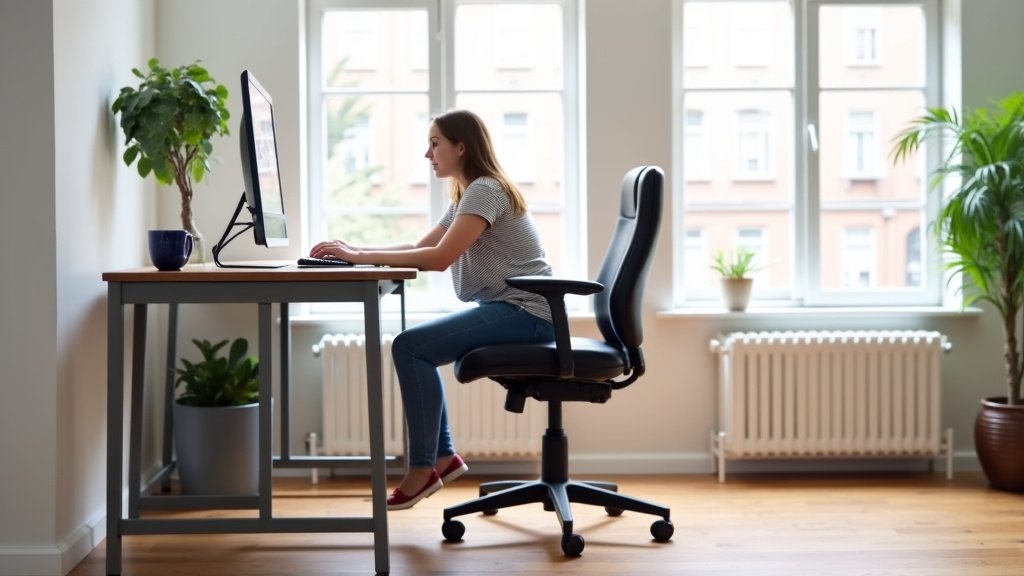
Ergonomics is all about making your workspace fit you. A drafting chair can help achieve this. Its adjustability means you can position yourself at the ideal height. Your feet should be flat on the floor or the footrest. Your elbows should be at a 90-degree angle when typing. Many experts highlight that proper ergonomic positioning is key to preventing strain (Occupational Safety and Health Administration).
This adjustability can also help you change positions more easily throughout the day. Sitting for too long in one position isn’t ideal. A drafting chair allows for micro-adjustments, helping you find a comfortable posture. We found that users report less back pain and neck strain when they can vary their seating position.
Enhanced Focus and Productivity
When you’re comfortable, you can focus better. A chair that supports good posture reduces distractions from discomfort. You won’t be fidgeting as much. This can lead to increased productivity. Think about it: when your back aches or your legs go numb, your mind wanders. A good chair keeps you in the zone.
Accommodating Different Desk Heights
Even standard desks vary in height. Some are taller than others. A drafting chair’s wide adjustment range means it can likely accommodate your desk, no matter its exact dimensions. If your desk is a bit on the higher side, a drafting chair is a natural fit. If it’s standard, you’ll likely use its lower settings.
What to Look for in a Drafting Chair for Your Desk
Not all drafting chairs are created equal. Here’s what you should consider to make sure it works well with your setup.
Adjustable Height Range
This is the most critical factor. Check the minimum and maximum height settings. Ensure they overlap with your desk height. A typical desk height is around 29-30 inches. Most drafting chairs can go much higher, but some can also go quite low. You want a chair that can comfortably sit you at desk height and also offer options for sitting higher if needed. Understanding the chair’s height settings is crucial for finding the right fit for your desk.
Sturdy Footrest
The footrest should be solid and adjustable, if possible. A wobbly footrest defeats the purpose. Look for chairs with a reinforced ring or a sturdy, fixed bar. Some models allow you to adjust the height of the footrest independently, which is a nice bonus. This adds stability and comfort for your legs.
Comfortable Seat and Back Support
While drafting chairs are known for their adjustability, comfort shouldn’t be an afterthought. Look for a seat cushion that offers good padding. Check if the backrest provides adequate lumbar support. Some drafting chairs have minimal back support, resembling stools. Others have more pronounced backrests that can be adjusted. Consider what level of support you need for long work sessions.
Swivel and Casters (Wheels)
Most drafting chairs have a swivel base, which is essential for easy movement around your workspace. Wheels (casters) are also very helpful for gliding smoothly. Make sure the casters are appropriate for your floor type. Hardwood floors might need softer wheels, while carpets might need sturdier ones. This mobility can improve your workflow significantly.
Potential Considerations and Downsides
While drafting chairs are great, there are a few things to keep in mind when using them at a regular desk.
Footrest Might Be Too High for Some
If your desk is on the lower side, you might find yourself using the drafting chair at its lowest setting. In this scenario, the footrest might end up being too high for your feet to comfortably reach. This could leave your feet dangling or resting in an awkward position. Always check the chair’s lowest setting relative to your desk height.
Aesthetics and Office Decor
Drafting chairs often have a more industrial or utilitarian look. They might not fit seamlessly with all home office aesthetics. If you’re aiming for a specific look, you might need to be selective. Many modern designs are quite stylish, though. You can find chairs that blend function and form.
Can Feel Less Stable When Lowered
Because they are designed to go very high, some drafting chairs might feel less stable when used at their lowest settings compared to a standard office chair. This is usually not a major issue, but it’s something to be aware of. Testing the chair at your desk height is a good idea if possible.
Making the Switch: A Checklist
Ready to see if a drafting chair is right for your desk? Here’s a quick checklist to help you decide:
- Measure your desk height accurately.
- Check the drafting chair’s minimum and maximum height settings.
- Consider if the footrest height will work for you at desk level.
- Think about the level of back support you require.
- Read reviews focusing on stability and comfort for regular desk use.
- Visualize how the chair’s style will fit your office space.
Drafting Chair vs. Standard Office Chair at a Regular Desk
Let’s compare them side-by-side for clarity.
| Feature | Drafting Chair | Standard Office Chair |
|---|---|---|
| Height Adjustment | Very wide range, goes much higher | Moderate range, typically lower maximum |
| Footrest | Usually included, often a ring | Rarely included |
| Ergonomic Support | High potential with proper adjustment | Varies greatly; can be good but often less adjustable |
| Ideal for | Standing desks, taller desks, varied heights | Standard desks, consistent sitting positions |
| Portability | Generally good with casters | Generally good with casters |
| Aesthetics | Can be more utilitarian, industrial | Wide variety of styles |
As you can see, the drafting chair brings a lot to the table, especially regarding adjustability. It’s not just for architects anymore. It can be a smart ergonomic choice for anyone using a standard desk.
Who Benefits Most from a Drafting Chair at a Regular Desk?
Several types of users find this setup particularly beneficial. If you often find yourself needing to adjust your seating height, this chair is for you. Perhaps you use a regular desk converted to standing and switch between sitting and standing. A drafting chair makes this transition smoother. We found that professionals who need to access storage at different levels also appreciate the extra height. A drafting chair can be a great companion for your standing desk setup.
Also, consider your body type. Taller individuals often find standard office chairs too low, even at their maximum setting. A drafting chair can provide the necessary height. Conversely, if you prefer to sit with your feet elevated, the footrest is a major plus. It’s about finding a chair that adapts to your needs, not the other way around.
Conclusion
You can absolutely use a drafting chair with your regular desk. It offers a fantastic way to boost your workspace ergonomics. Remember to check the height range and footrest compatibility for your specific desk. It’s a smart upgrade that can lead to better comfort and focus throughout your workday. Give it a try and see how it transforms your sitting experience. Your body will thank you for making this ergonomic adjustment.
Frequently Asked Questions
Will a drafting chair be too tall for my standard desk?
Drafting chairs offer a wide height adjustment range. While designed for tall tables, many can be lowered to comfortably fit standard desk heights, typically around 29-30 inches. Always check the chair’s minimum height setting to ensure it works for your desk.
Is the footrest on a drafting chair necessary for a regular desk?
The footrest is a key benefit, especially if you prefer sitting higher or have a taller desk. If you use the chair at its lowest setting with a standard desk, the footrest might be too high. In that case, you’d rest your feet flat on the floor, similar to a regular chair.
Can drafting chairs offer good back support for long work sessions?
Back support varies among drafting chairs. Some have minimal support, resembling stools, while others feature adjustable backrests. Look for models with adequate lumbar support that suits your needs for extended periods of sitting at your desk.
Are drafting chairs stable enough when used at lower heights?
Most drafting chairs are quite stable, even at lower settings. They are engineered for height, so stability is usually a priority. Reading user reviews can give you more insight into the stability of specific models when used with standard desks.
What if the drafting chair’s style doesn’t match my office decor?
While some drafting chairs have an industrial look, many modern designs blend aesthetics with function. You can find drafting chairs in various styles, colors, and materials that can complement your home office decor. Consider looking for more contemporary options.