What Furniture Is Best for a Therapist’s Home Office?
On this page (8 sections)
- Designing Your Therapist’s Home Office: Furniture Essentials
- Client Seating: The Cornerstone of Comfort
- Your Personal Seating: Ergonomics for the Professional
- Tables and Desks: Functional Surfaces
- Storage Solutions: Keeping it Tidy and Professional
- Lighting and Accents: Creating the Atmosphere
- Conclusion
- Frequently Asked Questions
For a therapist’s home office, the best furniture offers both comfort and professionalism. You’ll want pieces that create a welcoming atmosphere for clients. Think about durable, easy-to-clean materials like performance fabrics and solid wood frames. The goal is a space that feels both calming and functional.
Choosing the right furniture is key to setting the right tone. It’s about more than just looks; it affects how clients feel and how you work. We found that ergonomic seating is essential for long sessions. Also, consider furniture that offers discreet storage for office supplies and personal items. It helps maintain a tidy, distraction-free environment.
- Choose comfortable and professional seating.
- Opt for durable and easy-to-clean materials.
- Prioritize ergonomic designs for long workdays.
- Look for furniture with smart storage solutions.
- Create a calming yet functional atmosphere.
Let’s dive into the specific furniture pieces that will make your home office a sanctuary for both you and your clients.
Designing Your Therapist’s Home Office: Furniture Essentials
Setting up your therapist home office means creating a space that’s both a sanctuary for healing and a functional workspace for you. The furniture you choose plays a starring role. Freelancers planning a similar workspace can review home office furniture needs. We found that the right pieces can significantly impact client comfort and your own productivity. Think about blending style with practicality.
Your goal is a room that feels welcoming and professional. It should put clients at ease from the moment they step inside. At the same time, it needs to support you through long days. We’ve looked at what makes a difference, and comfort, durability, and a touch of elegance are key. Let’s look at the specific furniture items that will help you achieve this balance.
Client Seating: The Cornerstone of Comfort
The most important piece of furniture in your office is likely your client seating. This is where your clients will spend their sessions. It needs to be incredibly comfortable and inviting. Many experts suggest aiming for seating that encourages relaxation without being so soft that clients feel they might fall asleep.
Choosing the Right Armchair or Sofa
When selecting seating, consider the overall feel you want to create. A plush armchair can feel very personal and intimate. A small, well-designed sofa might be better if you anticipate couples or family sessions. Whatever you choose, make sure it’s not too low to the ground. This can make it difficult for some individuals to get up. We found that chairs with a firm, supportive base are often ideal.
Material Matters for Durability and Cleanliness
Think about the materials. Upholstery needs to be durable and easy to clean. Spills can happen, and regular use takes its toll. Performance fabrics are a fantastic option. They are designed to resist stains and wear. Leather can also be a good choice, as it’s easy to wipe down. However, some people find leather to be less comfortable in warmer weather. We found that woven fabrics with a tight weave offer a good balance of comfort and durability.
Size and Scale for Your Space
Ensure the seating fits the scale of your room. An oversized chair can make a small office feel cramped. Conversely, a tiny chair in a large room can look lost. Measure your space carefully before you buy. Allow enough room for your clients to move around comfortably. They should also have space to access the chair easily.
Your Personal Seating: Ergonomics for the Professional
As the therapist, your own comfort is just as vital. You’ll be sitting for extended periods. Investing in an ergonomic chair for yourself is non-negotiable. Your well-being directly impacts your ability to focus and provide care.
The Ergonomic Office Chair Explained
An ergonomic chair supports good posture. It helps prevent back pain and fatigue during long workdays. Look for adjustable features. These include lumbar support, armrest height, and seat depth. Being able to customize the chair to your body is key. We found that chairs with breathable mesh backs can offer excellent comfort and ventilation.
Why Adjustability is Key
Being able to adjust your chair allows you to maintain proper alignment. This means your feet should be flat on the floor. Your knees should be at about a 90-degree angle. Your back should be supported by the lumbar region. We found that even small adjustments can make a big difference in long-term comfort and health (Cleveland Clinic). Ensuring your own chair is at the proper height is key for maintaining good posture during long sessions.
Considering a Standing Desk Option
Some therapists find that incorporating a standing desk option is beneficial. This allows you to alternate between sitting and standing throughout the day. It can help with circulation and reduce stiffness. A height-adjustable desk, also known as a sit-stand desk, offers the most flexibility. You can easily transition between positions as needed.
Tables and Desks: Functional Surfaces
You’ll need surfaces for paperwork, a place to rest a drink, or perhaps for a client to hold a journal. The type of table or desk depends on your workflow and the aesthetic you’re aiming for.
The Side Table: Small but Mighty
A small side table next to your client’s chair is incredibly useful. It provides a convenient spot for a tissue box, a glass of water, or personal belongings. It should be at a height that’s easy to reach. Consider a design that’s stable and won’t tip over easily. We found that tables with a weighted base or a wider footprint tend to be more secure.
Your Desk: Professional and Practical
Your desk is your command center. It should be functional for your needs. Think about storage requirements. Do you need drawers for files? Or is a minimalist surface enough? The style of your desk should complement the overall tone of your office. A clean, uncluttered desk promotes a sense of calm.
Desk Material Considerations
Similar to seating, the material of your desk matters. Solid wood desks offer a classic, sturdy feel. Laminate desks can be more budget-friendly and are often easy to clean. Learn how one common surface material is made in this melamine material guide. Glass-top desks can make a space feel more open, but they can show fingerprints easily. We found that a matte finish on any desk surface can reduce glare and create a more soothing atmosphere.
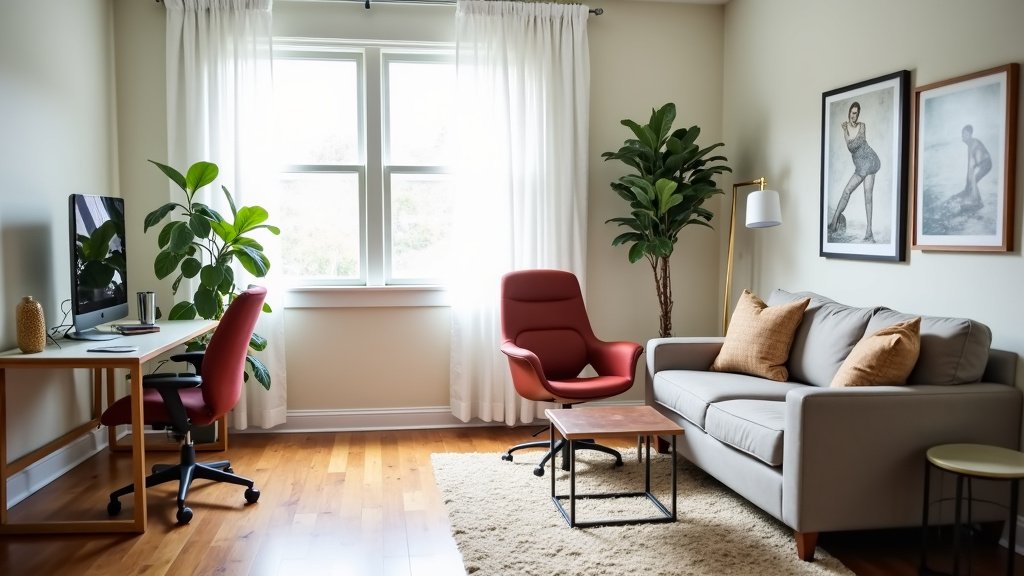
Storage Solutions: Keeping it Tidy and Professional
Discreet storage is essential in a therapist’s office. You want to keep your space organized and free from distractions. Clutter can be a significant source of anxiety for both you and your clients. Think about integrated storage solutions or standalone pieces.
Bookcases and Shelving
A well-organized bookcase can serve multiple purposes. It can hold professional texts, journals, or even some decorative items. Consider closed storage options, like cabinets with doors, to hide less aesthetically pleasing items. Floating shelves can also offer storage without taking up floor space. We found that bookshelves with adjustable shelves offer the most flexibility for different-sized items.
Filing Cabinets and Drawers
If you handle a lot of paperwork, a filing cabinet is a must. Opt for a lockable cabinet for client confidentiality. Many desks come with built-in drawers that can serve this purpose. Consider the size and capacity you’ll need. We found that a slim, upright filing cabinet can be a good space-saving option.
Decorative Baskets and Boxes
For smaller items like extra pens, notepads, or charging cables, decorative baskets and boxes are perfect. They help corral clutter while adding a touch of style. They can be placed on shelves, in cabinets, or even on the floor. We found that natural materials like wicker or woven fabric can add warmth to the space.
Lighting and Accents: Creating the Atmosphere
While not strictly furniture, lighting fixtures and decorative accents contribute significantly to the environment. They work in tandem with your furniture to create the desired mood.
Ambient and Task Lighting
Good lighting is crucial. You want your office to feel bright enough for clients to feel alert, but not harsh. Ambient lighting, like a floor lamp or a ceiling fixture with a dimmer, is key. Task lighting, such as a small desk lamp, can be useful for your own work. We found that warm-toned bulbs create a more inviting and calming atmosphere than cool-toned bulbs (Mayo Clinic).
Decorative Elements
Plants can bring life into a room. Soft throws or cushions on seating can add comfort. Art on the walls can provide a focal point without being distracting. Choose items that reflect a sense of peace and professionalism. We found that minimalist decor tends to be most effective for creating a serene environment.
A Checklist for Your Furniture Selection
Ready to furnish your space? Keep this quick checklist in mind:
- Comfort for clients is the top priority.
- Your own ergonomic seating is essential.
- Choose durable, easy-to-clean fabrics.
- Consider the scale of furniture for your room.
- Look for smart storage solutions.
- Aim for a calming and professional aesthetic.
By thoughtfully selecting each piece, you’re not just furnishing a room; you’re building a space conducive to healing and growth. You’re creating a professional haven.
Conclusion
You’ve learned that furnishing your therapist home office is about creating a balance. It’s about blending client comfort with your own professional needs. Prioritizing ergonomic seating for yourself and inviting, durable seating for clients sets a strong foundation. Smart storage keeps your space serene and focused. Remember, thoughtful furniture choices contribute directly to a therapeutic environment. Now, take these ideas and start planning your ideal office. You’re building a space that supports healing and your practice.
Frequently Asked Questions
What if my home office is very small?
For small spaces, focus on multi-functional furniture. Consider a compact, comfortable armchair instead of a sofa. Use vertical space with wall-mounted shelves for storage. A slim side table can offer utility without taking up much room.
How important is it for client seating to be easily cleaned?
It’s very important. Accidents can happen, and regular client use requires durability. Performance fabrics or leather are excellent choices because they resist stains and wipe clean easily. This ensures your office always looks professional and hygienic.
Can I use the same type of chair for myself and my clients?
While comfort is key for both, your chair should be specifically ergonomic. This means adjustable features to support your posture during long sessions. Client chairs should prioritize comfort and inviting aesthetics, but don’t necessarily need the same level of adjustability.
What are some budget-friendly furniture options for a new therapist?
Look for quality used furniture from reputable dealers or online marketplaces. If you donate replaced pieces, review office furniture donation tax tips. You can also find affordable, durable options at larger retailers. Focus your budget on a good ergonomic chair for yourself and comfortable, sturdy client seating. Sometimes, a fresh coat of paint or new hardware can update older pieces.
How can I ensure my furniture choices support confidentiality?
Choose furniture with discreet storage, such as cabinets with doors or drawers. This helps keep client notes and personal items out of sight. For filing, opt for a lockable filing cabinet. Minimal visible clutter signals professionalism and respect for privacy.