What Is the Best File Cabinet for Small Spaces?
On this page (11 sections)
- Finding the Right File Cabinet for Your Tight Quarters
- Vertical Storage: The Space-Saving Champion
- Slim and Narrow Designs: The Perfect Fit
- Understanding Different Drawer Configurations
- Material Matters: Durability Meets Style
- Considering Capacity: How Much Do You Really Need?
- Accessibility and Ergonomics for Small Homes
- Multi-functional File Cabinets: Two Birds, One Stone
- Your Small Space Filing Checklist
- Conclusion
- Frequently Asked Questions
The best file cabinet for small spaces is often a vertical or slim-profile cabinet. These designs take up minimal floor space. They help you organize important documents without overwhelming your limited room. Look for cabinets that are tall and narrow to maximize vertical storage.
When space is tight, you need smart storage solutions. File cabinets designed for small areas focus on efficiency and compact footprints. You can find models that fit perfectly into tight corners or narrow hallways. Think about how much storage you actually need and how often you access your files.
- Vertical file cabinets save the most floor space.
- Slim or narrow cabinets fit into tight spots.
- Consider how many files you need to store.
- Think about accessibility for frequently used documents.
Below, we’ll help you find the perfect file cabinet to conquer your small space clutter.
Finding the Right File Cabinet for Your Tight Quarters
When you live in a small home or apartment, every inch of space counts. You need smart solutions to keep your important papers organized without taking over your living area. The good news is, there are many file cabinets designed with compact living in mind. We’ve researched the best options to help you store your documents efficiently. When you live in a small home or apartment, you might also consider a writing desk for small spaces.
Vertical Storage: The Space-Saving Champion
Vertical file cabinets are your best friend in a small space. They rise upwards instead of spreading outwards. This means they use much less floor real estate. Think of them like a tall, slim bookshelf for your papers.
How Vertical Cabinets Work Wonders
These cabinets are designed to fit into narrow gaps. You might have a small corner or a sliver of wall space. A vertical cabinet can slide right in. They often have multiple drawers stacked on top of each other. This stacks your storage efficiently.
Top Benefits of Going Vertical
- Minimal Footprint: They take up very little floor space. This is key for cramped rooms.
- Maximum Capacity: You can store a good number of files. Vertical designs maximize height.
- Easy Access: Most vertical cabinets put your files at a convenient height.
- Aesthetic Appeal: Many look sleek and modern. They can blend into your decor.
Slim and Narrow Designs: The Perfect Fit
Sometimes, you don’t have space for even a standard vertical cabinet. That’s where slim or narrow file cabinets come in. These are specifically built to fit into tight spots. Think hallways, alcoves, or behind doors.
Where These Cabinets Shine
Imagine a narrow hallway that feels a bit bare. A slim file cabinet can add organization there. It won’t impede foot traffic. These are also great for small home offices. They can sit beside your desk without crowding it.
Key Features to Look For
When searching for a slim cabinet, check its depth. Many are less than 15 inches deep. Also, look at the height. Some are designed to fit under desks. Others are taller to maximize vertical storage within their narrow frame.
Understanding Different Drawer Configurations
File cabinets come with various drawer setups. For small spaces, the number and style of drawers matter. You want to balance storage needs with available space.
Single vs. Multiple Drawers
A single, wider drawer can hold a lot of files. However, it might take up more horizontal space. Multiple, narrower drawers offer more organization. They can also be stacked vertically. This is often the preferred choice for small spaces.
Hanging Files vs. Standard Drawers
Most modern file cabinets use hanging file systems. This is the standard for keeping papers neat. You simply slide in your hanging folders. Some very compact units might have open shelves. These are less secure for sensitive documents.
Material Matters: Durability Meets Style
The material of your file cabinet affects its look, weight, and durability. For small spaces, consider materials that are sturdy but not too bulky.
Metal File Cabinets
Metal cabinets are very durable and long-lasting. They can withstand a lot of use. They often have a more industrial look. Lighter gauge metal is available for easier moving.
Wood and Composite Options
Wood cabinets can add warmth to a room. They come in many finishes. Particleboard or MDF cabinets are often more affordable. They can look very much like solid wood. Be mindful of moisture with these materials.
Plastic and Resin Cabinets
These are usually the lightest and most affordable. They are easy to clean. Plastic cabinets are great for garages or craft rooms. They might not hold as many heavy files.
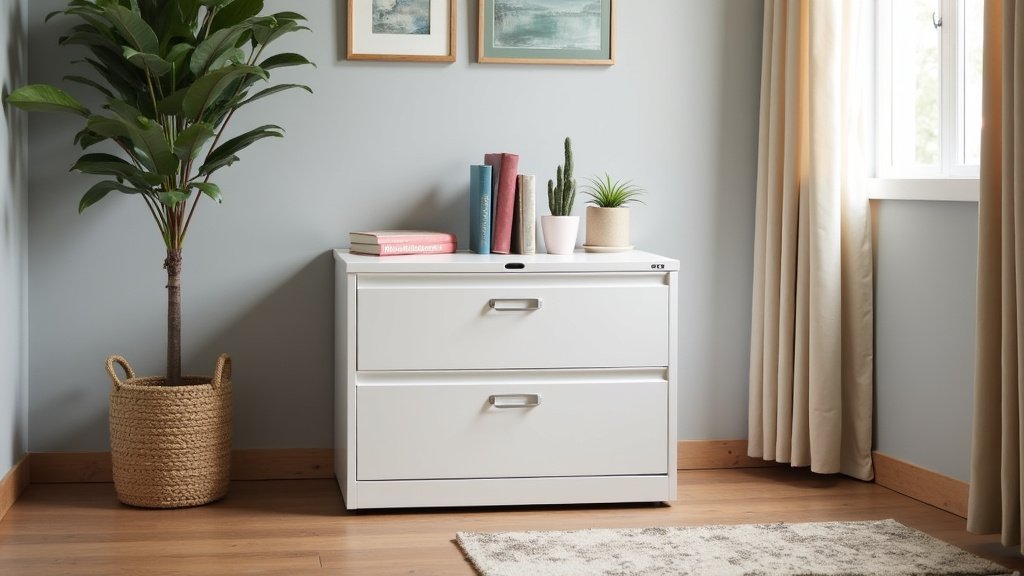
Considering Capacity: How Much Do You Really Need?
It’s easy to get caught up in getting the biggest cabinet. But in a small space, you need to be realistic. How many files do you actually need to store?
Assessing Your Filing Needs
Take a quick look at your current papers. Do you have boxes of old tax documents? Or just a few important current bills? Many people find they need less space than they think. Over-filing can lead to clutter. For smaller papers, our ideas for using magazine file holders may help organize what stays on your desk.
The “One In, One Out” Rule
A great strategy for small spaces is the “one in, one out” rule. When you file a new document, consider if an older, less important one can be shredded or recycled. This prevents your cabinet from overflowing.
Accessibility and Ergonomics for Small Homes
Even in a tiny space, how you access your files is important. You don’t want to struggle to get to your documents.
Drawer Glide Quality
Smooth-gliding drawers make a big difference. Cheap drawers can stick or jam. Look for cabinets with ball-bearing slides. This ensures drawers open and close easily, even when full. This is often found in better-quality metal cabinets.
Height and Reachability
If you choose a tall vertical cabinet, ensure you can reach the top drawers. Some may require a small step stool. For daily use items, keep them in lower drawers. This saves you time and hassle.
Multi-functional File Cabinets: Two Birds, One Stone
Why buy just a file cabinet when you can get more? Multi-functional pieces are fantastic for small living.
Desk and File Cabinet Combos
Some desks come with built-in file drawers. This saves a lot of space. You get a workspace and storage in one unit. These are ideal for a dedicated home office nook.
Storage Ottomans or Benches
Believe it or not, some stylish ottomans and benches offer file storage. They look like regular furniture. But inside, they have space for hanging files. This is a clever way to hide clutter and add seating.
Your Small Space Filing Checklist
To help you make the right choice, here’s a quick checklist:
- Measure your available space first.
- Decide on vertical or slim design.
- Estimate how many files you need to store.
- Consider drawer configuration and glides.
- Check the material for durability and style.
- Think about whether multi-functionality is a plus.
Conclusion
Finding the best file cabinet for your small space is all about smart choices. You’ve learned that vertical and slim cabinets are your top allies. They maximize storage without hogging precious floor space. Remember to consider drawer configurations, materials, and your actual filing needs. Don’t forget multi-functional pieces to get even more out of your furniture. Now, take those measurements, assess your paper piles, and choose the cabinet that will bring order to your compact home. Your clutter-free, organized space awaits!
Frequently Asked Questions
What’s the biggest mistake people make when buying a file cabinet for a small space?
A common mistake is buying a cabinet that’s too large or too deep. You might overestimate how much space you have or how many files you need. Always measure your available area carefully before you buy. It’s better to have a slightly smaller, well-fitting cabinet than one that crowds your room.
Can a slim file cabinet really hold enough documents?
Yes, slim cabinets can be surprisingly spacious. They often maximize vertical storage within their narrow frame. While they might not hold as many files as a wider cabinet, they are perfect for essential documents and often fit easily under desks or in tight alcoves.
Are metal or wood file cabinets better for small spaces?
Both have pros and cons. Metal cabinets are durable and often have smoother glides, which is great for frequent use. Wood or composite cabinets can offer a warmer aesthetic and blend better with home decor. For very tight spots, consider lighter metal options or stylish composite pieces.
What if I need to store sensitive documents in a small apartment?
Look for a file cabinet with lockable drawers. Many slim and vertical cabinets designed for home use come with this feature. This ensures your important papers remain secure even in shared living spaces or open-plan apartments.
How do I know if a file cabinet is easy to open and close?
Check for drawer glide quality. Cabinets with ball-bearing slides are generally the smoothest and most durable. If possible, test the drawers in person. If buying online, read reviews that specifically mention how easily the drawers open and close, especially when full.