What Is the Best Writing Desk for Small Apartments?
On this page (9 sections)
- Finding the Perfect Writing Desk for a Small Apartment
- How to Measure Your Space Like a Pro
- 5 Types of Space-Saving Desks to Consider
- Smart Placement Strategies for Tiny Rooms
- Key Features That Make a Desk Work in a Small Space
- Your Small Apartment Desk Checklist
- Making It Feel Like Home, Not Just a Desk
- Conclusion
- Frequently Asked Questions
Finding the Perfect Writing Desk for a Small Apartment
The best desk for a small apartment is one that maximizes your workspace without overwhelming your living area. It should be functionally deep enough for a laptop and a notebook, yet have a small footprint. Our research found that the ideal choice often combines a compact design with clever storage or a fold-away feature.
You’re not just buying a piece of furniture. You’re making a pact with your living space. We get it. A cramped home office can feel like a puzzle with missing pieces. But with the right strategy, you can build a productive nook that doesn’t eat your room alive.
How to Measure Your Space Like a Pro
Before you even browse online, grab a measuring tape. This single step will save you from a giant headache later. You need three key measurements: width, depth, and height.
Write them down on a sticky note. Where will this desk live? In a corner? Under a window? Against a blank wall? Measuring the actual spot is non-negotiable.
The Golden Numbers for a Small Apartment Desk
Generally, we found that desks under 40 inches wide are considered compact. A depth of 20 to 24 inches is usually enough for most laptop work. This gives you room for your computer and a mouse without feeling claustrophobic.
- Width (Side-to-Side): Aim for 30-40 inches for primary work.
- Depth (Front-to-Back): 20-24 inches is the sweet spot.
- Height (Top-to-Floor): Standard is 28-30 inches. Match it to your chair.
Don’t forget vertical space! Could you add wall shelves above? Could a taller, narrow desk (a “secretary” style) use your height instead of your floor space?
5 Types of Space-Saving Desks to Consider
Different desk designs solve different small-space problems. Let’s break down the most effective options we’ve seen for tiny apartments.
1. The Fold-Down Wall Desk (Murphy Desk)
This is the ultimate space-saver. It’s a cabinet mounted to the wall that folds down into a work surface. When you’re done, you fold it up and the room is completely clear. It’s like having a secret office that disappears.
Many experts say this is a top choice for studio apartments where your living room is also your office (and sometimes your dining room). Look for models with built-in shelves or cubbies inside for storage.
2. The Compact Writing Table
This is your classic, no-frills desk. If you want a different surface style, compare glass desks for small apartments. It has four legs and a flat top. The key is choosing a narrow depth or a smaller width. These are often lightweight and easy to move around.
They lack storage, but that’s okay! You can pair one with a small filing cabinet or floating shelves. It’s a flexible, budget-friendly foundation you can build upon.
3. The Corner Desk (L-Shaped)
Never underestimate a corner! An L-shaped desk hugs two walls, giving you a large work surface without sticking out into the middle of the room. It’s perfect for multitaskers who need space for a laptop and physical papers.
We found that a small corner desk (around 48 inches on each side) can feel surprisingly spacious. It defines your work zone clearly and can often hide clutter in the corner angle.
4. The Secretary or Computer Armoire
Think of this as a desk inside a cabinet. It features a fold-down front panel that becomes your work surface. Inside, there are shelves and drawers for your supplies.
When you close it up, it looks like a regular piece of storage furniture. It’s a fantastic way to hide your work life at the end of the day, which is great for mental health in a small home.
5. The Floating Desk
Similar to a wall desk but even simpler. It’s just a shelf or plank mounted to the wall at desk height. You often have no legs, which makes the floor feel more open and spacious.
This option requires sturdy mounting. You’ll likely need to find a stud in your wall. Pair it with a sleek, armless chair that can tuck completely underneath.
Smart Placement Strategies for Tiny Rooms
Where you put the desk is almost as important as which desk you choose. The right spot can make a tiny desk feel functional, while the wrong spot can make the whole room feel cluttered.
Use Vertical Space to Your Advantage
When floor space is precious, think upwards! Install floating shelves above your desk for books and supplies. A tall, narrow bookshelf next to it can hold more without claiming much floor area.
This draws the eye up and makes the room feel taller. It’s a simple trick that interior designers use all the time to combat cramped spaces.
Define Your Work Zone
In an open-plan studio, your desk needs its own territory. Use a small area rug under the desk and chair. This creates a visual boundary that says “this is office space.”
You can also use lighting. A desk lamp or a string of lights can create a focused pool of light that makes your nook feel intentional and separate from the couch just a few feet away.
Key Features That Make a Desk Work in a Small Space
Not all small desks are created equal. Look for these specific features that add huge functionality without adding bulk.
| Feature | Why It’s a Space-Saver |
|---|---|
| Legs vs. Panel | Legs let you see the floor, making the room feel bigger. A solid panel can hide cords. |
| Built-in Storage | Drawers, cubbies, or shelves reduce the need for extra furniture. |
| Lightweight/Movable | You can easily shift it to clean or rearrange the room. |
| Wall-Mountable | Frees up 100% of the floor space beneath it. |
| Multipurpose Design | Can double as a dining table, console table, or entryway table. |
Your Small Apartment Desk Checklist
Ready to shop? Use this quick checklist. If a desk checks most of these boxes, you’ve likely found a winner.
- Measured Twice: I have exact width, depth, and height measurements for my spot.
- Cord Management: I have a plan for hiding computer and lamp cords (zip ties, cable sleeve).
- Storage Solved: I know where my supplies, papers, and laptop will go when not in use.
- Multi-Use Potential: I could use this desk for something other than work if needed.
- Comfort Fit: The desk height works with my chair, and the depth allows my arms to rest comfortably.
Making It Feel Like Home, Not Just a Desk
A functional desk is great, but a workspace you enjoy being in is even better. In a small apartment, this desk is likely in your main living area, so it should blend with your decor.
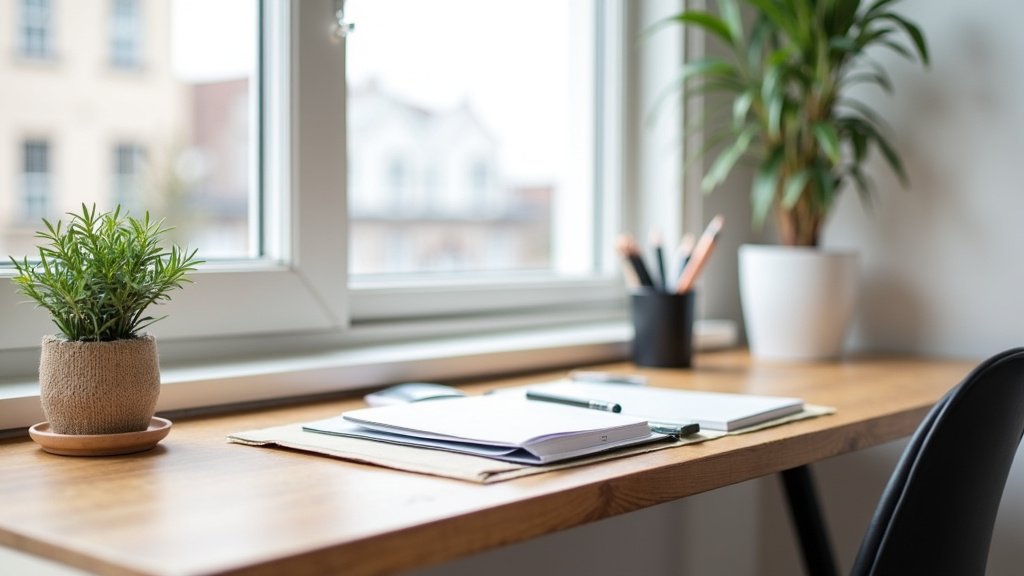
Add a small plant, a nice desk lamp, or a piece of art on the wall above. These personal touches make the space feel curated, not cluttered. It transforms a “work corner” into “your favorite corner.”
Conclusion
You don’t need a huge space to build a productive and stylish home office. The perfect desk for your small apartment is one that fits your exact measurements and supports your daily workflow. You’ve learned how to measure your space, found five smart desk types, and discovered key features like built-in storage and a lightweight design. Now, it’s time to act. Grab your measuring tape, use the checklist, and start shopping with confidence. Your ideal desk is out there, ready to turn your cramped corner into your favorite spot.
Frequently Asked Questions
What are the best materials for a small apartment desk?
We’ve found that lightweight wood, metal, and bamboo are excellent choices. They are durable and don’t add visual bulk. Avoid very dark or heavy materials that can make the room feel smaller. A light-colored finish can help the desk blend in.
How can I make my small desk look less cluttered?
Start with a minimalist surface. Use cable organizers and a desk lamp with built-in storage. Add a small, decorative tray for essentials like pens. The goal is to keep only what you use daily on the desk top.
Can I use a small desk in a bedroom?
Absolutely. A compact writing table or a fold-down wall desk is perfect for a bedroom. Place it near a window for natural light. This creates a dedicated work nook without taking over the sleeping area.
What’s the best chair to pair with a small desk?
Look for a slim, armless chair that can tuck completely underneath. A chair with a low backrest will feel less imposing. Ensure the chair height matches your desk so you work comfortably.
How do I choose between a wall-mounted and a free-standing desk?
A wall-mounted desk is best if you need to reclaim 100% of your floor space. A free-standing desk offers more flexibility to move around. Consider your lease rules and whether you can drill into walls before deciding.