Does a Standing Desk Burn More Calories?
On this page (9 sections)
- Burning More Calories by Standing vs. Sitting
- The Calorie Difference: Standing vs. Sitting in Numbers
- Factors Influencing Calorie Burn While Standing
- Standing Desk vs. Other Activities: A Comparison
- Maximizing Your Calorie Burn with a Standing Desk
- Is Standing All Day the Goal?
- Your Standing Desk Checklist for Increased Calorie Burn
- Conclusion
- Frequently Asked Questions
Yes, you can burn more calories by using a standing desk, but the difference might be smaller than you think. Standing burns more calories than sitting, so switching to a standing desk can offer a slight calorie-burning boost throughout your workday.
While standing is better than sitting for calorie expenditure, it’s not a replacement for regular exercise. Think of it as a gentle nudge towards a more active lifestyle. You’ll see the biggest changes when you combine a standing desk with consistent physical activity.
- Standing burns more calories than sitting.
- The calorie increase from standing is modest.
- It complements, but doesn’t replace, exercise.
- You’ll burn more calories the longer you stand.
- Intensity matters – fidgeting adds up!
Ready to see how much more you could be burning? Let’s break down the science behind standing desks and calorie burn, so you know exactly what to expect.
Burning More Calories by Standing vs. Sitting
Can switching to a standing desk help you burn more calories? The short answer is yes. Research consistently shows that standing burns more calories than sitting.
Think about it this way: when you sit, your body is in a relatively resting state. Your muscles are relaxed, and your heart rate is lower. Standing, on the other hand, requires your muscles to work harder. You’re engaging your legs, core, and even your back just to stay upright. This increased muscle activity translates to a higher calorie burn.
We found that the difference, while real, is often modest. It’s not a magic bullet for weight loss, but it’s a positive step. Every little bit of extra calorie expenditure adds up over time. Let’s look at some numbers.
The Calorie Difference: Standing vs. Sitting in Numbers
Studies give us a clearer picture of just how many more calories you might burn. The exact amount varies based on your weight, metabolism, and how long you stand.
Generally, an average person might burn an extra 0.15 to 0.8 calories per minute by standing instead of sitting. That might not sound like a lot. But let’s do some simple math.
Imagine you stand for just three hours of your workday. If you burn an extra 0.5 calories per minute, that’s 30 extra calories per hour. Over three hours, that’s 90 extra calories. Do that five days a week, and you’re looking at 450 extra calories burned.
While this isn’t a replacement for a workout, it’s like finding an extra treat in your calorie budget. The U.S. Department of Health and Human Services recommends adults get at least 150 minutes of moderate-intensity aerobic activity per week. Standing contributes to your overall movement, even if it’s low-intensity.
Factors Influencing Calorie Burn While Standing
So, you’re standing, but are you maximizing your calorie burn? Several factors play a role:
Your Body Weight Matters
Heavier individuals tend to burn more calories than lighter individuals when performing the same activity. This is because it requires more energy (calories) to move a larger mass. So, if you weigh more, you’ll likely see a slightly larger calorie surplus from standing.
Duration of Standing
The longer you stand, the more calories you burn. It’s a simple equation. Standing for an entire eight-hour workday will burn significantly more calories than standing for just one or two hours. Many experts suggest alternating between sitting and standing throughout the day to find a balance.
Movement and Fidgeting: The Unsung Heroes
This is where things get interesting. Standing still can be quite sedentary. However, most people don’t stand perfectly still for hours. You shift your weight, fidget, stretch, or even pace a little. These small movements add up!
We found that people who fidget more while standing burn a noticeable amount of extra calories. It’s like a mini-workout happening all day without you even realizing it. Think of it as involuntary movement. Even small actions like tapping your feet or adjusting your posture engage more muscles and increase energy expenditure.
Desk Type and Ergonomics
While not directly about calorie burn, your standing desk setup matters for your well-being and ability to stand longer. A desk that’s the right height prevents strain. This allows you to comfortably stand for longer periods, indirectly increasing your total calorie burn over the day.
Standing Desk vs. Other Activities: A Comparison
To put the calorie burn from standing into perspective, let’s compare it to other common activities. This helps manage expectations.
We’ve established that standing burns more calories than sitting. But how does it stack up against walking or more vigorous exercise?
Consider these approximate calorie burns per hour for a 155-pound person (Mayo Clinic):
| Activity | Calories Burned Per Hour |
|---|---|
| Sitting | ~60-75 |
| Standing (Stationary) | ~100-130 |
| Walking (3 mph) | ~200-300 |
| Running (5 mph) | ~500-600 |
As you can see, standing offers a moderate increase over sitting. However, it’s a fraction of what you’d burn during moderate-intensity activities like walking. The key takeaway is that standing is better than sitting, but it’s not a substitute for dedicated exercise.
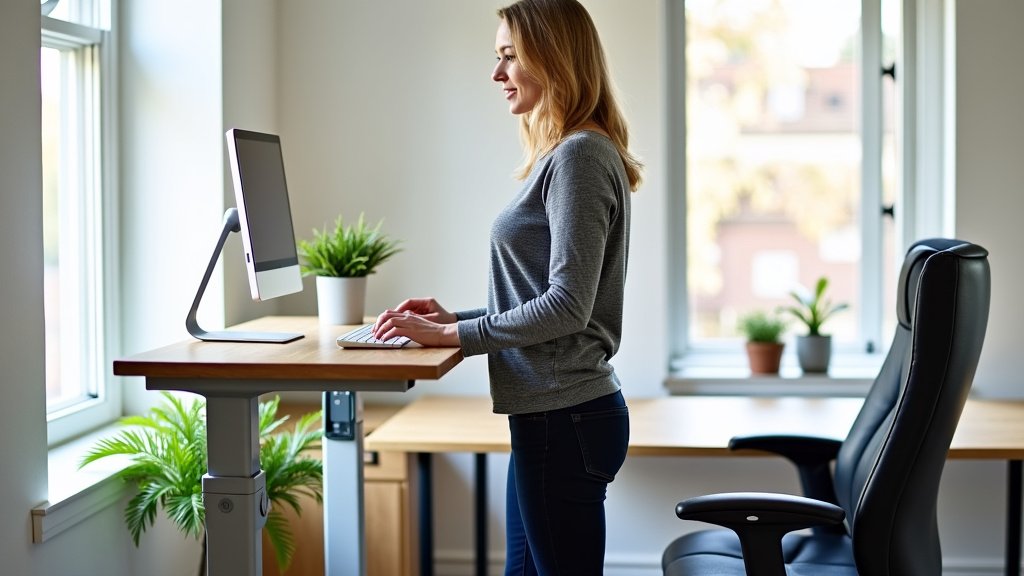
Maximizing Your Calorie Burn with a Standing Desk
Ready to make the most of your standing desk for calorie burning? These desk activity ideas can add movement to the workday. Here are some practical tips:
- Alternate positions: Don’t stand all day. Switch between sitting and standing. This helps prevent fatigue and keeps your body engaged. Aim for periods of 30-60 minutes of standing.
- Move around: Shift your weight frequently. Do calf raises or gentle stretches. Even small movements contribute.
- Walk and talk: If you have phone calls, pace around your office or home. This turns a sitting or standing call into a walking workout.
- Stand on an anti-fatigue mat: These mats can make standing more comfortable, allowing you to do it for longer periods.
- Incorporate micro-workouts: While standing, do squats, lunges, or desk push-ups. These small bursts of activity can significantly boost your calorie burn.
Is Standing All Day the Goal?
It’s important to be realistic. Standing for eight hours straight isn’t necessarily the healthiest approach. Many health professionals recommend a balance between sitting and standing. This is often referred to as “active sitting” and “active standing.”
The goal isn’t to replace all your sitting with standing. It’s to introduce more movement and reduce prolonged sedentary periods. Our bodies are designed to move. Prolonged sitting is linked to various health issues, including an increased risk of heart disease and diabetes (CDC). Standing desks help combat this by breaking up long periods of sitting.
So, while you’ll burn more calories standing, the primary benefit is often seen in the reduction of sedentary time. This reduction has broader health implications beyond just calorie expenditure.
Your Standing Desk Checklist for Increased Calorie Burn
To help you get started or improve your standing desk routine, here’s a quick checklist:
- Set realistic standing goals (e.g., 30 minutes every hour).
- Invest in an anti-fatigue mat for comfort.
- Practice shifting your weight and moving regularly.
- Schedule regular standing breaks if you tend to forget.
- Combine standing with movement like stretching or light exercises.
- Listen to your body and adjust your sitting/standing schedule as needed.
By implementing these strategies, you can harness the calorie-burning potential of your standing desk and contribute to a more active workday.
Conclusion
You’ve learned that using a standing desk does burn more calories than sitting, but the increase is modest. Think of it as a helpful addition to your day, not a replacement for exercise. The real magic happens when you combine standing with regular movement and fidgeting. Your weight, how long you stand, and how much you move all play a part in your calorie burn. Ready to make the most of your standing desk? Try alternating between sitting and standing throughout your workday to maximize benefits and comfort.
Frequently Asked Questions
How many extra calories can I really expect to burn standing?
Research generally suggests you might burn an extra 0.15 to 0.8 calories per minute by standing instead of sitting. While this number varies per person, it means a few hours of standing could add up to a modest boost to your daily calorie expenditure.
Is standing all day necessary to see benefits?
No, standing all day isn’t the goal and can lead to fatigue. Many experts recommend a balance between sitting and standing. Alternating positions for about 30-60 minutes at a time is a great way to stay active without overdoing it.
Does fidgeting really make a difference in calorie burn?
Yes, it does! Small movements like shifting your weight, tapping your feet, or stretching engage more muscles than standing completely still. These “micro-movements” can significantly add to the calories you burn throughout the day.
Can I use a standing desk to lose weight?
A standing desk can contribute to weight loss by increasing your daily calorie burn, but it’s unlikely to be a primary driver of weight loss on its own. For significant weight loss, it’s best to combine standing with a healthy diet and regular, more intense exercise.
What’s the best way to alternate between sitting and standing?
Listen to your body! A common recommendation is to start with 30 minutes of standing for every hour, or to simply switch positions whenever you start feeling tired or uncomfortable. Some people prefer to set timers as a reminder to change positions.