
Yes, for many people, a standing desk can be better for your back by encouraging more movement and reducing prolonged sitting. It won’t instantly cure all back pain, but it can be a helpful tool in a healthier workday routine. We found that varying your posture throughout the day is key.
Sitting for hours can put a lot of pressure on your spinal discs. A standing desk lets you shift positions easily, which can ease discomfort. Think of it as giving your body a chance to stretch and move, instead of staying stuck in one spot. It’s about finding a good balance between sitting and standing.
- Standing desks help reduce prolonged sitting.
- They encourage more movement throughout your workday.
- They can alleviate some types of back discomfort.
- Using them correctly is important for benefits.
- They are a tool for a healthier, active routine.
You’re probably wondering exactly how a standing desk can help your back, and if it’s the right choice for you. Let’s walk through what our research found about standing desks and back health.
How Standing Desks Support Your Spine
You’re feeling those aches, aren’t you? That nagging feeling in your lower back after a long day of sitting. It’s a common complaint, and for good reason. Our bodies are designed to move, not to stay fixed in one position for hours on end. This is where a standing desk can truly help. We found that by allowing you to switch between sitting and standing, these desks offer a dynamic approach to your workday, helping to alleviate pressure on your spinal structures.
When you stand, your spine naturally aligns differently compared to sitting. Standing can help engage your core muscles, which are vital for supporting your back. Think of your core as a natural corset for your spine. When these muscles are active, they help maintain better posture and reduce strain on your discs and ligaments.
The Problem with Prolonged Sitting
Let’s be honest, sitting is comfortable. But too much comfort can be detrimental. When you sit for extended periods, especially with poor posture, your lower back bears a lot of weight. This can compress your spinal discs, leading to discomfort and, over time, potentially more serious issues. We found that the discs in your spine, those jelly-like cushions between your vertebrae, really don’t like constant pressure (National Institutes of Health).
Prolonged sitting can also lead to muscle imbalances. Your hip flexors can tighten, and your gluteal muscles (your butt muscles) can become weak. These imbalances can pull your pelvis out of alignment, further contributing to back pain. It’s a bit like a tug-of-war, where the wrong muscles are winning. A standing desk can help break this cycle by encouraging movement and muscle engagement.
Benefits for Back Health and Beyond
Beyond simply reducing back pain, there are several other compelling reasons why integrating a standing desk might be a good idea for you. It’s not just about what it stops; it’s also about what it starts in your body. We see benefits across various health markers.
- Reduced risk of chronic diseases linked to a sedentary lifestyle.
- Improved energy levels and focus throughout the day.
- Better circulation, preventing that “heavy leg” feeling.
- Potential for burning a few more calories.
- Enhanced mood and sense of well-being.
Improved Posture and Spinal Alignment
One of the most immediate benefits you might notice is improved posture. When you stand, your body naturally tries to find a more neutral spine position. This means your ears, shoulders, and hips are generally in a straighter line. This alignment helps distribute your weight evenly, reducing pressure points that often develop from slouching in a chair. It’s like straightening a stack of books that were on the verge of toppling over.
Many experts emphasize that this natural alignment reduces stress on your lumbar spine, which is the most common area for back pain (Mayo Clinic). Think of it this way: good posture is like giving your spine a break, letting it work as it was designed to.
Increased Movement and Blood Flow
You know that feeling of stiffness after sitting for a long time? That’s your body telling you it needs to move. A standing desk encourages subtle movements – shifting your weight, stretching your calves, even just moving your feet. These small movements are incredibly beneficial. They help keep your blood flowing, delivering oxygen and nutrients to your muscles and spinal discs. This simple act of movement can reduce stiffness and discomfort.
Better blood flow also means your muscles are getting what they need to stay healthy and strong. It’s like gently watering a garden; consistent small efforts yield big results. We found that even slight changes in position throughout the day can make a significant difference to overall comfort.
Finding the Right Balance: Sit-Stand Habits
A standing desk isn’t about standing all day, every day. That could actually cause different problems, like foot pain or fatigue. The real magic happens when you alternate between sitting and standing. This dynamic approach is what truly supports your back and overall health. We found that finding your personal sit-stand rhythm is key.
Many people wonder, “How much should I stand?” There’s no one-size-fits-all answer, but generally, experts suggest a ratio that feels comfortable for you. It’s about listening to your body and making gradual changes. Starting slow is always a good idea.
How Long Should You Sit and Stand?
The general recommendation from many health organizations is to aim for a mix. A common guideline you’ll hear is to stand for about 15-30 minutes for every 30-60 minutes of sitting (Cleveland Clinic). But don’t feel like you need a timer always reminding you. The goal is just to avoid long periods in any single position.
Start with what feels manageable. Maybe stand for 10 minutes every hour, then gradually increase. Your body will tell you what’s working. The idea isn’t to force it, but to gently introduce more movement into your workday. It’s about building a sustainable habit, not a strict regimen.
Setting Up Your Standing Desk Correctly
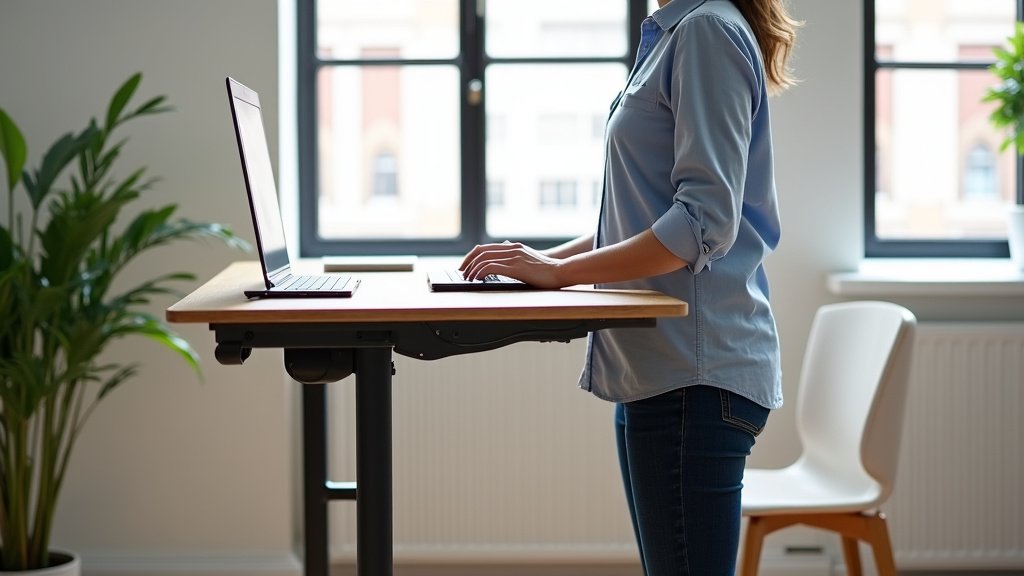
Having a standing desk is one thing; using it correctly is another. Proper ergonomics are crucial to reap the benefits and avoid new problems. Your setup can make all the difference for your back, shoulders, and neck. We found that a few simple adjustments can greatly improve your experience.
| Body Part | Proper Standing Posture |
|---|---|
| Head & Neck | Gazing forward, not down. Screen at eye level. |
| Shoulders | Relaxed, not hunched or shrugged. |
| Elbows | Bent at a 90-100 degree angle, close to your body. |
| Wrists | Straight, not bent up or down when typing. |
| Screen | Arm’s length away, top of screen at eye level. |
| Feet | Flat on the floor (sitting) or evenly weighted (standing). Anti-fatigue mat is helpful. |
Remember, your monitor height is very important. The top of your screen should be at or slightly below eye level. Your keyboard and mouse should be positioned so your elbows are at about a 90 to 100-degree angle, close to your body, and your wrists are straight. This prevents strain in your neck, shoulders, and wrists.
Investing in the Right Accessories
While the desk itself is the star, a few accessories can make your standing experience even better for your back. These are practical items that enhance comfort and support. Consider these additions to optimize your setup:
- Anti-Fatigue Mat: This is almost a must-have for standing. It cushions your feet, encourages subtle movements, and reduces pressure on your joints and back. It’s much better than standing directly on a hard floor.
- Monitor Arm: This allows you to easily adjust your monitor height and depth, ensuring it’s always at the right ergonomic position whether you’re sitting or standing.
- Ergonomic Chair: Even with a standing desk, you’ll still be sitting sometimes. A good ergonomic chair properly supports your lower back and posture during those sitting periods.
- Foot Rest (for sitting): When you’re sitting, a footrest can help maintain proper knee and hip angles, further supporting your lower back.
We found that these small investments can make a big difference in how your body feels at the end of the day. It’s about creating a holistic ergonomic environment.
When a Standing Desk Might Not Be Enough
It’s important to have realistic expectations. A standing desk is a tool for a healthier workday, but it’s not a magic cure-all for every type of back pain. If you have chronic, severe, or worsening back pain, a standing desk might not be the complete solution you need. We found that sometimes, more targeted interventions are required.
Here’s a quick checklist to consider:
- Are you experiencing sharp, shooting pains down your leg?
- Is your back pain accompanied by numbness or tingling?
- Does your pain persist even when you change positions?
- Have you tried stretching and light exercise without relief?
- Is your current pain interfering with daily activities?
If you answered yes to any of these, it’s a good idea to chat with a healthcare professional, like a physical therapist or your doctor. They can give you personalized advice and help diagnose the root cause of your pain. A standing desk can be part of the solution, but professional guidance is sometimes necessary.
Conclusion
You’ve seen why a standing desk can be a significant step toward a healthier workday. It helps reduce prolonged sitting, encourages movement, and supports better spinal alignment. Remember, it’s not about standing all day, but about finding a comfortable rhythm between sitting and standing, always prioritizing proper ergonomics. We found that incorporating these dynamic changes into your routine can truly make a difference for your back health and overall well-being. So, consider giving your body the movement it craves; your back will thank you.
Frequently Asked Questions
Will a standing desk instantly cure my back pain?
A standing desk isn’t a magic cure. While it can significantly help reduce back pain by promoting movement and better posture, it’s a tool within a broader healthy routine. For severe or chronic pain, consult a healthcare professional for diagnosis and treatment.
How long should I stand at my desk each day?
There’s no strict rule, but many experts suggest alternating between sitting and standing. Aim for about 15-30 minutes of standing for every 30-60 minutes of sitting. Listen to your body and adjust gradually, focusing on avoiding long periods in any single position.
What’s the most important accessory for a standing desk?
An anti-fatigue mat is often considered the most important accessory. It cushions your feet, encourages subtle movements, and significantly reduces pressure on your joints and back, making prolonged standing much more comfortable.
Can a standing desk cause other pains, like in my feet or legs?
Yes, standing too much, especially without proper footwear or an anti-fatigue mat, can lead to foot, leg, or lower back fatigue. The key is balance and proper setup. Gradually increase your standing time and ensure good ergonomic posture to prevent new discomforts.
Should my young child or teenager use a standing desk for schoolwork?
Children and teenagers already tend to be more active than adults, so prolonged sitting might be less of an immediate concern. However, encouraging variable posture with a sit-stand desk can still be beneficial for their developing bodies and focus, as long as proper ergonomics are maintained.
