What Is the Recommended Chair Height for a Standing Desk?
On this page (7 sections)
The recommended standing desk chair height is typically around 26 to 30 inches. This height allows your feet to rest flat on the floor. Your elbows should form a 90-degree angle when typing. This posture helps prevent strain and fatigue.
Finding the right chair height is key to comfortable standing desk use. It supports your body’s natural alignment. Many people overlook this detail, leading to discomfort. We found that proper ergonomics can make a big difference. It’s about setting up your workspace for long-term well-being.
- Ideal standing desk chair height: 26-30 inches.
- Ensure feet are flat on the floor.
- Elbows should be at a 90-degree angle when typing.
- This supports good posture and reduces strain.
- Proper setup boosts comfort and productivity.
Let’s walk through exactly how to adjust your chair for the perfect standing desk setup.
Finding Your Perfect Standing Desk Chair Height
So, you’ve embraced the standing desk life. That’s fantastic! But wait, what about your chair? Does it just sit there looking pretty, or does it play a role? It absolutely does. Even when you’re primarily standing, you’ll still want a chair for those moments you need to sit and rest or shift positions. Getting this chair height just right is key to comfort and good posture.
We found that the ideal height for a chair used with a standing desk isn’t just about whether you can reach your desk. It’s about supporting your body properly. Think of it like adjusting your car seat – a little bit of tweaking makes a huge difference on a long drive. The goal is to set your chair so that when you do sit, you’re not creating new aches and pains.
The 90-Degree Rule: Your Ergonomic Compass
The most important guideline to remember is the 90-degree angle. This applies to both your elbows and your knees when you’re seated. Why 90 degrees? Well, research suggests this angle promotes a neutral spine and reduces pressure on your joints (Cleveland Clinic). It’s a simple rule that makes a big impact.
Elbows at the Ready
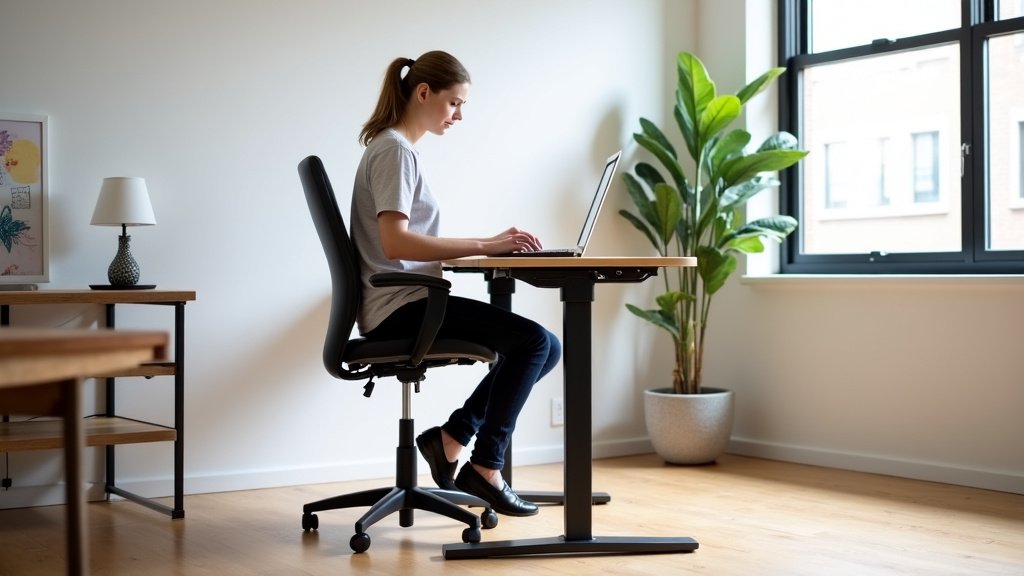
When you’re sitting at your standing desk, your elbows should naturally bend at about a 90-degree angle. Your forearms should be parallel to the floor. This position helps you type comfortably without reaching up or hunching down. You want your keyboard and mouse to be at a height where your arms can rest in this relaxed, bent position. If your arms are too high, you might feel strain in your shoulders. Too low, and you might round your back.
Knees in Line
Your knees should also form a roughly 90-degree bend when you’re seated. Your feet should rest flat on the floor. This provides stable support for your body. If your chair is too high, your feet might dangle, putting pressure on the back of your thighs. This can restrict blood flow. If it’s too low, you might find yourself slouching to get your arms to the right height. We found that keeping your feet firmly planted is a foundational ergonomic principle.
What Does “Chair Height” Actually Mean Here?
You might be thinking, “Wait, a chair height for a standing desk? Isn’t the point to stand?” Great question! It highlights a common point of confusion. When we talk about chair height in this context, we’re referring to the height of your actual seating surface – the part you sit on. This is what needs to be adjusted so that it works harmoniously with your standing desk setup.
The idea is that your standing desk allows you to transition between sitting and standing. When you choose to sit, your chair needs to be at the correct height relative to your desk. This ensures that the ergonomic benefits you get from standing aren’t undone the moment you take a seat. It’s about creating a flexible workspace that supports your body in multiple postures.
Chair Height vs. Desk Height: The Balancing Act
The relationship between your chair height and your desk height is like a dance. They need to move together. When your chair is set to the correct height for sitting (remember that 90-degree rule?), your desk should be at a height that complements it. Typically, this means when your chair is adjusted so your elbows are at 90 degrees and forearms are parallel to the floor, your desk surface should be just about at that same elbow height.
So, if your chair is set at, say, 28 inches high, your desk should ideally be around 28 inches high when you’re in sitting mode. This is why adjustable standing desks are so popular. They allow you to easily change the desk height to match your chair position, whether you’re standing or sitting. We found this flexibility is a major advantage for ergonomic well-being.
Measuring Your Ideal Chair Height: A Practical Guide
Let’s get down to brass tacks. How do you actually figure out what that perfect chair height is for you? It’s surprisingly straightforward. You’ll need your chair and your standing desk (or a surface at your typical desk height). Grab a measuring tape, too!
The Sitting Test: Your Personal Ergonomic Assessment
First, sit in your chair. Adjust it up or down until your feet can rest flat on the floor. Now, pay attention to your knees. Are they bent at about 90 degrees? If not, adjust a bit more. Once your feet are flat and your knees are comfortably bent, place your hands on the desk. Can you rest your forearms on the desk with your elbows at that 90-degree angle? Understanding how to set your desk height is crucial for maintaining the correct 90-degree elbow angle.
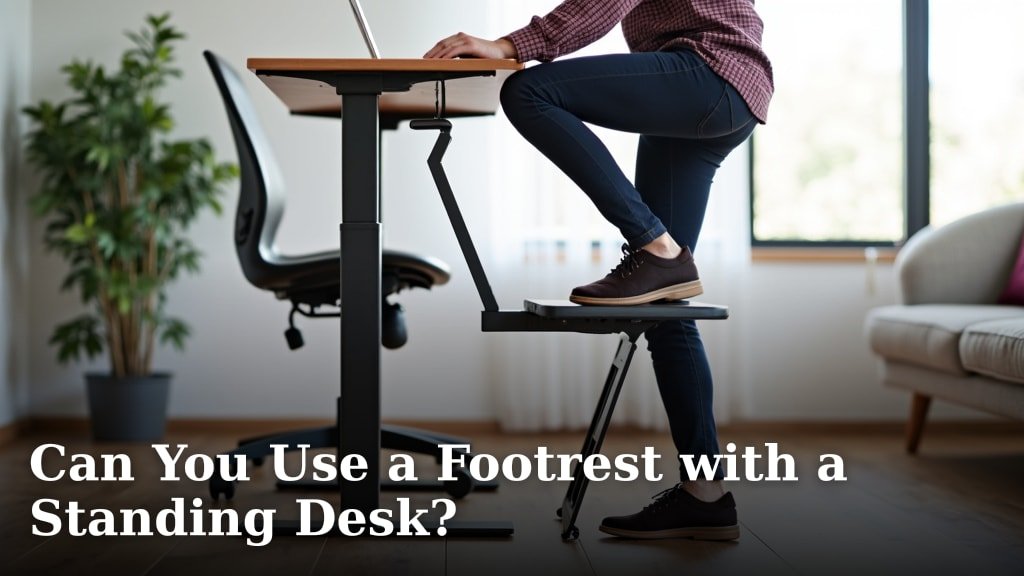
If your desk feels too high or too low for this position, you have a couple of options. If your desk is adjustable, you can adjust the desk itself. If your desk is fixed, you might need to adjust your chair higher or lower. If you adjust your chair lower and your feet no longer touch the floor, consider using a footrest. This ensures you maintain that crucial leg support.
The Standing Test: Checking the Alignment
Now, stand up at your standing desk. Adjust the desk height so that when you stand naturally, your elbows are at about a 90-degree angle, and your forearms are parallel to the floor. This is your ideal standing height. Now, lower your adjustable chair to its lowest setting. Can you comfortably sit down with your feet flat on the floor and your knees at a 90-degree angle?
If the lowest setting on your chair is still too high for your feet to be flat, you might have an issue. Many experts suggest that the lowest setting on your chair should allow you to achieve the proper sitting posture relative to your desk. If you find yourself on your tiptoes even at the lowest chair setting, it’s a sign that your desk might be too low for your standing height, or your chair might not go low enough. We found that using a footrest can often solve this!
Common Chair Height Scenarios and Solutions
Not everyone’s setup is the same. Height differences, desk types, and chair models all play a role. Here are a few common scenarios we’ve seen and how to tackle them.
Scenario 1: My Chair Is Too High Even at Its Lowest Setting
This is a frequent challenge, especially with very low desks or chairs that don’t go very low. If your feet can’t rest flat on the floor when you sit, it can lead to discomfort. The simplest fix is often a footrest. A good footrest can elevate your feet, allowing your knees to bend correctly and keeping your thighs supported. Many adjustable footrests are available. We found they are a simple but effective tool for ergonomic support.
Scenario 2: My Chair Is Too Low for My Standing Desk
If you’ve adjusted your standing desk to your ideal standing height, and then your chair is so low that your arms are nowhere near the desk surface when you sit, it can be awkward. In this case, ensure your chair has sufficient height adjustment range. If it doesn’t go high enough, you might need to consider a chair with a taller gas lift cylinder or a different chair model altogether. Alternatively, you could try slightly adjusting your desk height for sitting, but prioritize your standing posture first. We found that a good quality adjustable chair is a worthwhile investment.
Scenario 3: I Have a Fixed-Height Desk
Fixed-height desks present a different challenge. Your goal is to find a chair height that allows you to achieve good ergonomics in both sitting and standing. This often means finding a compromise. If the desk is at a standard height (around 29-30 inches), you’ll likely find a chair height of 18-20 inches for sitting works well. When you stand, your desk might feel a bit low, but you can adapt by slightly bending your knees. If you primarily sit, a chair that allows your feet flat and elbows at 90 degrees is key. If you primarily stand, you might need a taller chair to use as a perch or a higher standing desk solution.
| Posture | Elbow Angle | Forearm Position | Foot Position | Ideal Chair Surface Height (Approx.) |
|---|---|---|---|---|
| Sitting at Standing Desk | ~90 degrees | Parallel to floor, resting on desk | Flat on floor or footrest | 26-30 inches (adjusts to you) |
| Standing at Standing Desk | ~90 degrees | Parallel to floor, hovering over desk | N/A | Varies (adjusts to you) |
Quick Checklist for Your Perfect Chair Height
Ready to dial in your setup? Run through this quick checklist:
- Feet Flat: When sitting, do your feet rest comfortably and flat on the floor or a footrest?
- Knees at 90: Is your knee bend approximately 90 degrees when seated?
- Elbows at 90: When your forearms are on your desk, are your elbows bent at about 90 degrees?
- Forearms Parallel: Are your forearms parallel to the floor when resting on the desk?
- No Strain: Do you feel any pinching, stretching, or awkward pressure in your shoulders, back, or wrists?
- Easy Transition: Can you easily move between sitting and standing without major adjustments?
Conclusion
You’ve learned that the right chair height for your standing desk setup is about more than just comfort; it’s about ergonomics and long-term well-being. Remember the 90-degree rule for your elbows and knees, and ensure your feet are flat on the floor for stable support. When your chair height supports proper posture, you can seamlessly transition between sitting and standing, minimizing strain and maximizing productivity. Take a moment to test your setup using the checklist we provided. Your body will thank you for creating a workspace that truly supports you.
Frequently Asked Questions
Do I need a special chair for my standing desk?
Not necessarily! You can often use your existing office chair. The key is to adjust its height so that when you sit, your feet are flat on the floor and your elbows are at a 90-degree angle when typing. Many standard chairs offer enough adjustability for this purpose.
What if my chair is too high even at its lowest setting?
If your feet don’t reach the floor comfortably, a footrest is a great solution. It allows you to maintain proper leg support and knee angle, even if your chair doesn’t go low enough. Look for an adjustable footrest to fine-tune the height.
My standing desk is fixed height. How do I find the right chair height?
With a fixed-height desk, you’ll focus on achieving the best possible ergonomics for your primary work posture. Adjust your chair so your feet are flat and elbows are at 90 degrees when sitting. If you stand more, you might need a taller chair or use your standing desk at a slightly lower height to accommodate sitting.
How often should I adjust my chair height?
You should adjust your chair height every time you transition between sitting and standing, if needed, to maintain proper ergonomics. The goal is to have your elbows at roughly desk height (around 90 degrees) in both positions. An adjustable standing desk makes this transition much easier.
Can the wrong chair height really affect my productivity?
Yes, it absolutely can. When you’re uncomfortable or experiencing strain due to poor posture, it’s hard to focus. Achieving the correct chair height reduces fatigue and discomfort, allowing you to concentrate better on your tasks and work more efficiently throughout the day.