8 Best Vertical Mice (November 2026)
The best ergonomic vertical mice include the Anker 2.4G Wireless Ergonomic Mouse for simple right-hand comfort, the Logitech Lift Vertical Ergonomic Wireless Mouse for small to medium hands, and the TECKNET Ergonomic Mouse for 3-device switching.
On this page (4 sections)
The best vertical mouse ergonomic pick for most right-handed desks is the Anker 2.4G Wireless Ergonomic Mouse. Its upright shape, three DPI settings and simple USB receiver cover everyday work without a long learning curve.
Start here if you want comfort first and extra features second. It suits right-handed users who spend long periods reading, writing, browsing and moving between documents.
Logitech Lift fits small to medium hands better, while TECKNET and ProtoArc offer more connection choices for desks with several devices. Hand size matters because a shell that is too small or too large can undo the benefit of the angle.
If you prefer to steer with your thumb, compare wireless trackball mice. A trackball moves the cursor without sliding the whole mouse across the desk.
For rechargeable power, compare ProtoArc, TECKNET B0F1YD86Z6 and Uineer. They remove spare batteries but ask you to keep a charging cable in your routine.
Choose disposable batteries for simple ownership, or rechargeable power for fewer small purchases. Keep the mouse close to your body, relax your palm and give the shape a few days before you judge it.
Noise, button layout and connection type should also shape your shortlist. A mouse that feels right can still frustrate you if it uses the wrong port or clicks too loudly.
Our picks at a glance
-
1
 Best for simple right-hand comfort
Anker 2.4G Wireless Ergonomic Mouse
9.7/10 our score
See it on Amazon -
2
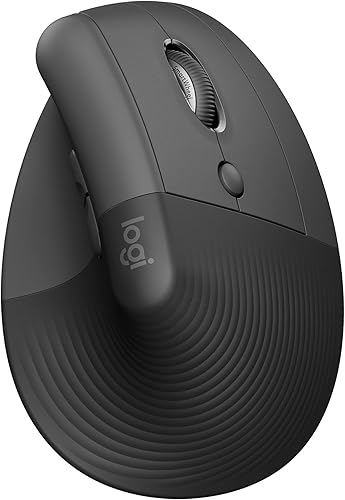 Best for small to medium hands
Logitech Lift Vertical Ergonomic Wireless Mouse
9.5/10 our score
See it on Amazon -
3

- 4
 Check it
ProtoArc EM11 NL Wireless Ergonomic Vertical Mouse
Best for rechargeable small-hand use - 5
 Best for quiet USB desk workCheck it
- 6
 Best for rechargeable multi-device workCheck it
- 7
 Check it
UGREEN Ergonomic Wireless Mouse
Best for medium to large hands - 8
 Check it
Uineer Ergonomic Wireless Vertical Mouse
Best for rechargeable scrolling features
The best vertical mouse ergonomic picks
The best vertical ergonomic mouse depends on hand size, connection needs, noise level and disposable or rechargeable power. Those four factors narrow the field faster than a long feature list.
We compared those factors with listed features and buyer feedback to build a shortlist for real desk routines. A model can look strong on paper and still be wrong for a small hand or a quiet room.
Our score weighs specs, features and buyer feedback against what you are shopping for. It is a guide to fit, not a promise that one shape suits every grip or workstation.
A vertical shape can encourage a more handshake-like grip, but you still need to relax your hand and keep the mouse close enough that your shoulder stays comfortable. Desk height, chair position and monitor placement work together with the mouse.
Give a new vertical mouse time to feel normal, especially if you have used a flat mouse for years. Judge comfort after your hand has learned the new posture.
A USB receiver gives fast plug-in setup, while Bluetooth can free a port and connect to a tablet or second laptop. Quiet left and right clicks help, but side buttons and scroll wheels may still make sound on some models.
For related desk gear, see our desktop keyboard buying guide. If you are deciding between shapes, our vertical mouse vs standard mouse comparison explains the main design trade-off.
DPI range does not need to be extreme for office work. Match the mouse to your hand first, then to your devices.
| Product | Best for | Connection | DPI | Size | Our score |
|---|---|---|---|---|---|
| Anker 2.4G Wireless Ergonomic Mouse | simple right-hand comfort | 2.4G wireless USB receiver | 800, 1200 or 1600 | 120 x 62.8 x 74.8 mm | 9.7 |
| Logitech Lift Vertical Ergonomic Wireless Mouse | small to medium hands | Bluetooth Low Energy or Logi Bolt USB | 9.5 | ||
| TECKNET Ergonomic Mouse | 3-device switching | Bluetooth 5.0/3.0 or 2.4GHz USB A | 800 to 4800 across 6 levels | 9.4 | |
| ProtoArc EM11 NL Wireless Ergonomic Vertical Mouse | rechargeable small-hand use | Dual Bluetooth or 2.4G USB-A | 9.3 | ||
| TECKNET Ergonomic Mouse | quiet USB desk work | 2.4GHz USB A receiver | 800 to 4800 across 6 levels | 9.0 | |
| TECKNET Ergonomic Mouse | rechargeable multi-device work | Bluetooth or 2.4G USB | 8.9 | ||
| UGREEN Ergonomic Wireless Mouse | medium to large hands | 1000, 1600, 2000 or 4000 | 8.6 | ||
| Uineer Ergonomic Wireless Vertical Mouse | rechargeable scrolling features | Bluetooth 5.0, Bluetooth 4.0 or 2.4G USB | 800, 1600, 2400 or 3200 | 8.3 |
Anker 2.4G Wireless Ergonomic Mouse: Best for simple right-hand comfort
- Right-hand vertical shape
- 800/1200/1600 DPI
- 2.4G USB receiver
- Next and previous buttons
Anker gives right-handed users a straightforward vertical shape, 3 DPI settings and browser navigation buttons. It uses a USB receiver and 2 AAA batteries.
Pros
- Handshake-style vertical shape
- Three DPI settings
- Power-saving mode after 8 minutes
Cons
- Right-hand use only
- 2 AAA batteries are not included
- Key click sounds are unavoidable
Anker is the strongest all-around choice when you want an uncomplicated right-hand vertical mouse for computer work. Its ergonomic structure uses a neutral handshake position, so your palm turns less than with a standard flat mouse.
That posture suits right-handed users who work for long stretches at a desk. Allow a short adjustment period before you decide whether the change from a flat mouse feels natural.
The optical sensor offers 800, 1200 and 1600 DPI settings. Lower sensitivity suits careful document work, while a higher setting reduces hand movement across a wide screen.
This range is modest compared with models that reach 4800 DPI, but it covers most office tasks well. Browsing, email, spreadsheets and writing rarely need extreme pointer speed.
The 2.4G USB receiver is stored in the mouse's bottom. That storage helps in a bag, although you should still check the compartment before travel.
You need 2 AAA batteries, which are not included, and the mouse enters power-saving mode after 8 minutes of inactivity. A press of the left or right button wakes it, so keep spare batteries in a drawer for daily use.
Anker includes next and previous buttons for web browsing. Those side controls help when you move between pages without taking your hand off the mouse.
Key click sounds are unavoidable, so this fits a normal home office better than a very quiet shared space. In daily use, it makes most sense as a simple right-hand starter mouse without complex pairing or software.
Logitech Lift Vertical Ergonomic Wireless Mouse: Best for small to medium hands
- 57-degree vertical shape
- Bluetooth and Logi Bolt
- SmartWheel scrolling
- Up to 2 years from one AA battery
Logitech Lift is shaped for small to medium right hands and adds Bluetooth, Logi Bolt, customizable buttons and a SmartWheel.
Pros
- 57-degree angle
- Quiet clicks
- Multi-OS support
Cons
- Right-hand model in this pick
- Uses one AA battery
- Some shortcuts require Logitech software
Logitech Lift is the clearest fit for small to medium right hands. Its 57-degree shape, softly textured grip and thumb rest are designed to support a more natural forearm position during long desk sessions.
That size focus makes Lift easier to recommend when a larger vertical mouse feels clumsy. Small hands need enough shell to support the palm without forcing the fingers into a cramped reach.
You can connect through Bluetooth Low Energy or the included Logi Bolt USB receiver. That choice helps if you want to free a USB port or move between a laptop and a desktop.
Lift works with Windows, macOS, iPadOS, Chrome OS and Linux, and Logitech gives it a rated battery life of up to 2 years from one AA battery. Long battery life reduces the need for frequent swaps in a busy routine.
The SmartWheel switches between precise scrolling and faster scrolling. It suits people who move between short lists and long documents without changing their grip.
Customizable buttons can be assigned through Logitech software, which helps if you repeat the same shortcuts during the day. Assign only the actions you use often, because too many shortcuts can slow learning.
Read our guide on how to use a Logitech Lift mouse before changing from a flat mouse. Our Logitech Lift mouse review covers the model in more detail.
In daily use, Lift suits right-handed users who want a smaller vertical shape with modern connection options. The main trade-off is that this pick is built around right-hand use and one AA battery.
TECKNET Ergonomic Mouse: Best for 3-device switching
- Bluetooth and 2.4GHz modes
- Six DPI levels to 4800
- Nearly silent left and right clicks
- Deep sleep mode
This TECKNET model supports Bluetooth connections to two devices plus a 2.4GHz USB connection. Its six DPI levels suit work that moves between slower precision and faster pointer speed.
Pros
- Three-device support
- Six DPI levels
- 36-month warranty when registered
Cons
- Right-hand use only
- 2 AAA batteries are not included
- Side buttons are not compatible with macOS
This TECKNET suits a desk that moves between several devices. Bluetooth can connect to two devices at the same time, while the 2.4GHz USB A mode uses the receiver stored in the mouse.
That split suits people who alternate between a work laptop, a home computer and a tablet. You can keep Bluetooth for portable devices and use the receiver when plug-in setup feels more reliable.
The six DPI levels run from 800 to 4800. Lower settings help with careful placement, while higher settings suit wide screens and general browsing.
The design is right-handed and aimed at medium to large hands. Measure your hand before ordering if you sit between sizes.
TECKNET says the left and right clicks are nearly silent, but the other function buttons are not silent. It uses 2 AAA batteries and enters deep sleep after about 10 to 30 minutes without activity.
The side buttons are not compatible with macOS. In daily use, the main checks are hand size, battery upkeep and Mac side button limits.
ProtoArc EM11 NL Wireless Ergonomic Vertical Mouse: Best for rechargeable small-hand use
- 58-degree vertical shape
- 500mAh rechargeable battery
- Three-device connection
- 1000/1600/2400 DPI
ProtoArc fits small to medium right hands and combines a rechargeable battery with dual Bluetooth and 2.4G USB-A connections.
Pros
- Rechargeable design
- Three-device support
- Quiet left and right clicks
Cons
- Buttons are not programmable
- Forward and back buttons do not work with Mac OS
- Type-C cable is for charging only
ProtoArc EM11 NL suits small to medium right hands with a hand length under 7.5 in. Its 58-degree vertical shape keeps the wrist closer to a natural handshake position, but adaptation can take 1 to 2 weeks.
That period is normal for a vertical shape. Keep your palm relaxed and avoid forcing a flat-mouse grip onto an upright shell.
The built-in 500mAh Li-Ion battery recharges through the included Type-C cable. That cable is for charging only, while the mouse connects through dual Bluetooth or the included 2.4G USB-A receiver.
You can connect up to 3 devices. The 1000, 1600 and 2400 DPI levels cover office work, browsing and document tasks, and the left and right buttons are designed for quieter clicking.
All buttons are not programmable, which keeps setup simple. The forward and back buttons do not work with Mac OS, so check that limit before you buy.
TECKNET Ergonomic Mouse: Best for quiet USB desk work
- 52-degree vertical angle
- Six DPI levels to 4800
- Quiet clicks on all buttons
- Up to 24 months of battery life
This USB-focused TECKNET model keeps setup simple with a receiver and adds six DPI levels, quiet buttons and auto-sleep.
Pros
- Plug-and-play USB connection
- Quiet clicks
- Windows, macOS, Chrome OS and Linux support
Cons
- Right-hand use only
- 2 AAA batteries are required
- The included component is the mouse
Choose this TECKNET when you want a quiet USB vertical mouse without Bluetooth pairing. Plug the USB A receiver into a laptop or desktop, then use the 52-degree shape for a more upright grip.
That simple connection suits fixed desks where the same computer is used every day. There is no need to pair or switch between wireless profiles.
The optical sensor has 6 DPI levels from 800 to 4800. All buttons use quiet technology, which helps in shared offices and study areas.
It supports Windows, macOS, Chrome OS and Linux. It uses 2 AAA batteries, has auto-sleep power saving and is rated for up to 24 months of battery life.
The trade-off is that this model focuses on USB setup rather than multi-device Bluetooth switching. Its right-hand design also rules it out for left-handed users.
In daily use, it suits right-handed users who want quiet USB work at one desk.
TECKNET Ergonomic Mouse: Best for rechargeable multi-device work
- Bluetooth 5.0/3.0 and USB A
- 600mAh rechargeable battery
- 52-degree angle
- Six DPI levels to 4800
This TECKNET combines a rechargeable battery with Bluetooth and USB A connections. It suits S/M hands and supports six DPI levels for office work, browsing and light gaming.
Pros
- Rechargeable battery
- Three-device switching
- Quiet clicks
Cons
- Forward and back buttons are not available on Mac
- Right-hand design
- Charging is part of regular upkeep
This rechargeable TECKNET is a practical middle ground for Bluetooth and USB A workstations. It supports Bluetooth 5.0/3.0 and 2.4G wireless, with switching across up to 3 devices.
That mix suits people who use a laptop at work, a tablet at home and a desktop for personal tasks. Bluetooth can handle portable devices, while the USB receiver gives a simple plug-in option.
The built-in 600mAh battery takes about 1.5 hours to charge and can provide up to 2 months of use. A Type-C charging cable is included, so you do not need to keep 2 AAA batteries nearby.
Rechargeable power is convenient, but it becomes part of your routine. Charge the mouse before a busy week rather than waiting for a low battery warning.
Its 52-degree vertical design is aimed at S/M hands. That size focus helps smaller hands get palm support without stretching to reach the main buttons.
Six DPI levels run from 800 to 4800, and side forward and back buttons add quick browser control. The DPI range supports careful editing and faster movement across large screens.
The model works with Windows, Mac, Android, Chrome OS, Linux and iOS. Forward and back buttons are not available on Mac, so the connection compatibility is broader than the shortcut compatibility.
In daily use, this model suits right-handed users who want rechargeable power with both Bluetooth and USB options. Check hand size and Mac button limits, then plan charging into your week.
UGREEN Ergonomic Wireless Mouse: Best for medium to large hands
- Bluetooth and 2.4G wireless
- Quiet clicks
- Five-button layout
- PTFE glide feet
UGREEN is shaped for medium to large hands and uses a five-button layout, quiet clicks and PTFE glide feet for smooth movement.
Pros
- Clear hand-size focus
- Four DPI settings
- Windows, macOS, Linux, ChromeOS and Android support
Cons
- Not suitable for small hands
- Right-hand use only
- Uses one AA battery
UGREEN is the best fit here for medium to large hands that need quiet everyday control. The maker specifically says it is not suitable for small hands, so measure before choosing it.
That clear sizing guidance helps shoppers avoid a common mismatch. A larger shell can give fuller palm support, but only if your fingers can still reach the buttons without stretching.
Its vertical design uses a natural handshake position, while PTFE glide feet are intended to reduce surface friction during movement. Smooth glide helps the cursor feel controlled on a desk or mat.
The five-button layout gives you common navigation controls without adding a large number of extra buttons. That layout suits office work and browsing more than complex shortcut setups.
You can use Bluetooth or 2.4G wireless, switch among up to 3 devices and work within a stated 10 m range. The setup suits a desk with a laptop, tablet and desktop nearby.
The 1000, 1600, 2000 and 4000 DPI settings cover document editing, browsing and faster cursor work. Lower settings help with precise placement, while higher settings reduce travel on wide displays.
UGREEN supports Windows, macOS, Linux, ChromeOS and Android. It uses one AA battery and has a smart sleep mode for power saving.
In daily use, UGREEN suits right-handed users with medium to large hands who want quiet clicks and simple navigation. The main trade-off is that small hands should look at a smaller vertical model instead.
Uineer Ergonomic Wireless Vertical Mouse: Best for rechargeable scrolling features
- Three wireless modes
- Side scroll wheel
- 7-color LED lights
- 500mAh rechargeable battery
Uineer adds a side scroll wheel, 7-color LED lights and three-device switching to a rechargeable vertical shape.
Pros
- Side scroll wheel
- Rechargeable battery
- Quiet left and right buttons
Cons
- Right-hand design
- Adaptation may take 1 to 2 weeks
- The 2.4G receiver uses USB A
Uineer stands out when you want more scrolling control and a rechargeable battery. Its side scroll wheel can help with horizontal movement in wide spreadsheets or other layouts, while the 7-color LED lights add a visible desktop accent.
Those features suit people who work with wide tables, timelines or design boards. Side scrolling reduces the need to drag scrollbars with the cursor during long sessions.
The mouse supports Bluetooth 5.0, Bluetooth 4.0 and 2.4G USB connectivity. You can switch among 3 devices, including a MacBook, Mac, iPad, Windows laptop, desktop or tablet.
That flexibility helps in mixed-device homes and small offices. Bluetooth suits portable devices, while the included USB-A receiver gives a direct plug-in mode.
Four DPI levels run from 800 to 3200. The left and right buttons are designed to be quiet, and forward and back buttons provide page controls.
The DPI range is practical for office work, browsing and light creative tasks. Lower levels support careful placement, while higher levels help when you cross a large screen.
The built-in 500mAh battery recharges in about 2 hours through the included Type-C cable. Uineer says it can last for weeks with typical 8-hour daily use, while the mouse enters sleep mode after 10 to 30 minutes of inactivity.
In daily use, Uineer suits right-handed users who want extra scrolling control without disposable batteries. Allow 1 to 2 weeks to adapt if this is your first vertical mouse, and keep the charging cable handy.
How to choose an ergonomic vertical mouse
The best vertical mouse ergonomic choice starts with hand size. A shell that is too small can leave your fingers cramped, while one that is too large can make buttons harder to reach.
Logitech Lift and ProtoArc are the clearest small to medium hand options in this group. TECKNET B0DG5SW7F4 and UGREEN are aimed at medium to large hands, while the other models should be compared by their shape and stated dimensions.
Which connection should you choose?
Choose a USB receiver when you want a quick plug-in setup. Anker and the USB-focused TECKNET B0GF63SSRY keep the connection simple, while the other TECKNET models, ProtoArc, UGREEN and Uineer add Bluetooth options.
USB setup suits a fixed desk with one main computer. Bluetooth suits portable setups and desks with more than one device, and it can free a USB port.
Check the receiver type before buying because USB A and Bluetooth do not offer the same setup on every device. Some newer laptops have limited USB-A ports, so a receiver can become a daily hassle.
Battery upkeep also differs by model. Disposable batteries are easy to swap, while rechargeable batteries need a cable and a charging habit.
Hand size should come before connection features in your decision. The right connection will not fix a shell that feels too small, too large or hard to reach.
For more wired and wireless options, compare our guides to the best wireless vertical mouse and best USB vertical mice. Set the mouse close to your keyboard and keep your elbow relaxed.
What DPI range is useful at a desk?
A wider DPI range gives you more ways to change pointer speed, but it does not automatically make a mouse more comfortable. Use a lower setting when you need careful control and a higher setting when you want less hand movement across a large display.
The TECKNET models reach 4800 DPI. Anker offers 800, 1200 and 1600 DPI, while ProtoArc and Uineer provide smaller ranges that may be enough for office work.
Are vertical mice good for wrist comfort?
A vertical mouse may help you keep your hand and forearm closer to a handshake position, but comfort depends on fit, grip and desk setup. Give yourself time to learn the shape, and stop using it if discomfort increases.
The vertical angle is not a medical treatment. If wrist pain continues, ask a qualified health professional for advice.
You can also compare Trackball vs Mouse: Which is Best for Ergonomics? if reducing wrist movement is your main goal.
Can you use a vertical mouse for gaming?
Some vertical mice can handle casual gaming, but their shape and button layouts prioritize comfort over gaming-specific controls. The TECKNET rechargeable model offers up to 4800 DPI, while Uineer reaches 3200 DPI and adds forward and back buttons.
For a narrower gaming comparison, see the best vertical mouse for gaming. MMO players should also review how to choose a vertical MMO mouse.
What features are harder to find?
Infinite scroll and joystick controls are not standard on the products here. If you need a side control, Uineer has a side scroll wheel, while the other models use more familiar button layouts.
Read our guide to a vertical mouse with a joystick and our explanation of whether you can get a vertical mouse with infinite scroll.
More guides on this topic
- Best Vertical Mice for Mac
Which vertical mouse should you buy?
Pick the Anker 2.4G Wireless Ergonomic Mouse if you want the highest-scoring simple right-hand design with 3 DPI settings and a USB receiver. It suits everyday office work without complex setup.
Choose Logitech Lift for small to medium hands, TECKNET B0DG5SW7F4 for three-device switching, or ProtoArc for a rechargeable small-hand option. Each one solves a different desk problem, so match the model to your hand and devices.
For larger hands, UGREEN is the focused choice. Its medium to large sizing and quiet clicks suit right-handed users who do not want a small shell.
If you want more desktop features, Uineer adds a side scroll wheel and LED lights. Shoppers who need quiet USB work at one desk should look closely at TECKNET B0GF63SSRY.
Shoppers who move between several systems should weigh Bluetooth support and side button limits. Some models pair widely, while forward and back buttons may not work the same way on Mac.
Shoppers comparing brand-specific shapes can continue with the best Evoluent vertical mouse, best vertical mouse for wrist pain, best vertical mouse for small hands, best vertical mouse for carpal tunnel, best vertical mouse with programmable buttons and best vertical mouse for large hands.
Measure your hand, check the connection type and plan battery care before you order. Those three checks will help you choose a vertical mouse that feels right after the first week.
Our top 3 picks at a glance
-
1
Best for simple right-hand comfort
Anker 2.4G Wireless Ergonomic Mouse
9.7/10 our score
See it on Amazon -
2
Best for small to medium hands
Logitech Lift Vertical Ergonomic Wireless Mouse
9.5/10 our score
See it on Amazon -
3


